ISTE Ltd and John Wiley & Sons Inc Forlag
Visning: Type : Alle | Sprog : Alle | Format : Alle
-
Transitions from Digital Communications to Quantum Communications: Concepts and Prospects (Bog, Hardback, Engelsk)
This book addresses the move towards quantum communications, in light of the recent technological developments on photonic crystals and their potential applications in systems.
Levering: Skaffevare (forvent 14 - 30 hverdage) -
Transformation of Collective Intelligences: Perspective of Transhumanism (Bog, Hardback, Engelsk)
There is a great transformation of the production of knowledge and intelligibility. The "digital fold of the world" (with the convergence of NBIC) affects the collective assemblages of thought , of research. The aims of these assemblages are also controversial issues.
Levering: Skaffevare (forvent 14 - 30 hverdage) -
UHF RFID Technologies for Identification and Traceability (Bog, Hardback, Engelsk)
UHF Radio Frequency Identification (RFID) is an electronic tagging technology that allows an object, place or person to be automatically identified at a distance without a direct line-of-sight using a radio wave exchange.
Levering: Skaffevare (forvent 14 - 30 hverdage) -
Time-Frequency Domain for Segmentation and Classification of Non-stationary Signals: The Stockwell Transform Applied on Bio-signals and Electric Signals (Bog, Hardback, Engelsk)
This book focuses on signal processing algorithms based on the timefrequency domain. Original methods and algorithms are presented which are able to extract information from non-stationary signals such as heart sounds and power electric signals.
Levering: Skaffevare (forvent 14 - 30 hverdage) -
UCITS Handbook (Bog, Hardback, Engelsk)
The goal of this Handbook on UCITS is to provide a one-stop source for investors and asset managers, service providers, students, researchers, and practitioners to learn the necessary knowledge and analytical skills they need when setting up, managing and monitoring a UCITS fund.
Levering: Skaffevare (forvent 14 - 30 hverdage) -
Towards Innovative Freight and Logistics (Bog, Hardback, Engelsk)
Papers presented at TRA2014, the 5th Transport Research Arena, held in Paris, France in 2014.
Levering: Skaffevare (forvent 14 - 30 hverdage) -
Traffic Management (Bog, Hardback, Engelsk)
Papers presented at TRA2014, the 5th Transport Research Arena, held in Paris, France in 2014.
Levering: Skaffevare (forvent 14 - 30 hverdage) -
-
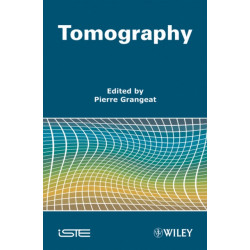
Tomography (Bog, Hardback, Engelsk)
The principle of tomography is to explore the structure and composition of objects non-destructively along spatial and temporal dimensions, using penetrating radiation, such as X- and gamma-rays, or waves, such as electromagnetic and acoustic waves.
Levering: Skaffevare (forvent 14 - 30 hverdage) -
Time-Predictable Architectures (Bog, Hardback, Engelsk)
Building computers that can be used to design embedded real-time systems is the subject of this title. Real-time embedded software requires increasingly higher performances.
Levering: Skaffevare (forvent 14 - 30 hverdage) -
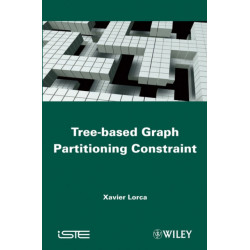
Tree-based Graph Partitioning Constraint (Bog, Hardback, Engelsk)
Combinatorial problems based on graph partitioning enable us to mathematically represent and model many practical applications. Mission planning and the routing problems occurring in logistics perfectly illustrate two such examples.
Levering: Skaffevare (forvent 14 - 30 hverdage) -
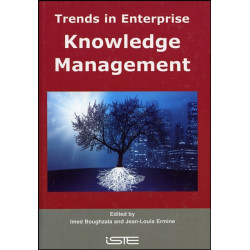
Trends in Enterprise Knowledge Management (Bog, Hardback, Engelsk)
Knowledge Management (KM) encompasses a wide range of tools and methods that are at the heart of the information and communication society and provide solutions that rely as much on organization as on technology.
Levering: Skaffevare (forvent 14 - 30 hverdage)