Ivan R Dee, Inc Forlag
Visning: Type : Alle | Sprog : Alle | Format : Alle
-
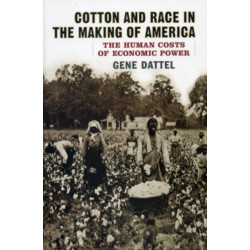
Cotton and Race in the Making of America: The Human Costs of Economic Power (Bog, Paperback / softback, Engelsk)
Since the earliest days of colonial America, the relationship between cotton and the African-American experience has been central to the history of the republic. America's most serious social tragedy, slavery and its legacy, spread only where cotton could be grown. Gene Dattel...
Levering: Print on Demand (forvent 14 - 30 hverdage) -
After the War: The Lives and Images of Major Civil War Figures After the Shooting Stopped (Bog, Paperback / softback, Engelsk)
David Hardin tells the compelling and often moving stories of eleven prominent Civil War figures after the war. Their struggle would be a constant tug back toward a destroyed past, and a confrontation with the reality of being strangers in their own land.
Levering: Print on Demand (forvent 14 - 30 hverdage) -
The Treatment Trap: How the Overuse of Medical Care is Wrecking Your Health and What You Can Do to Prevent It (Bog, Paperback / softback, Engelsk)Levering: Print on Demand (forvent 14 - 30 hverdage)
-
From Prairie To Corn Belt: Farming on the Illinois and Iowa Prairies in the Nineteenth Century (Bog, Paperback / softback, Engelsk)
From Prairie to Corn Belt, first published in 1967, examines the development of farming in the prairie states. Bogue focuses on the individual farmer and the problems and developments that have forced changes in the family farm business.
Levering: Print on Demand (forvent 14 - 30 hverdage) -
Catcher: How the Man Behind the Plate Became an American Folk Hero (Bog, Paperback / softback, Engelsk)
Today's baseball catcher stolidly goes about his duty without attracting much attention. But it wasn't always that way, as Peter Morris shows in this lively and original study. In baseball's early days, catchers stood a safe distance back of the batter without protective gear....
Levering: Print on Demand (forvent 14 - 30 hverdage) -
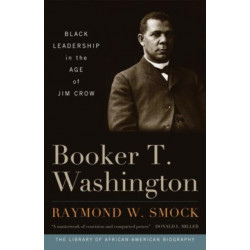
Booker T. Washington: Black Leadership in the Age of Jim Crow (Bog, Paperback / softback, Engelsk)
From the time of his famous Atlanta address in 1895 until his death in 1915, Booker T. Washington was the preeminent African-American educator and race leader. But to historians and biographers of the last hundred years, Washington has often been described as an enigma, a man ...
Levering: Print on Demand (forvent 14 - 30 hverdage) -
Walter White: The Dilemma of Black Identity in America (Bog, Paperback / softback, Engelsk)
The day Walter White was buried in 1955 the New York Times called him "the nearest approach to a national leader of American Negroes since Booker T. Washington." For more than two decades, White, as secretary of the NAACP, was perhaps the nation's most visible and most powerfu...
Levering: Print on Demand (forvent 14 - 30 hverdage) -
A Game of Inches: The Stories Behind the Innovations That Shaped Baseball: The Game on the Field, Volume 1 (Bog, Paperback / softback, Engelsk)Levering: Print on Demand (forvent 14 - 30 hverdage)
-
The End of Baseball: A Novel (Bog, Paperback / softback, Engelsk)Levering: Print on Demand (forvent 14 - 30 hverdage)
-
La Ronde (Bog, Paperback / softback, Engelsk)
First published for private circulation in Vienna in 1900, Arthur Schnitzler's famous play looks at the sexual morality and class ideology of his day through a series of sexual encounters between pairs of characters. When published publicly in 1903, it became an immediate best...
Levering: Print on Demand (forvent 14 - 30 hverdage) -
Hank Greenberg: The Story of My Life (Bog, Paperback / softback, Engelsk)Levering: Print on Demand (forvent 14 - 30 hverdage)
-
Insurgents, Raiders, and Bandits: How Masters of Irregular Warfare Have Shaped Our World (Bog, Hardback, Engelsk)Levering: Print on Demand (forvent 14 - 30 hverdage)