Left Coast Press Inc Forlag
-
Documentary Filmmaking for Archaeologists (Bog, Hardback, Engelsk)
A documentary filmmaker and historical archaeologist team up to provide a concise guide to filmmaking designed to help archaeologists navigate the unfamiliar world of documentary film.
Levering: Skaffevare (forvent 14 - 30 hverdage) -
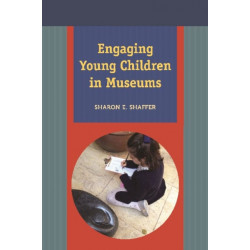
Engaging Young Children in Museums (Bog, Hardback, Engelsk)
This is the first book for museum professionals that focuses on this intersection between museum programming and early childhood education.
Levering: Skaffevare (forvent 14 - 30 hverdage) -
-
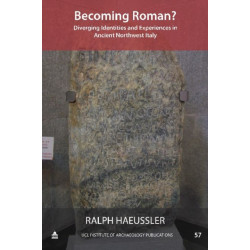
Becoming Roman?: Diverging Identities and Experiences in Ancient Northwest Italy (Bog, Hardback, Engelsk)
Few empires had such an impact on the conquered peoples as did the Roman empire, yet this volume shows though the example of Northwest Italy how individuals’ decisions introduced changes in material culture, identity and behavior on a regional level to resist homogenization.
Levering: Skaffevare (forvent 14 - 30 hverdage) -
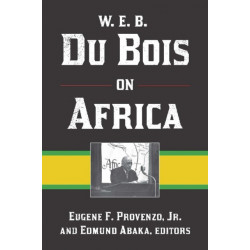
W. E. B. Du Bois on Africa (Bog, Hardback, Engelsk)
This book brings together, for the first time, W.E.B. Du Bois’s writings on Africa across half a century in magazine and journal articles, poems and book chapters, highlighting his role among the most important intellectual figures in modern African social thought.
Levering: Skaffevare (forvent 14 - 30 hverdage) -
Handbook of Anthropology in Business (Bog, Hardback, Engelsk)
The first comprehensive work on the burgeoning field of business anthropology, this innovative reference book, including more than 60 international scholar-practitioners, provides a foundation for the field for years to come.
Levering: Skaffevare (forvent 14 - 30 hverdage) -
Reanimating Industrial Spaces: Conducting Memory Work in Post-industrial Societies (Bog, Hardback, Engelsk)
Reanimating Industrial Spaces explores the relationships between people and the places of former industry through approaches which incorporate and critique memory-work.
Levering: Skaffevare (forvent 14 - 30 hverdage) -
Cultures of Energy: Power, Practices, Technologies (Bog, Hardback, Engelsk)
This path-breaking, comparative volume explores cultures of energy, the underlying but under-appreciated dimensions of both crisis and innovation in resource use around the globe.
Levering: Skaffevare (forvent 14 - 30 hverdage) -
Qualitative Inquiry and the Politics of Advocacy (Bog, Hardback, Engelsk)
The plenary volume from the Seventh International Congress of Qualitative Inquiry (2011) examines the politics of advocacy and the context in which scholars are encouraged to pursue social justice agendas.
Levering: Skaffevare (forvent 14 - 30 hverdage) -
Interpretive Planning for Museums: Integrating Visitor Perspectives in Decision Making (Bog, Hardback, Engelsk)
This book helps museums integrate visitors' perspectives into interpretive planning by recognizing, defining, and recording desired visitor outcomes throughout the planning process.
Levering: Skaffevare (forvent 14 - 30 hverdage) -
Intangible Heritage and the Museum: New Perspectives on Cultural Preservation (Bog, Hardback, Engelsk)
Taking a multi-sited, cross-cultural approach, this book investigates the relationship between cultural institutions in presenting “intangible heritage.”
Levering: Skaffevare (forvent 14 - 30 hverdage) -
Translating Museums: A Counterhistory of South Asian Museology (Bog, Hardback, Engelsk)
Shaila Bhatti's immersive study of the Lahore Museum in Pakistan is one of the first books to offer an in-depth historical and ethnographic analysis of a South Asian museum.
Levering: Skaffevare (forvent 14 - 30 hverdage)