Left Coast Press Inc Forlag
-
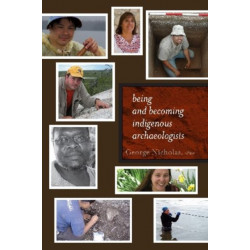
Being and Becoming Indigenous Archaeologists (Bog, Hardback, Engelsk)
This volume tells the stories—in their own words-- of 37 indigenous archaeologists from six continents, how they became archaeologists, and how their dual role affects their relationships with their community and their professional colleagues.
Levering: Skaffevare (forvent 14 - 30 hverdage) -
Reuben's Fall: A Rhizomatic Analysis of Disobedience in Kindergarten (Bog, Hardback, Engelsk)
This book offers a cultural studies lens on two kindergarten classrooms, examining moments of disobedience as children interacted with children, their teachers, and the space and time elements of the classroom environments.
Levering: Skaffevare (forvent 14 - 30 hverdage) -
A Millennium of Cultural Contact (Bog, Hardback, Engelsk)
A comprehensive textbook detailing the millennium of cultural contact between European societies and the rest of the world.
Levering: Skaffevare (forvent 14 - 30 hverdage) -
Drug Effects: Khat in Biocultural and Socioeconomic Perspective (Bog, Hardback, Engelsk)
Lisa Gezon cuts through traditional battle lines of the drug debate, proposing criteria for evaluating psychotropic substances that account for biocultural and socioeconomics contexts on local, national, and global levels.
Levering: Skaffevare (forvent 14 - 30 hverdage) -
Participatory Visual and Digital Methods (Bog, Hardback, Engelsk)
Gubrium and Harper provide instruction in visual and digital methodologies and show how they can contribute to building a participatory, public-engaged ethnography.
Levering: Skaffevare (forvent 14 - 30 hverdage) -
The Ten-Thousand Year Fever: Rethinking Human and Wild-Primate Malarias (Bog, Hardback, Engelsk)
Cormier integrates a wide range of data from molecular biology, ethnoprimatology, epidemiology, ecology, and other fields to show how culture and environment have shaped the history of malaria and will make it one of the most serious threats to humanity in the 21st century.
Levering: Skaffevare (forvent 14 - 30 hverdage) -
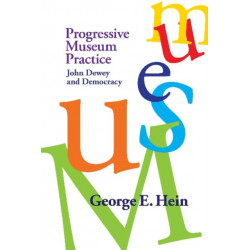
Progressive Museum Practice: John Dewey and Democracy (Bog, Hardback, Engelsk)
George E. Hein explores the impact on current museum theory and practice of early 20th-century educational reformer John Dewey’s philosophy, covering philosophies that shaped today’s best practices.
Levering: Skaffevare (forvent 14 - 30 hverdage) -
AIDS, Behavior, and Culture: Understanding Evidence-Based Prevention (Bog, Hardback, Engelsk)
Arguing for a behavior-based approach, Green and Ruark make the case that the most effective AIDS programs are those that encourage fundamental behavioral changes such as abstinence, delay of sex, faithfulness, and cessation of injection drug use.
Levering: Skaffevare (forvent 14 - 30 hverdage) -
Prehistoric Hunter-Gatherers of the High Plains and Rockies: Third Edition (Bog, Hardback, Engelsk)
A comprehensive revision of the classic prehistory of the North American high plains.
Levering: Skaffevare (forvent 14 - 30 hverdage) -
Histories of Maize: Multidisciplinary Approaches to the Prehistory, Linguistics, Biogeography, Domestication, and Evolution of Maize (Bog, Hardback, Engelsk)
Histories of Maize is the most comprehensive reference source on the botanical, genetic, archaeological, and anthropological aspects of ancient maize published to date.
Levering: Skaffevare (forvent 14 - 30 hverdage) -
Maritime Archaeology: A Technical Handbook, Second Edition (Bog, Hardback, Engelsk)
Jeremy Green's systematic overview of maritime archaeology offers a step-by-step description of this fast-growing field.
Levering: Skaffevare (forvent 14 - 30 hverdage) -
Past and Present in Hunter Gatherer Studies (Bog, Hardback, Engelsk)
This volume shows how hunter gatherer societies maintain their traditional lifeways in the face of interaction with neighboring herders, farmers, and traders.
Levering: Skaffevare (forvent 14 - 30 hverdage)