Left Coast Press Inc Forlag
-
The Origin of Cultures: How Individual Choices Make Cultures Change (Bog, Paperback / softback, Engelsk)
In this provocative and important book, renowned anthropologist W. Penn Handwerker shows that individual choices, from the fatal to the mundane, are fundamentally questions of culture—what it is, where it comes from, and the complex ways it changes and evolves.
Levering: Skaffevare (forvent 14 - 30 hverdage) -
Islamic Art and Archaeology in Palestine (Bog, Paperback / softback, Engelsk)
Myriam Rosen-Ayalon's introduction to Palestinian Islamic art and archeology presents here for the first time the multifaceted and long-lasting artistic achievements of this period.
Levering: Skaffevare (forvent 14 - 30 hverdage) -
Controversies in Archaeology (Bog, Paperback / softback, Engelsk)
Alice Beck Kehoe offers introductory students a method of evaluating and assessing claims about the past in this reader-friendly, concise text, using examples from Native American origins to ancient astronauts.
Levering: Skaffevare (forvent 14 - 30 hverdage) -
Protecting Catalhoyuk: Memoir of an Archaeological Site Guard (Bog, Paperback / softback, Engelsk)
As part of the innovative, multivocal output from the famous Turkish Neolithic site of Çatalhöyük, we hear from one of the site guards, Sadrettin Dural, who tells the story of the excavation from the point of view of the “Other.”
Levering: Skaffevare (forvent 14 - 30 hverdage) -
Qualitative Inquiry and the Conservative Challenge: Confronting Methodological Fundamentalism (Bog, Paperback / softback, Engelsk)
This volume is a call to qualitative researchers to respond to the political and methodological conservativism of the new millennium by emphasizing ethical practice and social justice.
Levering: Skaffevare (forvent 14 - 30 hverdage) -
A Need to Know: The Clandestine History of a CIA Family (Bog, Paperback / softback, Engelsk)
In scenes eerily parallel to the culture of fear inspired by our current War on Terror, A Need to Know explores the clandestine history of a CIA family defined, and ultimately destroyed, by their oath to keep toxic secrets during the Cold War.
Levering: Skaffevare (forvent 14 - 30 hverdage) -
Witches, Westerners, and HIV: AIDS and Cultures of Blame in Africa (Bog, Paperback / softback, Engelsk)
A witch's curse, an imperialist conspiracy, a racist plot—Alexander Rödlach draws on a decade of research and work in Zimbabwe to compare local beliefs about the cause of the HIV/AIDS epidemic in Africa and the impact of these beliefs on public health and advocacy programs.
Levering: Skaffevare (forvent 14 - 30 hverdage) -
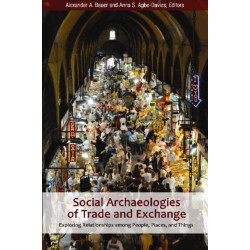
Social Archaeologies of Trade and Exchange: Exploring Relationships among People, Places, and Things (Bog, Paperback / softback, Engelsk)
The volume merges traditional archaeological concerns about trade and exchange with more contemporary issues of agency, identity and social meaning.
Levering: Skaffevare (forvent 14 - 30 hverdage) -
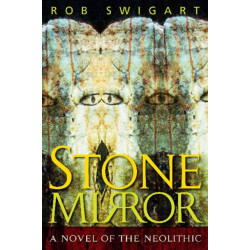
Stone Mirror: A Novel of the Neolithic (Bog, Paperback / softback, Engelsk)
Swigart’s novel provides both a basic reconstruction of Neolithic lifeways and a primer on contemporary archaeological politics and practice.
Levering: Skaffevare (forvent 14 - 30 hverdage) -
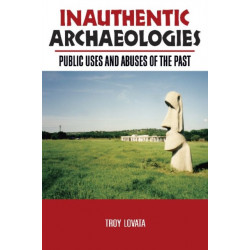
Inauthentic Archaeologies: Public Uses and Abuses of the Past (Bog, Paperback / softback, Engelsk)
In this concise, student-friendly look at the public appropriation of archaeology, Troy Lovata examines outright hoaxes, fanciful re-creations, artistic representations, commercial enterprises, and discredited replicas of the past.
Levering: Skaffevare (forvent 14 - 30 hverdage) -
Archaeological Field Schools: A Guide for Teaching in the Field (Bog, Paperback / softback, Engelsk)
Jane Baxter’s practical guide about how to run a successful field school offers archaeologists ways to maximize the educational and training benefits of these experiences.
Levering: Skaffevare (forvent 14 - 30 hverdage) -
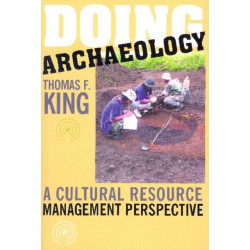
Doing Archaeology: A Cultural Resource Management Perspective (Bog, Paperback / softback, Engelsk)
A textbook for introductory archaeology students that focuses on the contemporary practice of cultural resources management archaeology.
Levering: Skaffevare (forvent 14 - 30 hverdage)