Left Coast Press Inc Forlag
Visning: Type : Alle | Sprog : Alle | Format : Alle
-
Coming to Narrative: A Personal History of Paradigm Change in the Human Sciences (Bog, Hardback, Engelsk)
Weaving autoethnography, theoretical exposition, and a close examination of social trends, distinguished scholar Arthur P. Bochner shows how the theoretical paradigms in the human sciences have developed and changed over the past four decades.
Levering: Skaffevare (forvent 14 - 30 hverdage) -
Witches, Westerners, and HIV: AIDS and Cultures of Blame in Africa (Bog, Paperback / softback, Engelsk)
A witch's curse, an imperialist conspiracy, a racist plot—Alexander Rödlach draws on a decade of research and work in Zimbabwe to compare local beliefs about the cause of the HIV/AIDS epidemic in Africa and the impact of these beliefs on public health and advocacy programs.
Levering: Skaffevare (forvent 14 - 30 hverdage) -
Witches, Westerners, and HIV: AIDS and Cultures of Blame in Africa (Bog, Hardback, Engelsk)
A witch's curse, an imperialist conspiracy, a racist plot—Alexander Rödlach draws on a decade of research and work in Zimbabwe to compare local beliefs about the cause of the HIV/AIDS epidemic in Africa and the impact of these beliefs on public health and advocacy programs.
Levering: Skaffevare (forvent 14 - 30 hverdage) -
Judging Exhibitions: A Framework for Assessing Excellence (Bog, Hardback, Engelsk)
Using criteria such as comfort, engagement, reinforcement, and meaningfulness, renowned museum researcher Beverly Serrell and colleagues have... Læs mere
Levering: Skaffevare (forvent 14 - 30 hverdage) -
Social Archaeologies of Trade and Exchange: Exploring Relationships among People, Places, and Things (Bog, Paperback / softback, Engelsk)
The volume merges traditional archaeological concerns about trade and exchange with more contemporary issues of agency, identity and social meaning.
Levering: Skaffevare (forvent 14 - 30 hverdage) -
Historical Archaeology: Why the Past Matters (Bog, Hardback, Engelsk)
What is historical archaeology and why is it important? Well-known archaeologist Barbara Little addresses these key questions for introductory students in this concise, inexpensive, and well-written text.
Levering: Skaffevare (forvent 14 - 30 hverdage) -
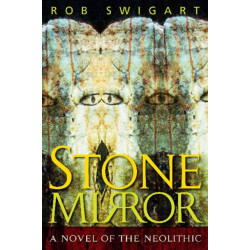
Stone Mirror: A Novel of the Neolithic (Bog, Paperback / softback, Engelsk)
Swigart’s novel provides both a basic reconstruction of Neolithic lifeways and a primer on contemporary archaeological politics and practice.
Levering: Skaffevare (forvent 14 - 30 hverdage) -
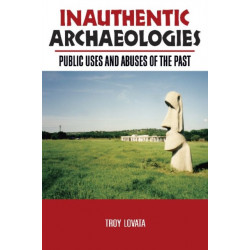
Inauthentic Archaeologies: Public Uses and Abuses of the Past (Bog, Paperback / softback, Engelsk)
In this concise, student-friendly look at the public appropriation of archaeology, Troy Lovata examines outright hoaxes, fanciful re-creations, artistic representations, commercial enterprises, and discredited replicas of the past.
Levering: Skaffevare (forvent 14 - 30 hverdage) -
Archaeological Field Schools: A Guide for Teaching in the Field (Bog, Paperback / softback, Engelsk)
Jane Baxter’s practical guide about how to run a successful field school offers archaeologists ways to maximize the educational and training benefits of these experiences.
Levering: Skaffevare (forvent 14 - 30 hverdage) -
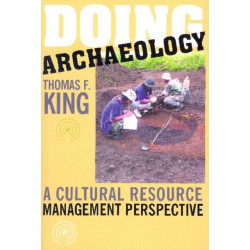
Doing Archaeology: A Cultural Resource Management Perspective (Bog, Paperback / softback, Engelsk)
A textbook for introductory archaeology students that focuses on the contemporary practice of cultural resources management archaeology.
Levering: Skaffevare (forvent 14 - 30 hverdage) -
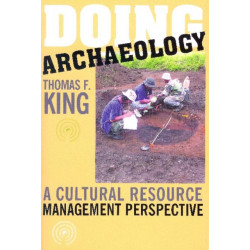
Doing Archaeology: A Cultural Resource Management Perspective (Bog, Hardback, Engelsk)
A textbook for introductory archaeology students that focuses on the contemporary practice of cultural resources management archaeology.
Levering: Skaffevare (forvent 14 - 30 hverdage) -
Essentials of Qualitative Inquiry (Bog, Paperback / softback, Engelsk)
Essentials of Qualitative Inquiry, Second Edition is the key resource for introducing applied researchers into the qualitative tradition due to its clear exposition, step-by-step approach, and emphasis on methodological coherence.
Levering: 6 - 9 hverdage