Liberty Fund Inc Forlag
Visning: Type : Alle | Sprog : Alle | Format : Alle
-
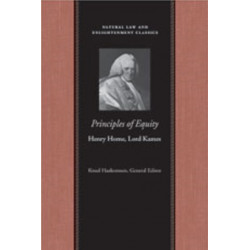
Principles of Equity (Bog, Hardback, Engelsk)
Henry Home, Lord Kames, was the complete 'Enlightenment man', concerned with the full spectrum of human knowledge and its social use. First published in 1760, this title - in his jurisprudence - explains the distinction between the nature of equity and common law.
Levering: Skaffevare (forvent 14 - 30 hverdage) -
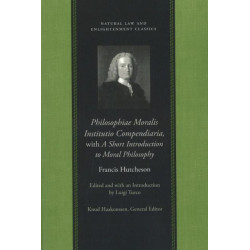
Philosophiae Moralis Institutio Compendiaria: with A Short Introduction to Moral Philosophy (Bog, Paperback / softback, Engelsk)
Hutcheson's "Institutio" was written as a textbook for university students and it therefore covers a curriculum... Læs mere
Levering: Skaffevare (forvent 14 - 30 hverdage) -
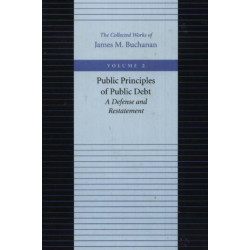
The Public Principles of Public Debt -- A Defense & Restatement: A Defense and Restatement (Bog, Hardback, Engelsk)
Says that our reliance on public debt has amassed a sort of orthodoxy that is commonly - and needlessly - assumed by taxpayers, by politicians, and by economists themselves.
Levering: Skaffevare (forvent 14 - 30 hverdage) -
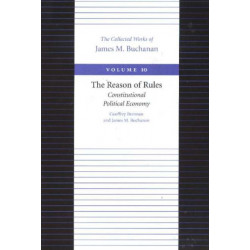
The Reason of Rules -- Constitutional Politics Economy: Constitutional Political Economy (Bog, Hardback, Engelsk)
Sketches out a methodological and analytical framework for the establishment of rules. This book points out that the consideration of rules has its roots in classical economics and has been hinted at in the work of some contemporary economists.
Levering: Skaffevare (forvent 14 - 30 hverdage) -
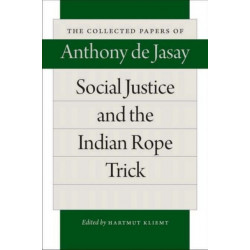
Social Justice & the Indian Rope Trick (Bog, Hardback, Engelsk)Levering: Skaffevare (forvent 14 - 30 hverdage)
-
State (Bog, Paperback / softback, Engelsk)
An analysis of modern political arrangements that views the state as acting in its own interest contrary to the interests of individuals and even of an entire society.
Levering: Skaffevare (forvent 14 - 30 hverdage) -
Selected Writings of Lord Acton, Volume 3 -- Essays in Religion, Politics, & Morality (Bog, Paperback / softback, Engelsk)
Lord Acton was among the most illustrious historians of 19th-century England, a man of great learning with a deep devotion to individual liberty and a profound understanding of history. This volume offers a collection of Acton essays.
Levering: Skaffevare (forvent 14 - 30 hverdage) -
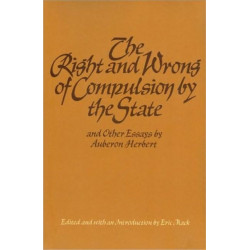
"The Right & Wrong of Compulsion by the State, & other Essays (Bog, Hardback, Engelsk)
Auberon Herbert (1838-1906) is an eloquent, forceful, and uncompromising defender of liberty. This volume contains ten essays.
Levering: Skaffevare (forvent 14 - 30 hverdage) -
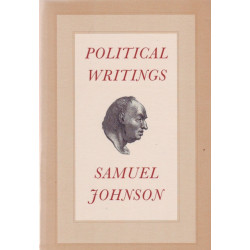
Political Writings (Bog, Paperback / softback, Engelsk)
This volume contains 24 of Samuel Johnson's essays on the great social, economic and political issues of his time. These include "Taxation No Tyranny", "An Introduction to the Political State of Great Britain", "Thoughts on the Coronation of King George III", and "The Patriot".
Levering: Skaffevare (forvent 14 - 30 hverdage) -
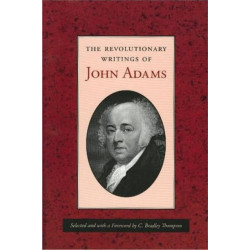
The Revolutionary Writings of John Adams (Bog, Paperback / softback, Engelsk)
John Adams was one of the principal framers of the American Republic and the successor to Washington as president. This volume presents some of the principal... Læs mere
Levering: Skaffevare (forvent 14 - 30 hverdage) -
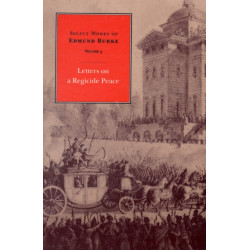
Select Works of Edmund Burke, Volume 3: Letters on a Regicide Peace (Bog, Paperback / softback, Engelsk)
Part of a three-volume set, this text presents selected work of Edmund Burke on English history and political thought. This third volume presents his "Letters on a Regicide Peace"(1795-1796).
Levering: Skaffevare (forvent 14 - 30 hverdage) -
Tocqueville's Voyages: The Evolution of His Ideas and Their Journey Beyond His Time (Bog, Paperback / softback, Engelsk)Levering: Skaffevare (forvent 14 - 30 hverdage)