Liverpool University Press Forlag
Visning: Type : Alle | Sprog : Engelsk | Format : Paperback / softback Der vises kun varer på engelsk
-
Nazism 1919–1945 Volume 4: The German Home Front in World War II: A Documentary Reader (Bog, Paperback / softback, Engelsk)
It illuminates the nature of Nazism and the regime it established by documenting politics and life in wartime Germany: government and party, law and terror, welfare and social planning, sex and population policy, women, youth, propoganda, morale and resistance.
Levering: 6 - 9 hverdage -
Citadel (Bog, Paperback / softback, Engelsk)
Shortlisted for Forward Prize for Best First Collection 2020Poetry Book of the Month - The Telegraph May 2020Juana of Castile (commonly referred to as Juana la Loca - Joanna the Mad) was a sixteenth-century Queen of Spain, daughter of the instigators of the Inquisition.
Levering: 6 - 9 hverdage -
Black Intersectionalities: A Critique for the 21st Century (Bog, Paperback / softback, Engelsk)
An important collection which explores the complex interrelationships between race, gender, and sex as these are conceptualised within contemporary thought.
Levering: 6 - 9 hverdage -
Phlegon of Tralles' Book of Marvels (Bog, Paperback / softback, Engelsk)
The Book of Marvels, a compilation of marvellous events of a grotesque, bizarre or sensational nature, was composed in the second century A.D.
Levering: 6 - 9 hverdage -
Chronicon Paschale 284-628 (Bog, Paperback / softback, Engelsk)
The Chronicon Paschale is one of the major constituents of the Byzantine chronographic tradition covering the late antique period.
Levering: 6 - 9 hverdage -
Nazism 1919–1945 Volume 1: The Rise to Power 1919–1934: A Documentary Reader (Bog, Paperback / softback, Engelsk)
Volume 1 of this series of documents with commentary covers the period from the founding of the Nazi Party in 1919 to Hitler's assumption of the office of Fuhrer and Reich Chancellor of 1 August 1934.
Levering: 6 - 9 hverdage -
How To Wash A Heart (Bog, Paperback / softback, Engelsk)
Always at the centre of her books and performances are the experiences of the body, and, whether she is exploring racism, violence, the experiences of diaspora communities in India,... Læs mere
Levering: 6 - 9 hverdage -
Augustus, First Roman Emperor: Power, Propaganda and the Politics of Survival (Bog, Paperback / softback, Engelsk)
Rome's first emperor, Augustus, the adopted son of Julius Caesar, has probably had the most lasting effect on history of all... Læs mere
Levering: 6 - 9 hverdage -
Hands-on Palaeontology: A Practical Manual (Bog, Paperback / softback, Engelsk)
A comprehensible reference manual for palaeontologists on many aspects of their science. Topics discussed range from the esoteric, such as palaeoecology and preservation, to the practical, such as the storing of specimens and photography.
Levering: 6 - 9 hverdage -
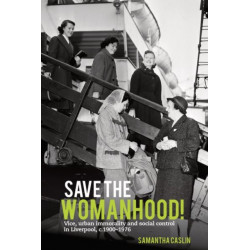
Save the Womanhood!: Vice, urban immorality and social control in Liverpool, c. 1900-1976 (Bog, Paperback / softback, Engelsk)
The history of the women who travelled through Liverpool in search of work and adventure, and the women who tried to... Læs mere
Levering: 6 - 9 hverdage -
Keats’s Negative Capability: New Origins and Afterlives (Bog, Paperback / softback, Engelsk)
Few critical terms coined by poets are more famous than “negative capability.” Though Keats uses the mysterious term only once, a consensus about... Læs mere
Levering: 6 - 9 hverdage -
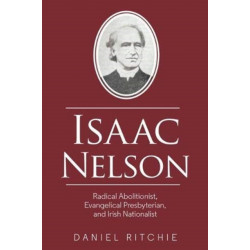
Isaac Nelson: Radical Abolitionist, Evangelical Presbyterian, and Irish Nationalist (Bog, Paperback / softback, Engelsk)
A fascinating study that analyses Isaac Nelson’s contribution to the history of antislavery, evangelical revivalism, Ulster Presbyterianism, and Irish nationalism, while keeping in mind the wider British and transatlantic context in which he operated.
Levering: 6 - 9 hverdage