Macat International Limited Forlag
Visning: Type : Alle | Sprog : Alle | Format : Alle
-
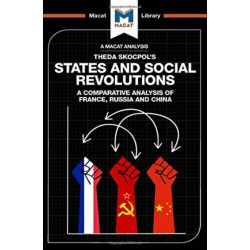
An States and Social Revolutions: A Comparative Analysis of France, Russia, and China (Bog, Hardback, Engelsk)
The modern world has been marked by social revolutions that have transformed the states where they occurred. Theda Skocpol examines three of these uprisings—the French, Russian, and Chinese revolutions—to consider the forces that make such dramatic upheaval possible.
Levering: Skaffevare (forvent 14 - 30 hverdage) -
An Rights of Man (Bog, Hardback, Engelsk)
Born in Britain in 1737, Thomas Paine had a humble, religious upbringing and very little formal education. The course of his life turned in 1774, when he met the great American statesman Benjamin Franklin in London.
Levering: Skaffevare (forvent 14 - 30 hverdage) -
An Common Sense (Bog, Hardback, Engelsk)
Published in 1776, when America was teetering on the brink of war with Britain, Common Sense galvanized the colonists and George Washington’s army, influencing not only the course of the Revolutionary War, but also the resultant government.
Levering: Skaffevare (forvent 14 - 30 hverdage) -
An Analysis of Alexander Hamilton, James Madison, and John Jay's The Federalist Papers (Bog, Hardback, Engelsk)
One of the most influential works of political theory ever written, The Federalist Papers collects 85 essays from 1787 and 1788, when the United States was a new country looking to find its way politically
Levering: Skaffevare (forvent 14 - 30 hverdage) -
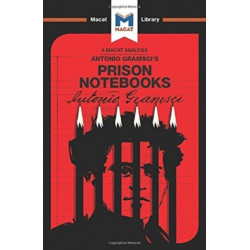
An Analysis of Antonio Gramsci's Prison Notebooks (Bog, Hardback, Engelsk)
An important Marxist work, Prison Notebooks (1948) argues that we must understand societies both in terms of their economic relationships and their cultural beliefs.
Levering: Skaffevare (forvent 14 - 30 hverdage) -
An Analysis of Alexis de Tocqueville's Democracy in America (Bog, Hardback, Engelsk)
Democracy in America, published in 1835 and 1840, challenged conventional thinking about democracy when it first appeared and is still cited today for its in-depth analysis of what makes a successful democracy.
Levering: Skaffevare (forvent 14 - 30 hverdage) -
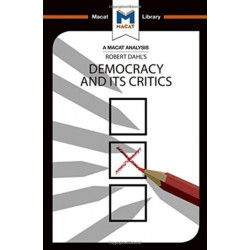
An Democracy and its Critics (Bog, Hardback, Engelsk)
Before the publication of Nature’s Metropolis in 1991, historians generally treated urban and rural areas as distinct from one another, following separate lines of development and maturity.
Levering: Skaffevare (forvent 14 - 30 hverdage) -
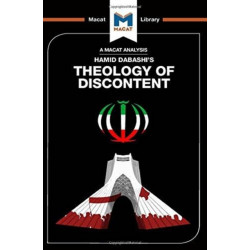
An Theology of Discontent: The Ideological Foundation of the Islamic Revolution in Iran (Bog, Hardback, Engelsk)
Hamid Dabashi suggests that the Iranian Revolution of 1978-9 would not have taken place had it not been for the influential ideas set out by eight Iranian Islamic thinkers in the decades before it occurred.
Levering: Skaffevare (forvent 14 - 30 hverdage) -
An Iran: A People Interrupted (Bog, Hardback, Engelsk)
Written amid the political fallout and `war on terror’ following the 9/11 terrorist attacks on New York—Dabashi’s adopted city—in 2001, Iran: A People Interrupted offers an insider’s insight into the Iranian psyche.
Levering: Skaffevare (forvent 14 - 30 hverdage) -
An Analysis of Edmund Burke's Reflections on the Revolution in France: Reflections on the Revolution in France (Bog, Hardback, Engelsk)
First published in 1790, Burke’s Reflections rejects the ideas that had inspired radical... Læs mere
Levering: Skaffevare (forvent 14 - 30 hverdage) -
An Symposium (Bog, Hardback, Engelsk)
More than 2,500 years after it was written, Symposium remains a key text for philosophers, historians, writers, artists and politicians. Plato imagines seven important historical figures, including the philosopher Socrates, debating eros (human love and desire).
Levering: Skaffevare (forvent 14 - 30 hverdage) -
An Analysis of Friedrich Nietzsche's Beyond Good and Evil (Bog, Hardback, Engelsk)
No philosopher could be a better example of creative thinking in action than Friedrich Nietzsche: a German iconoclast who systematically... Læs mere
Levering: Skaffevare (forvent 14 - 30 hverdage)