Maney Publishing Forlag
-
Uncovering the Hidden: The Works and Life of Der Nister (Bog, Hardback, Engelsk)
The book is based on the papers presented at the Mendel Friedman Yiddish conference held at St Hilda's College, University of Oxford, in August 2012, revisits the rich and diverse legacy of the Yiddish writer Pinkhas Kahanovitsh, known by his penname Der Mister.
Levering: Skaffevare (forvent 14 - 30 hverdage) -
Chicago of the Balkans: Budapest in Hungarian Literature 1900-1939 (Bog, Hardback, Engelsk)
This is the first English-language study of competing metropolitan narratives in Hungarian literature that spans both the liberal late Habsburg and post-liberal, Christian-national eras.
Levering: Skaffevare (forvent 14 - 30 hverdage) -
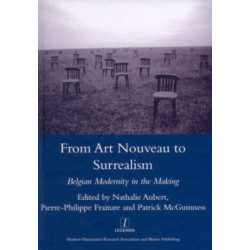
From Art Nouveau to Surrealism: European Modernity in the Making (Bog, Hardback, Engelsk)
This book explores an artistic culture, which produces the unclassifiable, as a rule. It presents Belgian artistic culture from the 1890s to the 1940s. The book examines the theme of doubleness and reflection in Belgian Symbolism.
Levering: Skaffevare (forvent 14 - 30 hverdage) -
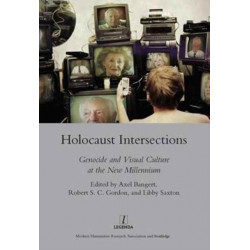
Holocaust Intersections: Genocide and Visual Culture at the New Millennium (Bog, Hardback, Engelsk)
This book charts how visual culture at the new millennium has engaged with the Holocaust and provides insight into a number of significant trends in the production, distribution and reception of recent works about the Nazi genocide.
Levering: Skaffevare (forvent 14 - 30 hverdage) -
Contemporary Italian Women Writers and Traces of the Fantastic: The Creation of Literary Space (Bog, Hardback, Engelsk)
Contemporary Italian Women Writers and Traces of the Fantastic
Levering: Skaffevare (forvent 14 - 30 hverdage) -
Wanderers Across Language: Exile in Irish and Polish Literature of the Twentieth Century (Bog, Hardback, Engelsk)
Wanderers Across Language
Levering: Skaffevare (forvent 14 - 30 hverdage) -
Journeys of Remembrance: Representations of Travel and Memory in Post-war French and German Literature (Bog, Hardback, Engelsk)
Journeys of Remembrance
Levering: Skaffevare (forvent 14 - 30 hverdage) -
Trypillia Mega-Sites and European Prehistory: 4100-3400 BCE (Bog, Hardback, Engelsk)
Ignored for many years, the archaeology of the Tripillia/Tripolye sites found in modern Ukraine and Moldova can make important contributions to... Læs mere
Levering: Skaffevare (forvent 14 - 30 hverdage) -
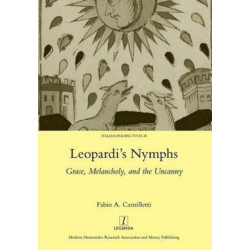
Leopardi's Nymphs: Grace, Melancholy, and the Uncanny (Bog, Hardback, Engelsk)
The author gives a ground-breaking interpretation of the way Leopardi negotiates the original fracture between poetry and philosophy that characterizes Western culture. He argues that the nymph can be seen as the inspirational power allowing the utterance of a new kind of poetry.
Levering: Skaffevare (forvent 14 - 30 hverdage) -
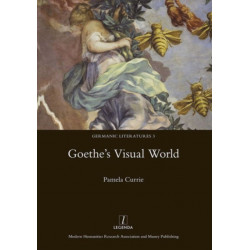
Goethe's Visual World (Bog, Hardback, Engelsk)
Goethe's ideas on colour and imagery crossed many borderlines: those of artistic processes and philosophical aesthetics, art history and colour theory, together with the science of... Læs mere
Levering: Skaffevare (forvent 14 - 30 hverdage) -
Dada as Text, Thought and Theory (Bog, Hardback, Engelsk)
This book aims to show new ways in which Dada explains itself, and that Dada, in turn, can help to animate and expand debates about a diverse range of other fields including poetics, psychoanalysis, ethics, semantics, intellectual history and science.
Levering: Skaffevare (forvent 14 - 30 hverdage) -
Dante and Epicurus: A Dualistic Vision of Secular and Spiritual Fulfilment (Bog, Hardback, Engelsk)
This book explores Dante's reception and polemical representation of Epicureanism, and the light this sheds on his dualistic theory of the secular and spiritual hemispheres of human conduct. It also addresses a significant gap in Dante scholarship.
Levering: Skaffevare (forvent 14 - 30 hverdage)