Maney Publishing Forlag
Visning: Type : Alle | Sprog : Alle | Format : Alle
-
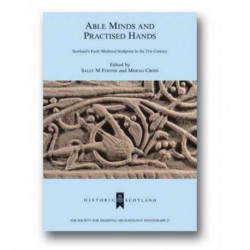
Able Minds and Practiced Hands: Scotland's Early Medieval Sculpture in the 21st Century (Bog, Hardback, Engelsk)
This book presents essays that exemplify key themes including the interdependence of conservation, research and access; the need for a 21st-century inventory of the medieval sculpture; the breadth and value of the wide range of the research tools; and conservation issue.
Levering: Skaffevare (forvent 14 - 30 hverdage) -
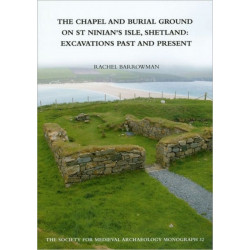
The Chapel and Burial Ground on St Ninian's Isle, Shetland: Excavations Past and Present: v. 32: Excavations Past and Present (Bog, Paperback / softback, Engelsk)
This book describes the results of a small research project undertaken at Glasgow... Læs mere
Levering: Skaffevare (forvent 14 - 30 hverdage) -
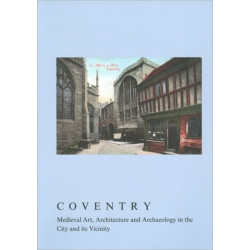
Coventry: Medieval Art, Architecture and Archaeology in the City and Its Vicinity (Bog, Paperback / softback, Engelsk)
This book is an outcome of the British archaeological association conference on Medieval Art, architecture and archaeology in the city and its vicinity in 2007. It addresses the rehabilitation of Coventry's medieval past and describes the evolution of archaeological enquiry.
Levering: Skaffevare (forvent 14 - 30 hverdage) -
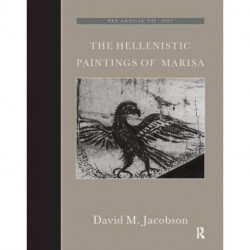
The Hellenistic Paintings of Marisa (Bog, Hardback, Engelsk)
In early June 1902, John Peters and Hermann Thiersch were alerted to the discovery of two painted burial caves at Marisa, less than 40 miles southwest from Jerusalem.... Læs mere
Levering: Skaffevare (forvent 14 - 30 hverdage) -
The History of the Merchant Taylors' Company (Bog, Hardback, Engelsk)
One of the 'Great Twelve' livery companies of the City of London, the Merchant Taylors' Company has been in existence for some seven hundred years. This new history will chart the remarkable story of the Company and its members from its origins until the 1950s.
Levering: Skaffevare (forvent 14 - 30 hverdage) -
King's Lynn and the Fens: Medieval Art, Architecture and Archaeology (Bog, Paperback / softback, Engelsk)
This book is an outcome of the British archaeological association conference on Medieval Art, architecture and archaeology in King's... Læs mere
Levering: Skaffevare (forvent 14 - 30 hverdage) -
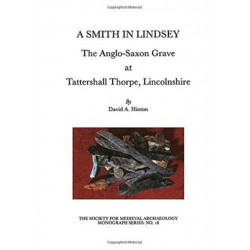
A Smith in Lindsey: The Anglo-Saxon Grave at Tattershall Thorpe, Lincolnshire (Bog, Paperback / softback, Engelsk)
A unique early medieval assemblage of tools and associated fragments of metal and glass was found during the excavation of a prehistoric and Roman site in 1981. Post-excavation revealed that the objects were Anglo-Saxon and had been placed in wooden boxes in a grave.
Levering: Skaffevare (forvent 14 - 30 hverdage) -
The Shapwick Project, Somerset: A Rural Landscape Explored (Bog, Paperback / softback, Engelsk)
This book provides an introduction to the Shapwick Project's objectives, geographical background and previous work in the Somerset. It deals with excavations in the outlying parish and focuses on work in the village at Shapwick House.
Levering: Skaffevare (forvent 14 - 30 hverdage) -
Uncovering the Hidden: The Works and Life of Der Nister (Bog, Hardback, Engelsk)
The book is based on the papers presented at the Mendel Friedman Yiddish conference held at St Hilda's College, University of Oxford, in August 2012, revisits the rich and diverse legacy of the Yiddish writer Pinkhas Kahanovitsh, known by his penname Der Mister.
Levering: Skaffevare (forvent 14 - 30 hverdage) -
Utrecht: Britain and the Continent - Archaeology, Art and Architecture (Bog, Paperback / softback, Engelsk)
This book presents the latest research on the cities monuments from the arrival of Willibrord and Boniface and the establishment of the Bishopric. It focuses on 12th century sculptural iconography, manuscript production, fonts, secular architecture and the Gothic cathedral.
Levering: Skaffevare (forvent 14 - 30 hverdage) -
Dress at the Court of King Henry VIII: The Wardrobe Book of the Wardrobe of the Robes prepared by James Worsley in December 1516, edited from Harley MS 2284, and his Inventory prepared on 17 January 1521, edited from Harley MS 4217, both in the British Li (Bog, Paperback / softback, Engelsk)
This book focuses on the dress of one royal individual, Henry and his physique, portraiture, personal wardrobe, jewellery, regalia and ceremonial robes. It is the only other substantial record of the king's clothes in English archives on wardrobe and inventory.
Levering: Skaffevare (forvent 14 - 30 hverdage) -
Chicago of the Balkans: Budapest in Hungarian Literature 1900-1939 (Bog, Hardback, Engelsk)
This is the first English-language study of competing metropolitan narratives in Hungarian literature that spans both the liberal late Habsburg and post-liberal, Christian-national eras.
Levering: Skaffevare (forvent 14 - 30 hverdage)