Oro Editions Forlag
Visning: Type : Alle | Sprog : Engelsk | Format : Paperback / softback Der vises kun varer på engelsk
-
Design Build Studios in Latin America: Teaching through a social agenda (Bog, Paperback / softback, Engelsk)
Design-Build Studios in Latin America asks questions about what matters in the present-day training and practice of architecture if we want our discipline to play a leading role in the ecological and social challenges of our time.
Levering: Skaffevare (forvent 14 - 30 hverdage) -
The Hypospace of Japanese Architecture (Bog, Paperback / softback, Engelsk)
The Hypospace of Japanese Architecture pushes past clichés of an exotic Japan to confront the modernity of an island nation whose habit of importing foreign ideas is less about assimilation than transformation, less a process of indigenisation than one of cultural invention.
Levering: 6 - 9 hverdage -
Seeing It All: Women Photographers Expose our Planet (Bog, Paperback / softback, Engelsk)
Seeing It All goes beyond the glamorising images of nature and wildlife that are typically shown. Here, images connect the seen to the hidden, abundance with disappearance, icebergs to indigenous portraits, animal sanctuaries and climate scientists, and heart to head.
Levering: Skaffevare (forvent 14 - 30 hverdage) -
Approximate Translation: Media, Narrative, and Experience in Urban Design (Bog, Paperback / softback, Engelsk)
Approximate Translation is a poetic and practical rumination on how to incorporate what makes a city a city — stories about place, an unexpected encounter, the immediacy of experience — into practices of urban design.
Levering: 6 - 9 hverdage -
I, Nobot (Bog, Paperback / softback, Engelsk)
The book is a graphic novella written by two self-realised nobots who aim to help nearly seven billion fellow biological nobots (also known as humans) realise their true nature.
Levering: Skaffevare (forvent 14 - 30 hverdage) -
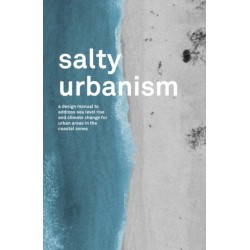
Salty Urbanism: a design manual to address sea level rise and climate change for urban areas in the coastal zones (Bog, Paperback / softback, Engelsk)
Overall, Salty Urbanism highlights the urgent need for cities and urban areas to adapt and prepare for the ongoing and future impacts of climate change.
Levering: 6 - 9 hverdage -
Co-Designing Publics (Bog, Paperback / softback, Engelsk)
Co-Designing Publics brings together a mix of academics, activists, and practitioners to discuss and debate discourses from scholarly research, grassroots activism, and design ideas for future action.
Levering: Skaffevare (forvent 14 - 30 hverdage) -
Reimagined Worlds: Narrative Placemaking for People, Play, and Purpose (Bog, Paperback / softback, Engelsk)
In Reimagined Worlds: Narrative Placemaking for People, Play, and Purpose, Margaret Chandra Kerrison presents an indispensable manifesto, compelling designers of environments and experiences to embrace a people-centred approach fueled by intentional narratives.
Levering: 6 - 9 hverdage -
Source Books in Architecture No. 16: Tatiana Bilbao ESTUDIO (Bog, Paperback / softback, Engelsk)
Focuses on the output of Tatiana Bilbao ESTUDIO, exposing and explaining the foundations and implications of their work.
Levering: 6 - 9 hverdage -
LA+ Exotique: Exotique (Bog, Paperback / softback, Engelsk)
LA+ EXOTIQUE showcases the award-winning designs and a comprehensive Salon des Refusés. The issue will also feature an essay by LA+ creative director Catherine Seavitt and interviews with... Læs mere
Levering: Skaffevare (forvent 14 - 30 hverdage) -
Fountain Safari (Bog, Paperback / softback, Engelsk)
A comprehensive, entertaining survey of fountains, sketching out their evolution over two millennia and across several cultures. Of interest to design professionals, landscape architects, urban designers, and students of the built environment.
Levering: 6 - 9 hverdage -
This Is Doug Hall: A Memoir (Bog, Paperback / softback, Engelsk)
Although lavishly and beautifully illustrated, this is not a book only to be looked at but one to be thoroughly read and enjoyed. In an account at once intimate and historical, Doug Hall writes eloquently about his development as a person and an artist.
Levering: Skaffevare (forvent 14 - 30 hverdage)