Pennsylvania State University Press Forlag
-
Ingres and the Studio: Women, Painting, History (Bog, Hardback, Engelsk)
An exploration of the portrait art of Jean Auguste Dominique Ingres, focusing on his studio practice and his training of students.
Levering: 6 - 9 hverdage -
Bazille: Purity, Pose, and Painting in the 1860s (Bog, Hardback, Engelsk)
This study seeks to situate Bazille within the complex art world of the 1860s. It examines a series of major paintings and critical essays by Bazille and his contemporaries and frames them within the modernist discourse about purity, or respecting the proper limits of the medium.
Levering: 6 - 9 hverdage -
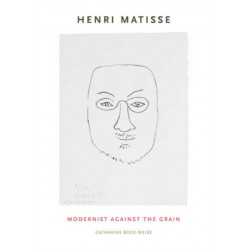
Henri Matisse: Modernist Against the Grain (Bog, Hardback, Engelsk)
A series of linked essays that considers different aspects of Matisse's life and work, revealing how the artist worked against many of the main tenets of modernism.
Levering: 6 - 9 hverdage -
Siting China in Germany: Eighteenth-Century Chinoiserie and Its Modern Legacy (Bog, Hardback, Engelsk)
Introduces and interprets the complex history of German chinoiserie in the long eighteenth century, focusing on its emergence in literature and the arts.
Levering: Skaffevare (forvent 14 - 30 hverdage) -
Paul Verlaine: A Bilingual Selection of His Verse (Bog, Hardback, Engelsk)
An anthology of works by nineteenth-century French poet Paul Verlaine, presenting both the French texts and new translations and setting the poems in the context of Verlaine’s troubled life and his literary development.
Levering: 6 - 9 hverdage -
Without God: Michel Houellebecq and Materialist Horror (Bog, Hardback, Engelsk)
Addresses the religious, metaphysical, and existential dimensions of French novelist Michel Houellebecq’s work. Argues that Houellebecq is the foremost contemporary chronicler of the spiritual anxieties of Western and specifically French modernity.
Levering: 6 - 9 hverdage -
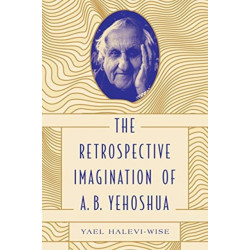
The Retrospective Imagination of A. B. Yehoshua (Bog, Hardback, Engelsk)
Explores the layers of signification that A. B. Yehoshua constructs in his fiction to draw readers into a critical analysis of the condition of Israel as well as his representations of place, vocational identities, names, holidays, and love.
Levering: Skaffevare (forvent 14 - 30 hverdage) -
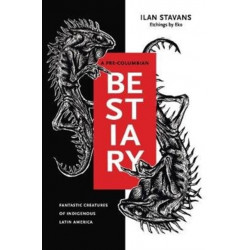
A Pre-Columbian Bestiary: Fantastic Creatures of Indigenous Latin America (Bog, Hardback, Engelsk)
Explores forty-six religious, mythical, and imaginary creatures that are integral to the aboriginal worldview of Aymara, Aztecs, Incas, Maya, Nahua, Tabascos, and other cultures of Latin America.
Levering: 6 - 9 hverdage -
Objects of Vision: Making Sense of What We See (Bog, Hardback, Engelsk)
Examines a series of linked case studies that not only highlight moments of seeming disconnect between seeing and believing, including hoaxes, miracles, spirit paintings, manipulated photographs, and holograms, but also offer a sensory history of ways of seeing. Â
Levering: 6 - 9 hverdage -
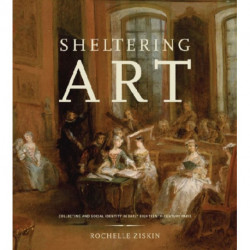
Sheltering Art: Collecting and Social Identity in Early Eighteenth-Century Paris (Bog, Hardback, Engelsk)
Explores the role of private art collections in the cultural, social, and political life of early eighteenth-century Paris.... Læs mere
Levering: 6 - 9 hverdage -
Apocalypse Illuminated: The Visual Exegesis of Revelation in Medieval Illustrated Manuscripts (Bog, Hardback, Engelsk)
Studies the illustration of Revelation in manuscripts from the ninth to the fifteenth century. Examines how twenty-five of the most important illustrated Apocalypses illustrate the biblical text and interpret it for diverse audiences.
Levering: 6 - 9 hverdage -
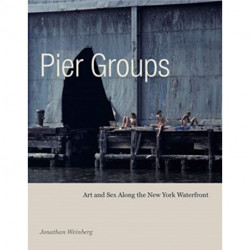
Pier Groups: Art and Sex Along the New York Waterfront (Bog, Hardback, Engelsk)
Explores the uses of the abandoned Hudson River docks in New York City by artists and a newly emerging gay subculture between 1971 and 1983.
Levering: 6 - 9 hverdage