Pennsylvania State University Press Forlag
-
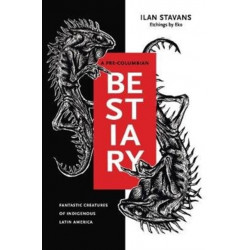
A Pre-Columbian Bestiary: Fantastic Creatures of Indigenous Latin America (Bog, Hardback, Engelsk)
Explores forty-six religious, mythical, and imaginary creatures that are integral to the aboriginal worldview of Aymara, Aztecs, Incas, Maya, Nahua, Tabascos, and other cultures of Latin America.
Levering: 6 - 9 hverdage -
Objects of Vision: Making Sense of What We See (Bog, Hardback, Engelsk)
Examines a series of linked case studies that not only highlight moments of seeming disconnect between seeing and believing, including hoaxes, miracles, spirit paintings, manipulated photographs, and holograms, but also offer a sensory history of ways of seeing. Â
Levering: 6 - 9 hverdage -
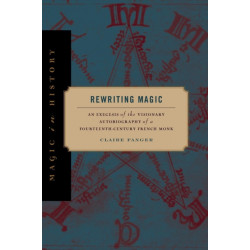
Rewriting Magic: An Exegesis of the Visionary Autobiography of a Fourteenth-Century French Monk (Bog, Paperback / softback, Engelsk)
Examines the text and background of The Flowers of Heavenly Teaching, an autobiography by the fourteenth-century Benedictine monk John of Morigny. Explores how the author negotiated the categories of magic and heresy in relation to Christianity.
Levering: 6 - 9 hverdage -
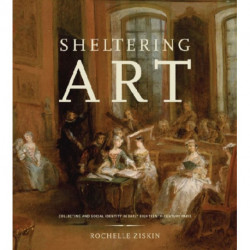
Sheltering Art: Collecting and Social Identity in Early Eighteenth-Century Paris (Bog, Hardback, Engelsk)
Explores the role of private art collections in the cultural, social, and political life of early eighteenth-century Paris.... Læs mere
Levering: 6 - 9 hverdage -
Apocalypse Illuminated: The Visual Exegesis of Revelation in Medieval Illustrated Manuscripts (Bog, Hardback, Engelsk)
Studies the illustration of Revelation in manuscripts from the ninth to the fifteenth century. Examines how twenty-five of the most important illustrated Apocalypses illustrate the biblical text and interpret it for diverse audiences.
Levering: 6 - 9 hverdage -
The Site of the Social: A Philosophical Account of the Constitution of Social Life and Change (Bog, Paperback / softback, Engelsk)
Inspired by Heidegger's concept of the clearing of being, and by Wittgenstein's ideas on human practice, Theodore Schatzki offers a novel approach to understanding the constitution and transformation of social life.
Levering: 6 - 9 hverdage -
Pier Groups: Art and Sex Along the New York Waterfront (Bog, Hardback, Engelsk)
Explores the uses of the abandoned Hudson River docks in New York City by artists and a newly emerging gay subculture between 1971 and 1983.
Levering: 6 - 9 hverdage -
What Things Do: Philosophical Reflections on Technology, Agency, and Design (Bog, Paperback / softback, Engelsk)
Focuses on how technologies mediate our actions and our world perceptions. Peter-Paul Verbeek examines the philosophy of... Læs mere
Levering: 6 - 9 hverdage -
Babylonia, the Gulf Region, and the Indus: Archaeological and Textual Evidence for Contact in the Third and Early Second Millennia B.C. (Bog, Paperback / softback, Engelsk)Levering: 6 - 9 hverdage
-
A Small Radius of Light: G. Daniel Massad, A Retrospective (Bog, Hardback, Engelsk)Levering: 6 - 9 hverdage
-
From Cyrus to Alexander: A History of the Persian Empire (Bog, Hardback, Engelsk)Levering: Skaffevare (forvent 14 - 30 hverdage)
-
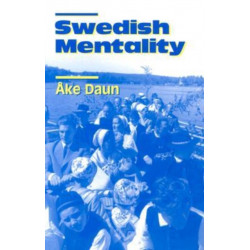
Swedish Mentality (Bog, Paperback / softback, Engelsk)
This text examines Swedish culture and mentality and draws upon statistics gathered over more than a decade of research. The author describes a range of factors influencing Swedish character, including population composition, rural background, and even climate.
Levering: 6 - 9 hverdage