Pennsylvania State University Press Forlag
Visning: Type : Alle | Sprog : Alle | Format : Alle
-
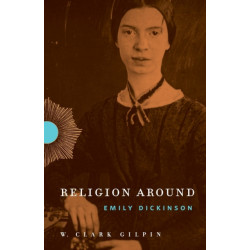
Religion Around Emily Dickinson (Bog, Paperback / softback, Engelsk)
Examines how the religious environment around Emily Dickinson, specifically New England Protestantism, helps in understanding her poetry, and conversely how her poetry brings attention to religious aspects of her culture and surroundings.
Levering: Skaffevare (forvent 14 - 30 hverdage) -
Thinking About Love: Essays in Contemporary Continental Philosophy (Bog, Paperback / softback, Engelsk)
A collection of essays exploring the nature and experience of love, its contradictions and limits, and its material and ideal forms.... Læs mere
Levering: 6 - 9 hverdage -
Sacred Shock: Framing Visual Experience in Byzantium (Bog, Hardback, Engelsk)
Art did not exist in Byzantium. Devotional objects - pectoral crosses, church mosaics, icons, and illuminated manuscripts - were regarded as infused... Læs mere
Levering: 6 - 9 hverdage -
Artworks: Meaning, Definition, Value (Bog, Paperback / softback, Engelsk)
What is art? What is it to understand a work of art? What is the value of art? Robert Stecker seeks to answer these central questions of aesthetics by placing them... Læs mere
Levering: Skaffevare (forvent 14 - 30 hverdage) -
The Political Responsibilities of Everyday Bystanders (Bog, Hardback, Engelsk)
A discussion of how everyday bystanders can learn to recognize and meet their shared and institutional political responsibilities for hunger, poverty, famine, civil war, wars of conquest and invasion, epidemics and pandemics, and genocide.
Levering: 6 - 9 hverdage -
America's Longest Run: A History of the Walnut Street Theatre (Bog, Paperback / softback, Engelsk)
Traces the history of the Walnut Street Theatre in Philadelphia from its founding in 1809. Documents the productions and players at the theater, and the difficulties it has faced from economic crises, changing tastes, and competition from new media.
Levering: Skaffevare (forvent 14 - 30 hverdage) -
A Sensory History Manifesto (Bog, Paperback / softback, Engelsk)
An exploration of the past, present, and future of sensory history.
Levering: 6 - 9 hverdage -
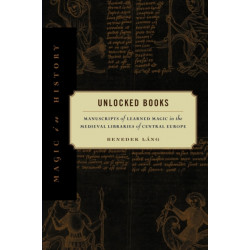
Unlocked Books: Manuscripts of Learned Magic in the Medieval Libraries of Central Europe (Bog, Paperback / softback, Engelsk)
Presents and analyzes texts of learned magic written in medieval Central Europe (Poland, Bohemia, and Hungary), and attempts to identify their authors, readers, and collectors.
Levering: Skaffevare (forvent 14 - 30 hverdage) -
Beginning Biblical Hebrew (Bog, Hardback, Engelsk)
Includes exercises that are drawn from the "Hebrew Bible".
Levering: 6 - 9 hverdage -
The Birth of God: The Bible and the Historian (Bog, Paperback / softback, Engelsk)
A volume of essays on the Hebrew Bible. Jean Bottero sees the Bible as a variety of documents which reveal much about their time of origin, historical... Læs mere
Levering: 6 - 9 hverdage -
Looking at Trauma: A Tool Kit for Clinicians (Bog, Paperback / softback, Engelsk)
.
Levering: 6 - 9 hverdage -
Catherine of Aragon: Infanta of Spain, Queen of England (Bog, Hardback, Engelsk)
Examines the life of Catherine of Aragon, focusing on her personal possessions and the items she bequeathed to those she left behind, to better... Læs mere
Levering: 6 - 9 hverdage