SAGE Publications Ltd Forlag
-
Key Concepts in Corporate Social Responsibility (Bog, Paperback / softback, Engelsk)
With detailed coverage and cross-referencing for each concept and over 50 concepts introduced, this guide to both the theory and implementation of CSR is an indispensable reference for any student of the subject.
Levering: Print on Demand (forvent 14 - 30 hverdage) -
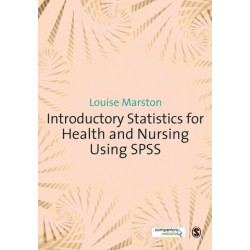
Introductory Statistics for Health and Nursing Using SPSS (Bog, Paperback / softback, Engelsk)
Specifically written for students in the health sciences, this book covers simple statistical concepts and then shows how to analyse data using SPSS.
Levering: Print on Demand (forvent 14 - 30 hverdage) -
Key Concepts in Economic Geography (Bog, Paperback / softback, Engelsk)
Part of the Key Concepts in Human Geography series, this is a companion text dedicated to economic geography presenting 23 key concepts and demonstrating their historical roots and contemporary applications.
Levering: Skaffevare (forvent 14 - 30 hverdage) -
Investigating Sociological Theory (Bog, Paperback / softback, Engelsk)
An original and enlivening book that really stands out amidst the drier, denser titles currently on the market. Brings social theory to life in an exciting and elegant way.
Levering: Print on Demand (forvent 14 - 30 hverdage) -
Learning Threads for the EYFS: Practical activities for 3-5 year olds (Bog, Paperback / softback, Engelsk)
This book presents clear and concise practical activities that are detailed and closely linked to early years specifications and... Læs mere
Levering: 6 - 9 hverdage -
Manage Your Money (Bog, Paperback / softback, Engelsk)
A Super Quick guide to successfully managing your money as you study, from funding and budgeting to managing your debt.
Levering: 6 - 9 hverdage -
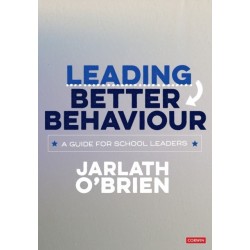
Leading Better Behaviour: A Guide for School Leaders (Bog, Paperback / softback, Engelsk)
In this companion to Better Behaviour, Jarlath O’Brien combines insights from his own experience of improving behaviour in schools, research and policy in a practical guide to support current and aspiring school leaders.
Levering: Print on Demand (forvent 14 - 30 hverdage) -
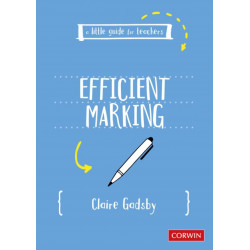
A Little Guide for Teachers: Efficient Marking (Bog, Paperback / softback, Engelsk)
A Little Guide for Teachers: Efficient Marking is full of highly innovative, practical and labour-saving strategies that shows busy teachers exactly how to provide feedback which moves learning forward, but which also inspires and motivates pupils to want to improve.
Levering: 6 - 9 hverdage -
A Little Guide for Teachers: Teacher Wellbeing and Self-care (Bog, Paperback / softback, Engelsk)
A Little Guide for Teachers: Teacher Wellbeing and Self-Care explains how wellbeing is essential to effective teaching, and gives teachers practical tools to take back control of the classroom.
Levering: 6 - 9 hverdage -
Is Assessment Fair? (Bog, Paperback / softback, Engelsk)
Drawing on international examples from the UK, US, Australia and South East Asia, this book offers a commentary on fairness that is highly relevant to the changing context of assessment today.
Levering: Print on Demand (forvent 14 - 30 hverdage) -
A Little Guide for Teachers: Diversity in Schools (Bog, Paperback / softback, Engelsk)
A Little Guide for Teachers: Diversity in Schools aims to provide starting points for teachers and leaders in creating a curriculum, either across disciplines or within subjects, that is as deep and diverse as their students.
Levering: 6 - 9 hverdage -
Key Questions in Healthcare Law and Ethics (Bog, Paperback / softback, Engelsk)
By using a unique format made up of over 150 frequently asked questions and corresponding answers, Key Questions in Healthcare covers the what, why, where and how in legal and ethical issues related to healthcare.
Levering: 6 - 9 hverdage