University of Nebraska Press Forlag
Visning: Type : Alle | Sprog : Alle | Format : Alle
-
Contesting French West Africa: Battles Over Schools and the Colonial Order, 1900–1950 (Bog, Paperback / softback, Engelsk)
Harry Gamble examines the controversies of political and educational reform in French West Africa from the early to mid-twentieth century.
Levering: Skaffevare (forvent 14 - 30 hverdage) -
Transmovimientos: Latinx Queer Migrations, Bodies, and Spaces (Bog, Hardback, Engelsk)
This anthology features work by and about queer, trans, and gender nonconforming Latinx communities, including immigrants and social dissidents who reflect on and write about diaspora and migratory movements while navigating geographical and embodied spaces in the United States.
Levering: 6 - 9 hverdage -
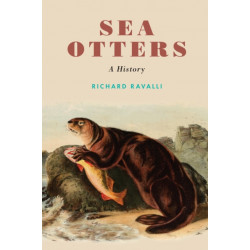
Sea Otters: A History (Bog, Paperback / softback, Engelsk)
An examination of sea otters in a Pacific World context and an exploration of how this iconic sea mammal once defined the world’s largest oceanscape.
Levering: Skaffevare (forvent 14 - 30 hverdage) -
Bury My Heart at Chuck E. Cheese's (Bog, Paperback / softback, Engelsk)
This powerful and inviting collection of Tiffany Midge’s musings on life, politics, and identity as a Native woman in America, reminds us that laughter is precious, even sacred.
Levering: Skaffevare (forvent 14 - 30 hverdage) -
Engendering Islands: Sexuality, Reproduction, and Violence in the Early French Caribbean (Bog, Hardback, Engelsk)
Ashley M. Williard argues that early Caribbean reconstructions of masculinity and femininity sustained occupation, slavery, and nascent ideas of race.
Levering: Skaffevare (forvent 14 - 30 hverdage) -
I Tell You Now: Autobiographical Essays by Native American Writers (Bog, Paperback / softback, Engelsk)
Presents an anthology of autobiographical accounts, by eighteen notable Native writers of different ages, tribes, and areas. This second edition features an introduction by the editors and biographical sketches for each writer.
Levering: Skaffevare (forvent 14 - 30 hverdage) -
The Greater Plains: Rethinking a Region's Environmental Histories (Bog, Paperback / softback, Engelsk)
This collection of essays represents an attempt to move beyond degradation and exploitation as the defining ecological narratives of the Great Plains by examining the region through the interrelated themes of water, grasses, animals, and energy.
Levering: Skaffevare (forvent 14 - 30 hverdage) -
Your Crib, My Qibla (Bog, Paperback / softback, Engelsk)
Your Crib, My Qibla interrogates loss, the death of a child, and a father’s pursuit of language able to articulate grief.
Levering: Skaffevare (forvent 14 - 30 hverdage) -
Cather Studies, Volume 13: Willa Cather's Pittsburgh (Bog, Paperback / softback, Engelsk)
Cather Studies, Volume 13 explores the myriad ways Willa Cather’s writing career was shaped by the decade she lived in Pittsburgh (1896–1906) and the artistic, professional, and personal connections that she made while sojourning there through 1916.
Levering: Skaffevare (forvent 14 - 30 hverdage) -
Hostages of Empire: Colonial Prisoners of War in Vichy France (Bog, Hardback, Engelsk)
Hostages of Empire is a social, cultural, and political history of the colonial prisoners of war.
Levering: Skaffevare (forvent 14 - 30 hverdage) -
The People Are Missing: Minor Literature Today (Bog, Paperback / softback, Engelsk)
Gregg Lambert offers an unprecedented inquiry into the evolution of Deleuze’s hopes for the revolutionary goals of minor literature and the related notion of the missing people in the conjuncture of contemporary critical theory.
Levering: 6 - 9 hverdage -
French St. Louis: Landscape, Contexts, and Legacy (Bog, Hardback, Engelsk)
French St. Louis places St. Louis, Missouri, in a broad colonial context, shedding light on its francophone history.
Levering: Skaffevare (forvent 14 - 30 hverdage)