University of Nebraska Press Forlag
Visning: Type : Alle | Sprog : Alle | Format : Alle
-
This rare and previously unpublished comprehensive collection of original materials addresses the Cherokees’ negotiations with policy makers both in Washington, DC, and the Cherokee Nation throughout the early to mid-nineteenth century.
Levering: Skaffevare (forvent 14 - 30 hverdage) -
The Dakota Way of Life (Bog, Hardback, Engelsk)
Ella Cara Deloria was the most prolific Native scholar of the greater Sioux Nation, and the results of her lifelong work comprise an essential source for the study of the greater Sioux Nation culture and language.
Levering: Skaffevare (forvent 14 - 30 hverdage) -
Empire Builder: John D. Spreckels and the Making of San Diego (Bog, Paperback / softback, Engelsk)
Empire Builder is the previously untold story of John D. Spreckels, the pioneer who almost singlehandedly built San Diego after creating empires in sugar, shipping, transportation, and building development up and down the coast of California and across the Pacific.
Levering: Skaffevare (forvent 14 - 30 hverdage) -
The Camp Fire Girls: Gender, Race, and American Girlhood, 1910–1980 (Bog, Paperback / softback, Engelsk)
Through the lens of America’s first and most popular girls’ organization, Jennifer Helgren traces the role and changing meaning of American girls’ citizenship across critical intersections of gender, race, class, and disability in the twentieth-century United States.
Levering: Skaffevare (forvent 14 - 30 hverdage) -
People of the Saltwater: An Ethnography of Git Lax M'oon (Bog, Paperback / softback, Engelsk)
People of the Saltwater is an exploration of an ancient community of the Gitxaala Nation and how its members relate socially, politically, and economically to the rest of the world.
Levering: Skaffevare (forvent 14 - 30 hverdage) -
Franz Boas: Shaping Anthropology and Fostering Social Justice (Bog, Hardback, Engelsk)
This is the magisterial biography of Franz Boas and his influence in shaping not only anthropology but also the sciences, humanities, and social science, the visual and performing arts, and America’s public sphere during a period of global upheaval and social struggle.
Levering: Skaffevare (forvent 14 - 30 hverdage) -
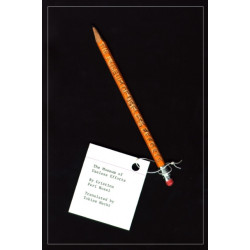
The Museum of Useless Efforts (Bog, Paperback / softback, Engelsk)Levering: Skaffevare (forvent 14 - 30 hverdage)
-
Taking the Field: Soldiers, Nature, and Empire on American Frontiers (Bog, Paperback / softback, Engelsk)
Taking the Field draws on the experiences of U.S. soldiers to examine interconnected ideas about nature and empire during the Progressive Era.
Levering: Skaffevare (forvent 14 - 30 hverdage) -
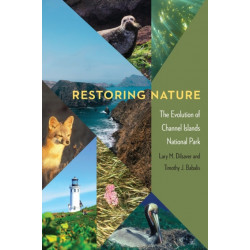
Restoring Nature: The Evolution of Channel Islands National Park (Bog, Paperback / softback, Engelsk)
Restoring Nature examines how the National Park Service has sought to reestablish native species and eradicate the exotic flora and fauna from Channel Islands National Park, and explores why the damage happened in the first place.
Levering: 6 - 9 hverdage -
Friendly Enemies: Soldier Fraternization Throughout the American Civil War (Bog, Paperback / softback, Engelsk)
Friendly Enemies analyzes the relations and fraternization of American soldiers on opposing sides of the Civil War, a representation of the common soldiers’ efforts to fight the war on their own terms.
Levering: Skaffevare (forvent 14 - 30 hverdage) -
Restoring Nature: The Evolution of Channel Islands National Park (Bog, Hardback, Engelsk)
Restoring Nature examines how the National Park Service has sought to reestablish native species and eradicate the exotic flora and fauna from Channel Islands National Park, and explores why the damage happened in the first place.
Levering: 6 - 9 hverdage -
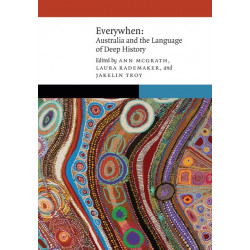
Everywhen: Australia and the Language of Deep History (Bog, Hardback, Engelsk)
Beyond the linear, diachronic, documentary past of Western or academic history, Everywhen asks how Australia’s Aboriginal and Torres Strait Islander knowledge systems can broaden our understandings of the past and of historical practice.
Levering: Skaffevare (forvent 14 - 30 hverdage)