University of Toronto Press Forlag
Visning: Type : Alle | Sprog : Alle | Format : Alle
-
Identity As Weapon: Crimean Tatars and Their Quest for Indigenous Self-determination (Bog, Hardback, Engelsk)Levering: Kan forudbestilles (Forventes d. 13-10-2026)
-
A Way Back Home: Jewish Return to Cervantes's Spain (Bog, Hardback, Engelsk)
A Way Back Home tells the stories of those openly practising Jews, both real and fictitious, who defied official Spanish policy by returning to (and thriving in) seventeenth-century Madrid, the heart of their Iberian homeland.
Levering: Kan forudbestilles (Forventes d. 10-11-2026) -
Down and Out in Utopia: Unemployment As Moral Education in Norway (Bog, Paperback / softback, Engelsk)
An American anthropologist follows the daily lives of the unemployed in Oslo to offer a unique look at what happens when people lose their jobs in one of the world’s wealthiest and most egalitarian countries.
Levering: Kan forudbestilles (Forventes d. 11-08-2026) -
Modernizing the Crown: The Evolution of the Liquor Control Board of Ontario, 1984-2025 (Bog, Hardback, Engelsk)
Modernizing the Crown articulates the evolution of the Liquor Control Board of Ontario from a stodgy distributor of alcohol to the dynamic retailer we see today.
Levering: Kan forudbestilles (Forventes d. 08-09-2026) -
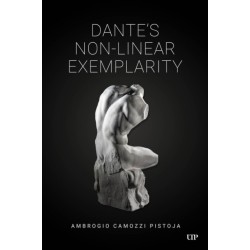
Dante's Nonlinear Exemplarity (Bog, Hardback, Engelsk)
Dante bends the medieval exemplum until it breaks: what looks like a moral lesson refuses to teach, what seems clear sinks back into obscurity, what should persuade disorients. These broken, nonlinear examples make uncertainty the ground of protest, self-cognition, devotion.
Levering: Kan forudbestilles (Forventes d. 08-09-2026) -
Life: Its Origins and Physical Basis (Bog, Hardback, Engelsk)
This book adopts a consequential analysis to describe the evolution of geochemical systems on a new planet, replicating molecular ensembles that form the basis of all life.
Levering: Kan forudbestilles (Forventes d. 01-09-2026) -
Legal Research and Writing (Bog, Paperback / softback, Engelsk)
This is the definitive Canadian guide to legal research and writing, covering print and digital sources, citation, AI tools, and best practices for students and practitioners navigating today’s evolving legal landscape.
Levering: Kan forudbestilles (Forventes d. 06-10-2026) -
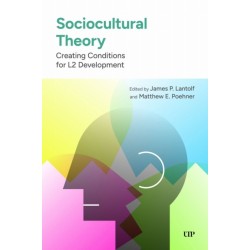
Sociocultural Theory: Creating Conditions for L2 Development (Bog, Hardback, Engelsk)
Sociocultural Theory is an exploration of empirical studies that address language instruction, assessment, and teacher education through the lens of Vygotskian sociocultural theory.
Levering: Kan forudbestilles (Forventes d. 17-11-2026) -
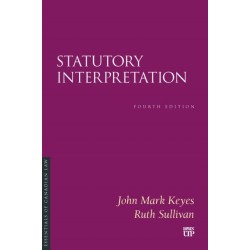
Statutory Interpretation (Bog, Paperback / softback, Engelsk)
Statutory Interpretation presents the judicially developed methodology for interpreting Canadian legislation and explores how its three dimensions of text, context, and purpose shape meaning.
Levering: Kan forudbestilles (Forventes d. 06-10-2026) -
Melodramatic Imagination in Russian Culture: New Perspectives (Bog, Hardback, Engelsk)
The essays in this volume examine the appeal of melodrama in the twenty-first century by applying contemporary melodramatic theories to Russian, Soviet, and post-Soviet cultural texts and discourses.
Levering: Kan forudbestilles (Forventes d. 08-12-2026) -
Privatization, Law, and the Challenge to Feminism (Bog, Paperback / softback, Engelsk)
Examining eight case studies on the role of law in various arenas, this collection of essays addresses the reconfiguration of the relations between the state, the market, and the family caused by privatization.
Levering: Skaffevare (forvent 14 - 30 hverdage) -
Parmenides of Elea: A Text and Translation with an Introduction (Bog, Paperback / softback, Engelsk)
David Gallop provides a Greek text and a new facing-page translation of the extant fragments of Parmenides' philosophical poem.
Levering: Skaffevare (forvent 14 - 30 hverdage)