Vintage Forlag
-
The History of Germany Since 1789 (Bog, Paperback / softback, Engelsk)
'At times,' writes Golo Mann, 'the Germans seem a philosophical people, at others the most practical and most materialistic at times the most peaceful, at others the most domineering and brutal.
Levering: Print on Demand (forvent 14 - 30 hverdage) -
The Forgotten Trade: Comprising the Log of the Daniel and Henry of 1700 and Accounts of the Slave Trade From the Minor Ports of England 1698-1725 (Bog, Paperback / softback, Engelsk)
Two years earlier, the Guinea trade had been prised loose by an Act of Parliament from the monopoly of the Royal African Company, and respectable burghers in a dozen small provincial ports seized what they saw as an opportunity for quick rewards from the slave trade.
Levering: Print on Demand (forvent 14 - 30 hverdage) -
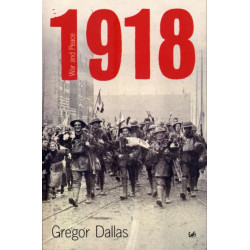
1918: War and Peace (Bog, Paperback / softback, Engelsk)
Pantomime season opens in London, where Lloyd George holds elections and reorganizes his War Cabinet; This book weaves politics, ideas, social life, fears, aspirations and harsh realities into a seamless reconstruction of life experienced at a great turning-point of history.
Levering: Print on Demand (forvent 14 - 30 hverdage) -
The Longest Night: A Military History of the Civil War (Bog, Paperback / softback, Engelsk)
Here, Eicher provides an authoritative modern battle history that spans the entire Civil War, covering major battles such as Gettysburg and... Læs mere
Levering: Print on Demand (forvent 14 - 30 hverdage) -
Thirteen Days: The Road to the First World War (Bog, Paperback / softback, Engelsk)
His interpretation also rejects the thesis that Europe in 1914 had reached such a boiling point that war was bound to erupt and the theory that the origins... Læs mere
Levering: Print on Demand (forvent 14 - 30 hverdage) -
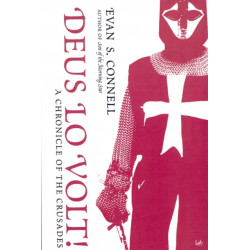
Deus Lo Volt!: A Chronicle of the Crusades (Bog, Paperback / softback, Engelsk)
Uniting Christian Europe in a common cause, the crusades defined forever the spirit of the West.A magisterial recounting of this great and terrible campaign, Deus lo Volt!
Levering: Print on Demand (forvent 14 - 30 hverdage) -
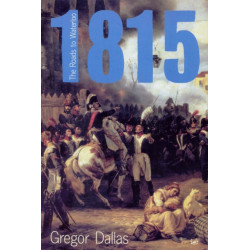
1815: The Roads to Waterloo (Bog, Paperback / softback, Engelsk)
The seventeen months from April 1814 to August 1815 were an extraordinary period in European history; a period which saw two sieges of Paris, a complete revision of Europe's... Læs mere
Levering: Print on Demand (forvent 14 - 30 hverdage) -
Puritanism & Revolution (Bog, Paperback / softback, Engelsk)
This illuminating collection of essays assesses the seventeenth century, interpreting what used to be called 'The Puritan Revolution', the ideas which helped to produce it and resulted from it, and the relation between these ideas and the political and economic events of the day.
Levering: Print on Demand (forvent 14 - 30 hverdage) -
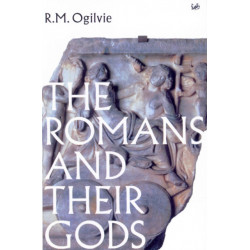
The Romans And Their Gods (Bog, Paperback / softback, Engelsk)
Drawing widely on original material (all of it quoted in translation), he tells us how the Romans prayed, what happened at a sacrifice, what sort of gods they believed in, and how seriously they took their religion - a religion in which actions, , not dogma, was paramount.
Levering: Print on Demand (forvent 14 - 30 hverdage) -
Cyril Connolly: A Life (Bog, Paperback / softback, Engelsk)
`In one of tje funniest biographies I have ever read, Lewis assembles all the excellently entertaining anecdotes about this deeply loved, much mocked, sometimes reviled figure whose departure has robbed the litarary world of its social smartness and any worthwhile eccentricity .
Levering: Print on Demand (forvent 14 - 30 hverdage) -
The Punic Wars: Rome, Carthage and the Struggle for the Mediterranean (Bog, Paperback / softback, Engelsk)
The Punic Wars (264-146BC) sprang from a mighty power struggle between two ancient civilisations - the trading empire of Carthage and the military confedoration of Rome.
Levering: Print on Demand (forvent 14 - 30 hverdage) -
The Broken Estate: Essays on Literature and Belief (Bog, Paperback / softback, Engelsk)
In a series of long essays, James Wood examines the connection between literature and religious belief, in a startlingly wide group of writers.
Levering: Print on Demand (forvent 14 - 30 hverdage)