WW Norton & Co Forlag
Visning: Type : Alle | Sprog : Engelsk | Format : Paperback / softback Der vises kun varer på engelsk
-
Paleofantasy: What Evolution Really Tells Us about Sex, Diet, and How We Live (Bog, Paperback / softback, Engelsk)
“With…evidence from recent genetic and anthropological research, [Zuk] offers a dose of paleoreality.” —Erin Wayman, Science News
Levering: 6 - 9 hverdage -
8 Keys to Brain-Body Balance (Bog, Paperback / softback, Engelsk)
Take-charge strategies to heal your body and brain from stress and trauma.
Levering: 6 - 9 hverdage -
The Communist Manifesto: A Norton Critical Edition (Bog, Paperback / softback, Engelsk)
Karl Marx’s 1848 text is reframed in this revised Norton Critical Edition in the context of twenty-first-century theoretical debates, capitalist globalization, the information technology revolution, and contemporary struggles up to and including the 2011 “Arab Spring.”
Levering: Skaffevare (forvent 14 - 30 hverdage) -
Clues: Investigating Solutions in Brief Therapy (Bog, Paperback / softback, Engelsk)
How do solutions develop? This question leads de Shazer to a provocative discussion of all the solution-related things that client and therapist do during a session, which ultimately point to a task that says, "Now that you know what works, do more of it."
Levering: 6 - 9 hverdage -
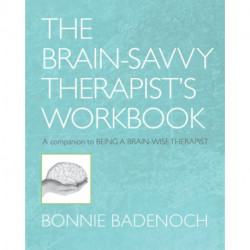
The Brain-Savvy Therapist's Workbook (Bog, Paperback / softback, Engelsk)
Client-centered exercises that accompany the concepts put forward in Being a Brain-Wise Therapist and make the theoretical practical.
Levering: Skaffevare (forvent 14 - 30 hverdage) -
Body Sense: The Science and Practice of Embodied Self-Awareness (Bog, Paperback / softback, Engelsk)
The science and practice of feeling our movements, sensations, and emotions.
Levering: 6 - 9 hverdage -
Genograms: Assessment and Treatment (Bog, Paperback / softback, Engelsk)
The latest edition of this definitive book in the field of family therapy—the first update in ten years.
Levering: 6 - 9 hverdage -
The Norton Anthology of Western Philosophy: After Kant (Bog, Paperback / softback, Engelsk)
The new standard anthology of nineteenth and twentieth century philosophy.
Levering: Skaffevare (forvent 14 - 30 hverdage) -
When Broken Glass Floats: Growing Up Under the Khmer Rouge (Bog, Paperback / softback, Engelsk)
"A gut-wrenching story told with honesty, restraint, and dignity." —Ha Jin, National Book Award-winning author of WaitingChanrithy Him felt compelled to tell of surviving life under the Khmer Rouge in a way "worthy of the suffering which I endured as a child."
Levering: 6 - 9 hverdage -
The Body Remembers Casebook: Unifying Methods and Models in the Treatment of Trauma and PTSD (Bog, Paperback / softback, Engelsk)
This is the first book of its kind to advocate utilizing and combining an assortment of trauma treatment models.
Levering: 6 - 9 hverdage -
Being a Brain-Wise Therapist: A Practical Guide to Interpersonal Neurobiology (Bog, Paperback / softback, Engelsk)
This book, part of the acclaimed Norton Series on Interpersonal Neurobiology, brings interpersonal neurobiology into the counseling room, weaving the concepts of neurobiology into the ever-changing flow of therapy.
Levering: 6 - 9 hverdage -
Walls: Elements of Garden and Landscape Architecture (Bog, Paperback / softback, Engelsk)
A systematic set of guidelines and an inspiring store of models for designers, builders, horticulturists, and landscape architects.
Levering: 6 - 9 hverdage