Alternative og fornybare energikilder og teknologier igen
Der er 5+ underkategorier
 for at udvide
kategorilisten.
for at udvide
kategorilisten.
Undervisningsmidler: naturvidenskab: generelt
Visning: Type : Alle | Sprog : Alle | Format : Alle

-
Bemærk: Kan ikke leveres før jul.
Teaching Gifted Learners in STEM Subjects: Developing Talent in Science, Technology, Engineering and Mathematics (Bog, Hardback, Engelsk)Levering: Skaffevare (forvent 14 - 30 hverdage) -
Bemærk: Kan ikke leveres før jul.
A Teacher’s Guide to Science and Religion in the Classroom (Bog, Paperback / softback, Engelsk)A Teacher’s Guide to Science and Religion in the Classroom provides practical guidance on how to help children access positive ways of thinking about the relationship between science and religion.
Levering: Skaffevare (forvent 14 - 30 hverdage) -
Bemærk: Kan ikke leveres før jul.
Teaching Science Creatively (Bog, Paperback / softback, Engelsk)Levering: Skaffevare (forvent 14 - 30 hverdage) -
Bemærk: Kan ikke leveres før jul.
The Teaching of Primary Science: Policy and Practice (Bog, Paperback / softback, Engelsk)Originally published in 1983. This book provides the first overview of developments in primary science prior to and following the national survey of... Læs mere
Levering: Skaffevare (forvent 14 - 30 hverdage) -
Bemærk: Kan ikke leveres før jul.
Talking and Doing Science in the Early Years: A practical guide for ages 2-7 (Bog, Paperback / softback, Engelsk)Levering: Skaffevare (forvent 14 - 30 hverdage) -
Bemærk: Kan ikke leveres før jul.
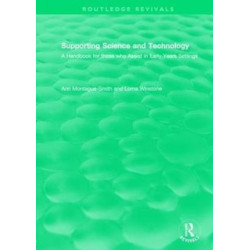
Supporting Science and Technology (1998): A Handbook for those who Assist in Early Years Settings (Bog, Hardback, Engelsk)Published in 1998, this book will increase the confidence of the classroom assistants by offering suggestions for improving their subject knowledge in line with the requirements of The Desirable Outcomes for pre-fives and the National Curriculum for Key Stage 1
Levering: Skaffevare (forvent 14 - 30 hverdage) -
Bemærk: Kan ikke leveres før jul.
Student Thinking and Learning in Science: Perspectives on the Nature and Development of Learners' Ideas (Bog, Paperback / softback, Engelsk)This readable and informative survey of key ideas about students’ thinking in science builds a bridge between theory and practice by offering clear accounts from research, and showing how they relate to actual examples of students talking about widely taught science topics.
Levering: Skaffevare (forvent 14 - 30 hverdage) -
Bemærk: Kan ikke leveres før jul.
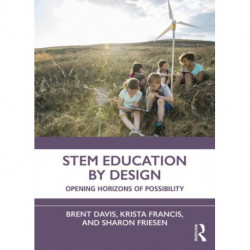
STEM Education by Design: Opening Horizons of Possibility (Bog, Paperback / softback, Engelsk)This book demonstrates how STEM can and should be understood as more than a collection of disciplines; it is a transdisciplinary, possibility-rich domain that is much more than the sum of its parts.
Levering: Skaffevare (forvent 14 - 30 hverdage) -
Bemærk: Kan ikke leveres før jul.
STEM Education by Design: Opening Horizons of Possibility (Bog, Hardback, Engelsk)This book demonstrates how STEM can and should be understood as more than a collection of disciplines; it is a transdisciplinary, possibility-rich domain that is much more than the sum of its parts.
Levering: Skaffevare (forvent 14 - 30 hverdage) -
Bemærk: Kan ikke leveres før jul.
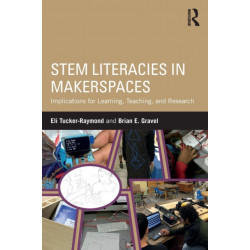
STEM Literacies in Makerspaces: Implications for Learning, Teaching, and Research (Bog, Paperback / softback, Engelsk)In the book, Tucker-Raymond and Gravel present an original framework for identifying, describing, and explaining STEM... Læs mere
Levering: Skaffevare (forvent 14 - 30 hverdage) -
Bemærk: Kan ikke leveres før jul.
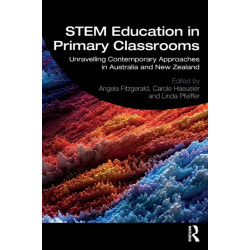
STEM Education in Primary Classrooms: Unravelling Contemporary Approaches in Australia and New Zealand (Bog, Paperback / softback, Engelsk)This book will shift thinking about what STEM education is and how it can be enacted in primary... Læs mere
Levering: Skaffevare (forvent 14 - 30 hverdage) -
Bemærk: Kan ikke leveres før jul.
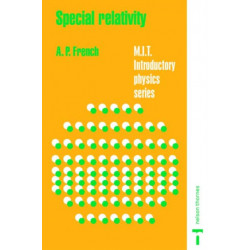
Special Relativity (Bog, Paperback / softback, Engelsk)The book opens with a description of the smooth transition from Newtonian to Einsteinian behaviour from electrons as their energy is progressively increased, and this leads directly to the relativistic expressions for mass, momentum and energy of a particle
Levering: Skaffevare (forvent 14 - 30 hverdage)