for at udvide
kategorilisten.
for at udvide
kategorilisten.
Subsaharisk Afrika
Visning: Type : Alle | Sprog : Engelsk | Format : Multiple-component retail product Der vises kun varer på engelsk

-
Bemærk: Kan ikke leveres før jul.
Originally published between 1923 and 1989, the 21 volumes in this set examine the politics, economics, sociology and psychology of (un)employment during the 18th, 19th and 20th Centuries, including during the periods of recession in the 1930s and 1980s.
Levering: Skaffevare (forvent 14 - 30 hverdage) -
Bemærk: Kan ikke leveres før jul.
Routledge Library Editions: Commodities (Engelsk)Originally published between 1982 and 1989, the volumes in this set were written at a time of instability in the global commodity markets. Then, just as now, these... Læs mere
Levering: Skaffevare (forvent 14 - 30 hverdage) -
Bemærk: Kan ikke leveres før jul.
Studies in African History (Engelsk)Originally published between 1969 and 1976 these 11 volumes covering Botswana, Ghana, Guinea, Nigeria, Tanzania combine historical approach with political analysis in an area of the world and at a time when events were constantly evolving.
Levering: Skaffevare (forvent 14 - 30 hverdage) -
Bemærk: Kan ikke leveres før jul.
This 20-volume set has titles originally published between 1939 and 1991. It looks at marriage in a broad context from a variety of perspectives, including anthropological, health, historical, psychological, and sociological.
Levering: Skaffevare (forvent 14 - 30 hverdage) -
Bemærk: Kan ikke leveres før jul.
Post-Brexit, in a world where food security is key, the quest for a satisfactory and viable policy for British agriculture has a continuing interest as relevant today as when these 26 books were first published between 1928 and 1994.
Levering: Skaffevare (forvent 14 - 30 hverdage) -
Bemærk: Kan ikke leveres før jul.
RLE: Colonialism and Imperialism is a 51-volume collection of previously out-of-print titles that examine the history, practice and implications of... Læs mere
Levering: Skaffevare (forvent 14 - 30 hverdage) -
Bemærk: Kan ikke leveres før jul.
The Rise of Our East African Empire (1893): Early Efforts in Nyasaland and Uganda (2 Volume Set) (Engelsk)Levering: Skaffevare (forvent 14 - 30 hverdage) -
Bemærk: Kan ikke leveres før jul.
-
Bemærk: Kan ikke leveres før jul.
Routledge Library Editions: South Africa (Engelsk)Originally published between 1931 and 1994 these books cover the turbulent racial history and politics of South Africa as well as economic and social aspects.... Læs mere
Levering: Skaffevare (forvent 14 - 30 hverdage) -
Bemærk: Kan ikke leveres før jul.
Routledge Library Editions: Slavery (Engelsk)Routledge Library Editions: Slavery analyses the Atlantic slave trade, and its effects on Africa; modern slavery around the world; slave rebellions and resistance; the Abolitionist movements; the suppression of the slave trade; slavery in the ancient world; and more besides.
Levering: Skaffevare (forvent 14 - 30 hverdage) -
Bemærk: Kan ikke leveres før jul.
Levering: Skaffevare (forvent 14 - 30 hverdage) -
Bemærk: Kan ikke leveres før jul.
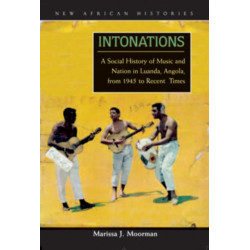
Intonations: A Social History of Music and Nation in Luanda, Angola, from 1945 to Recent Times (Engelsk)Tells the story of how Angola's urban residents in the late colonial period (roughly 1945-74) used music to talk back to their colonial oppressors and, more importantly, to define what it meant to be Angolan and what they hoped to gain from independence.
Levering: Skaffevare (forvent 14 - 30 hverdage)