- Afkolonisering af viden / Afkolonialitet
- Flag, emblemer, symboler, logoer
- Fredsstudier og konfliktløsning
- Generelle studier
- Globalisering
- Institutioner og videnskabelige selskaber i almindelighed
- Kognitiv videnskab
- Kommunikationsstudier
- Receptionsstudier eller fortolkningsstudier / publikumsteori
- Regionale studier
- Semiotik / semiologi
- Udviklingsstudier
- Videnskabens historie (samfundsvidenskab og humaniora)
Regionale studier
Visning: Type : Alle | Sprog : Alle | Format : Alle

-
China's Education Aid to Africa: Fragmented Soft Power (Bog, Paperback / softback, Engelsk)
China’s emergence as an aid donor in Africa has caught global attention, with China’s activity being viewed as the projection of soft power of a neo-colonialist kind. This book, which focuses on China’s education aid reveals a much more complicated picture.
Levering: Skaffevare (forvent 14 - 30 hverdage) -
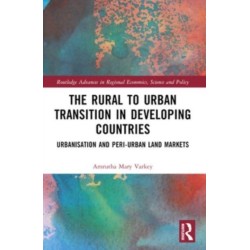
The Rural to Urban Transition in Developing Countries: Urbanisation and Peri-Urban Land Markets (Bog, Paperback / softback, Engelsk)
This book addresses urbanisation and peri-urban land markets, with a special focus on Bangalore, one of the... Læs mere
Levering: Skaffevare (forvent 14 - 30 hverdage) -
Tourism in Post-Communist States: Central and Eastern Europe (Bog, Paperback / softback, Engelsk)
This book addresses tourism and its development in the post-communist context of Central and Eastern Europe (CEE). The book consists of 14... Læs mere
Levering: Skaffevare (forvent 14 - 30 hverdage) -
Democracy, State Capacity and the Governance of COVID-19 in Asia-Oceania (Bog, Paperback / softback, Engelsk)
This book examines the public health responses to the COVID-19 pandemic in the Asia-Oceania region and their implications for democratic backsliding.
Levering: Skaffevare (forvent 14 - 30 hverdage) -
The Role of the Military in the Arab Uprisings: The Cases of Tunisia and Libya (Bog, Paperback / softback, Engelsk)
Focused on the 2010-2011 Arab Uprisings, this book examines the role of the military in Tunisia and Libya, arguing that both armies contributed decisively to the outcome and form of the respective uprisings.
Levering: Skaffevare (forvent 14 - 30 hverdage) -
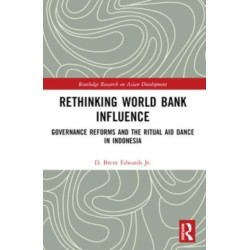
Rethinking World Bank Influence: Governance Reforms and the Ritual Aid Dance in Indonesia (Bog, Paperback / softback, Engelsk)
Why is it so hard for international development organizations—even ones as well-resourced and influential as the World Bank—to generate and sustain change in the way things are done in those countries where they work? This book provides an answer to the question.
Levering: Skaffevare (forvent 14 - 30 hverdage) -
Scandinavian Diplomacy and the Israeli-Palestinian Conflict: Official and Unofficial Soft Power (Bog, Paperback / softback, Engelsk)
This book scrutinizes how three small Scandinavian countries – Norway, Sweden and Denmark – developed a unique foreign policy that brought Israel and the Palestinians to the negotiating table.
Levering: Skaffevare (forvent 14 - 30 hverdage) -
Land Tenure Reform in Sub-Saharan Africa: Interventions in Benin, Ethiopia, Rwanda, and Zimbabwe (Bog, Paperback / softback, Engelsk)
This book examines the impacts of land tenure reform interventions implemented in Benin, Ethiopia, Rwanda, and Zimbabwe.
Levering: Skaffevare (forvent 14 - 30 hverdage) -
Gandhi and the Idea of Swaraj (Bog, Paperback / softback, Engelsk)
This book examines Gandhi's idea of Swaraj as an alternative to the modern concept of political authority. It also introduces the readers with Gandhi’s ideas of moral interconnectedness and empathetic pluralism.
Levering: Skaffevare (forvent 14 - 30 hverdage) -
Migration and Identity in British East and Southeast Asian Cinema (Bog, Paperback / softback, Engelsk)
An emerging interest in a British East and Southeast Asian identity after decades of political and social exclusion has coincided with periods of economic and political challenges in the UK.
Levering: Skaffevare (forvent 14 - 30 hverdage) -
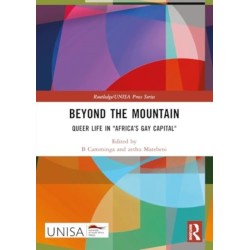
Beyond the Mountain: Queer Life in "Africa’s Gay Capital" (Bog, Paperback / softback, Engelsk)
Beyond The Mountain: Queer Life in "Africa’s Gay Capital" contributes to the body of knowledge on the lived experiences of lesbian, gay, bisexual, transgender, queer, and intersex (LGBTQI) communities in Cape Town.
Levering: Skaffevare (forvent 14 - 30 hverdage) -
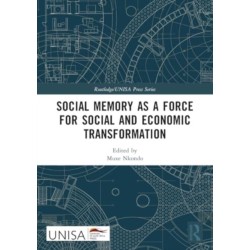
Social Memory as a Force for Social and Economic Transformation (Bog, Paperback / softback, Engelsk)
This volume is a reflection on social memory as a force for social and economic transformation. The contributors offer unique perspectives and reflections on history, politics, economics, culture, education, ethics and the arts.
Levering: Skaffevare (forvent 14 - 30 hverdage)