Anton Pelinka Forfatter
-
The Challenge of Ethnic Conflict, Democracy and Self-determination in Central Europe (Bog, Hardback, Engelsk)
This volume provides an overall assessment of ethnic diversity in central Europe in historical context and presents a critical assessment of the conflict in former Yugoslavia.
Levering: Skaffevare (forvent 14 - 30 hverdage) -
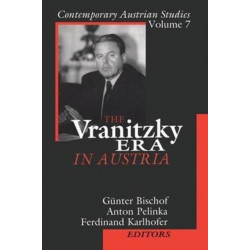
The Vranitzky Era in Austria: Contemporary Austrian Studies (Bog, Hardback, Engelsk)
Franz Vranitzky, the banker turned politician, was chancellor during the ten years (1986-96) when the world dramatically changed in the aftermath of the cold war
Levering: Skaffevare (forvent 14 - 30 hverdage) -
The Marshall Plan in Austria: Vol 8 (Bog, Hardback, Engelsk)
This volume in the Contemporary Austrian Studies series examines how the Marshall Plan affected Austria, and how it is perceived today.
Levering: Skaffevare (forvent 14 - 30 hverdage) -
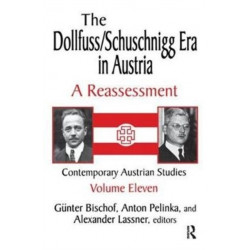
The Dollfuss/Schuschnigg Era in Austria: A Reassessment (Bog, Hardback, Engelsk)
The years of Chancellors Dollfuss and Schuschnigg's authoritarian governments (1933/34-1938) have been denounced as "Austrofascism" from the left, or defended as a Christian corporate state ("Stondestaat") from the right
Levering: Skaffevare (forvent 14 - 30 hverdage) -
The Americanization/Westernization of Austria (Bog, Hardback, Engelsk)
Political, economic, social, and cultural modernization dramatically transformed twentieth-century Austria
Levering: Skaffevare (forvent 14 - 30 hverdage) -
Neutrality in Austria: Contemporary Austrian Studies (Bog, Hardback, Engelsk)
After Stalin's death, during a respite in Cold War tensions in 1955, Austria managed to rid itself of a quadripartite occupation regime and become a neutral state
Levering: Skaffevare (forvent 14 - 30 hverdage) -
Austrian Foreign Policy in Historical Context (Bog, Hardback, Engelsk)
In 2005, Austria celebrated the sixtieth anniversary of its liberation from the Nazi regime and the fiftieth anniversary of the State Treaty that ended the occupation and returned full sovereignty to the country
Levering: Skaffevare (forvent 14 - 30 hverdage) -
The Austrian Party System (Bog, Hardback, Engelsk)
This book is intended to reflect the current state of a discipline-political science. However, it is also to be a contribution to the further development of this discipline. It... Læs mere
Levering: Skaffevare (forvent 14 - 30 hverdage) -
Austria: Out of the Shadow of the Past (Bog, Hardback, Engelsk)
This book compares contemporary Austria with other political systems and with the Austrias that existed in the past. The dynamism of the changes taking place in Austria can be described and analyzed with this double focus of comparison.
Levering: Skaffevare (forvent 14 - 30 hverdage)