Aristotle Forfatter
-
-
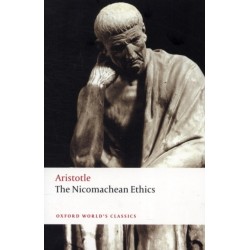
The Nicomachean Ethics (Bog, Paperback / softback, Engelsk)
In the Nicomachean Ethics Aristotle examines the nature of happiness, which he defines as a specially good kind of life. He considers the nature of practical reasoning, friendship,... Læs mere
Levering: 6 - 9 hverdage -
-
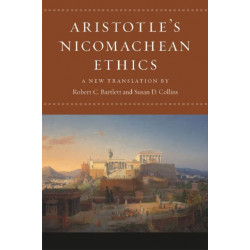
Aristotle's Nicomachean Ethics (Bog, Paperback / softback, Engelsk)
The "Nicomachean Ethics" is one of Aristotle's most widely read and influential works. Drawing on their intimate knowledge of Aristotle's thought, the authors have produced an... Læs mere
Levering: 6 - 9 hverdage -
The Nicomachean Ethics (Bog, Paperback / softback, Engelsk)
This work contains Artistotle's views on what makes a good human life. It has served as an influence on the history of ideas and offers insights into the human condition.
Levering: 6 - 9 hverdage -
Nicomachean Ethics (Bog, Hardback, Engelsk)
Nearly all the works that Aristotle (384–322 BC) prepared for publication are lost; the priceless ones extant are lecture-materials, notes, and memoranda (some are spurious). Nicomachean Ethics is antiquity's most influential account of life's Supreme Good.
Levering: 6 - 9 hverdage -
The Metaphysics (Bog, Paperback / softback, Engelsk)
Presents the author's mature rejection of both the Platonic theory that what we perceive is just a pale reflection of reality and the hard-headed view that all processes are the... Læs mere
Levering: 6 - 9 hverdage -
-
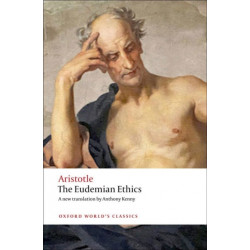
The Eudemian Ethics (Bog, Paperback / softback, Engelsk)
The Eudemian Ethics is a major treatise on moral philosophy whose central concern is what makes life worth living. This is the first time it has been published in its entirety in any... Læs mere
Levering: 6 - 9 hverdage -
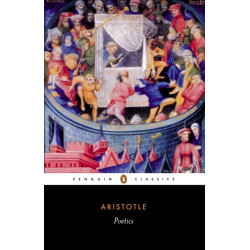
Poetics (Bog, Paperback / softback, Engelsk)
Suitable for all students of Greek theatre and literature, this book examines the dramatic elements of plot, character, language and spectacle that combine to produce pity and fear in the audience, and asks why we derive pleasure from this apparently painful process.
Levering: 6 - 9 hverdage -
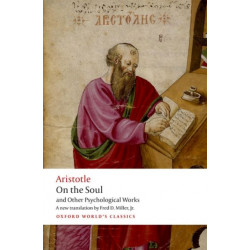
On the Soul: and Other Psychological works (Bog, Paperback / softback, Engelsk)
Aristotle's De Anima (On the Soul) is one of the great classics of philosophy. Aristotle examines the nature of the soul-sense-perception, imagination, cognition, emotion, and desire, including, memory, dreams, and processes such as nutrition, growth, and death.
Levering: 6 - 9 hverdage