Carl (University of Victoria Mosk Forfatter
Visning: Type : Alle | Sprog : Alle | Format : Alle
-
Capitalism and Religion in World History: Purification and Progress (Bog, Hardback, Engelsk)Levering: Skaffevare (forvent 14 - 30 hverdage)
-
Japanese Economic Development: Markets, Norms, Structures (Bog, Hardback, Engelsk)
Japanese Economic Development presents three distinct approaches to understanding how and why Japan made the transition from a relatively low-income country mainly focused on agriculture to a high-income nation centered on manufacturing and services.
Levering: Skaffevare (forvent 14 - 30 hverdage) -
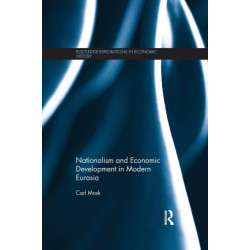
Nationalism and Economic Development in Modern Eurasia (Bog, Paperback / softback, Engelsk)Levering: Skaffevare (forvent 14 - 30 hverdage)
-
Japanese Industrial History: Technology, Urbanization and Economic Growth (Bog, Paperback / softback, Engelsk)
This text provides a detailed examination of the industrial development of Japan since th Meiji restoration (1868) and shows the extent to which Japan's own urbanization played a crucial role in its overall economic development.
Levering: Skaffevare (forvent 14 - 30 hverdage) -
Japanese Industrial History: Technology, Urbanization and Economic Growth (Bog, Hardback, Engelsk)
This text provides a detailed examination of the industrial development of Japan since th Meiji restoration (1868) and shows the extent to which Japan's own urbanization played a crucial role in its overall economic development.
Levering: Skaffevare (forvent 14 - 30 hverdage) -
Japanese Economic Development: Markets, Norms, Structures (Bog, Paperback / softback, Engelsk)
Japanese Economic Development presents three distinct approaches to understanding how and why Japan made the transition from a relatively low-income country mainly focused on agriculture to a high-income nation centered on manufacturing and services.
Levering: Skaffevare (forvent 14 - 30 hverdage) -
Trade and Migration in the Modern World (Bog, Paperback / softback, Engelsk)
Using a theory of economic and political gravitation, backed up with both quantitative analysis and qualitative description, Mosk explores trade and migration examining market forces and political resistance to diversity.
Levering: Skaffevare (forvent 14 - 30 hverdage) -
Nationalism and Economic Development in Modern Eurasia (Bog, Hardback, Engelsk)Levering: Skaffevare (forvent 14 - 30 hverdage)
-
Capitalism and Religion in World History: Purification and Progress (Bog, Paperback / softback, Engelsk)
Had a second form of capitalism - technological capitalism - not emerged binding science to innovation, harmony between faith and capitalism might have prevailed.
Levering: Skaffevare (forvent 14 - 30 hverdage)