Chih-yu Shih Forfatter
-
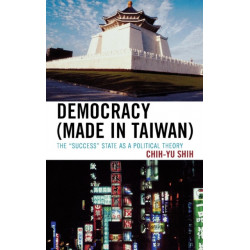
Democracy (Made in Taiwan): The 'Success' State as a Political Theory (Bog, Hardback, Engelsk)
While political scientists generally see Taiwan as a success state because of its economic modernization and political democratization, this book reinterprets Taiwan's success from the Confucian and postcolonial perspectives.
Levering: Print on Demand (forvent 14 - 30 hverdage) -
Negotiating Ethnicity in China: Citizenship as a Response to the State (Bog, Hardback, Engelsk)
This challenging study brings together anthropology and political science to examine how ethnic minorities are constructed by the state, and how they respond to such constructions.
Levering: Skaffevare (forvent 14 - 30 hverdage) -
Eros of International Relations: Self-Feminizing and the Claiming of Postcolonial Chineseness (Bog, Hardback, Engelsk)Levering: Skaffevare (forvent 14 - 30 hverdage)
-
Relations and Roles in China's Internationalism: Rediscovering Confucianism in a Pluriversal World (Bog, Hardback, Engelsk)Levering: Skaffevare (forvent 14 - 30 hverdage)
-
Post-Chineseness: Cultural Politics and International Relations (Bog, Hardback, Engelsk)Levering: 6 - 9 hverdage
-
Post-Western International Relations Reconsidered: The Pre-Modern Politics of Gongsun Long (Bog, Hardback, Engelsk)
This study offers a critique of international relations from the perspective of a pre-modern Chinese thinker, Gongsun Long. It explores both the potential and the danger of the post-Western quest for geo-cultural distinction.
Levering: Skaffevare (forvent 14 - 30 hverdage)