Jacob Neusner Forfatter
-
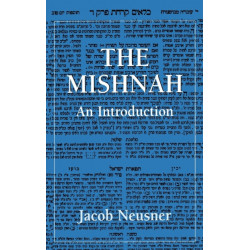
The Mishnah: An Introduction (Bog, Hardback, Engelsk)
Drawing on his own recent translation, Neusner introduces The Mishnah, the 2nd century classic codification of oral Jewish law, explaining its internal logic and structure, and its relevance to modern life. Annotation c. Book News, Inc., Portland, OR (booknews.com)
Levering: Print on Demand (forvent 14 - 30 hverdage) -
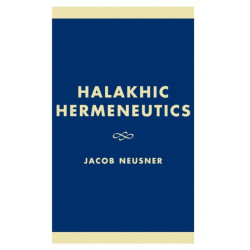
Halakhic Hermeneutics (Bog, Hardback, Engelsk)
This book presents an inductive account, through systematic inquiry into data, of the hermeneutics of the principal documents of Rabbinic Judaism. It undertakes a... Læs mere
Levering: Print on Demand (forvent 14 - 30 hverdage) -
The Torah and the Halakhah: The Four Relationships (Bog, Hardback, Engelsk)
This is a study of the relationship between two cognate religious components of Judaism, the laws of the Pentateuch and the corpus of Halakhah set forth by the Mishnah-Tosefta-Yerushalmi-Bavli.
Levering: Print on Demand (forvent 14 - 30 hverdage) -
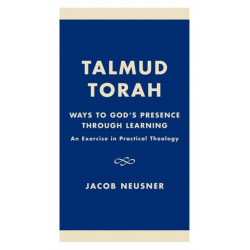
Talmud Torah: Ways to God's Presence through Learning: An Exercise in Practical Theology (Bog, Hardback, Engelsk)
This is a work of practical theology, a book not about Judaism but of Judaism. Talmud Torah does two things. First,... Læs mere
Levering: Print on Demand (forvent 14 - 30 hverdage) -
Midrashan Introduction (The Library of classical Judaism) (Bog, Hardback, Engelsk)
To find more information about Rowman and Littlefield titles, please visit www.rowmanlittlefield.com.
Levering: Print on Demand (forvent 14 - 30 hverdage) -
The Yerushalmi--The Talmud of the Land of Israel: An Introduction (Bog, Hardback, Engelsk)
To find more information on Rowman & Littlefield titles, please visit us at www.rowmanlittlefield.com.
Levering: Print on Demand (forvent 14 - 30 hverdage) -
Comparing Religions Through Law: Judaism and Islam (Bog, Hardback, Engelsk)
Comparing Religions Through Law presents an innovative and sometimes controversial study of the comparisons and contrasts between the two religions and offers an example of how comparative studies can lead to mutual understanding.
Levering: Skaffevare (forvent 14 - 30 hverdage) -
The Literature of Formative Judaism: The Midrash Compilations (Bog, Hardback, Engelsk)Levering: Skaffevare (forvent 14 - 30 hverdage)
-
Neusner on Judaism: Volume 1: History (Bog, Hardback, Engelsk)
Over a period of fifty years Jacob Neusner has made significant, insightful and challenging contributions to the study of Rabbinic Judaism, particularly in the... Læs mere
Levering: Skaffevare (forvent 14 - 30 hverdage) -
Uniting the Dual Torah: Sifra and the Problem of the Mishnah (Bog, Hardback, Engelsk)
In this book Jacob Neusner analyzes the text of Sifra, a commentary on the book of Leviticus, arguing that Sifra should be understood as successfully relating the Mishnah, the authoritative writing down of the Oral Torah, to Jewish Scripture, or the written Torah.
Levering: Print on Demand (forvent 14 - 30 hverdage) -
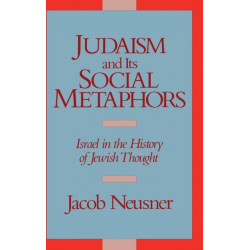
Judaism and its Social Metaphors: Israel in the History of Jewish Thought (Bog, Hardback, Engelsk)
Jacob Neusner examines the crucial role of the definition of Israel in the history of Judaic thought. The history of the... Læs mere
Levering: Print on Demand (forvent 14 - 30 hverdage) -
Theological and Philosophical Premises of Judaism (Bog, Hardback, Engelsk)
Shows that in its generative theology, Rabbinic Judaism in its formative age invoked the perpetual presence of God overseeing all that Israelites said... Læs mere
Levering: Skaffevare (forvent 14 - 30 hverdage)