James Hogg Forfatter
-
A Queer Book (Bog, Hardback, Engelsk)
At first glance this is a witty and comical collection of poems. But the eccentric nature of many of the poems nevertheless belies the often serious historical and moral issues contained within.
Levering: Skaffevare (forvent 14 - 30 hverdage) -
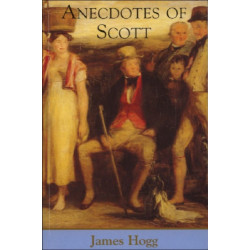
Anecdotes of Scott (Bog, Hardback, Engelsk)
James Hogg knew Sir Walter Scott well, and after Scott's death in 1832 he wrote an affectionate but frank account of their long friendship.
Levering: Skaffevare (forvent 14 - 30 hverdage) -
Altrive Tales: Featuring a ‘Memoir of the Author’s Life’ (Bog, Hardback, Engelsk)
Altrive Tales was carefully prepared by Hogg in 1832 as the opening volume in a planned twelve-volume collected prose fiction series, intended as the culmination of his career as a storyteller.
Levering: Skaffevare (forvent 14 - 30 hverdage) -
Contributions to Blackwood's Edinburgh Magazine: Volume 1, 1817-1828 (Bog, Hardback, Engelsk)
Sets Hoggs' contributions for this 19th century periodical in full cultural context, with detailed annotation and a convenient and complete editorial apparatus.
Levering: Skaffevare (forvent 14 - 30 hverdage) -
The Collected Letters of James Hogg, Volume 3, 1832-1835 (Bog, Hardback, Engelsk)
The third and final volume of the first collected edition of Hogg’s letters reveals his versatility in old age. It contains an index to all three volumes of Hogg’s letters.
Levering: Skaffevare (forvent 14 - 30 hverdage) -
Contributions to Blackwood's Edinburgh Magazine: Volume 2, 1829-1835 (Bog, Hardback, Engelsk)
This edition for the first time collects Hogg's 'Maga' publications, as well as provides a comprehensive introduction to Hogg's... Læs mere
Levering: Skaffevare (forvent 14 - 30 hverdage) -
Contributions to Musical Collections and Miscellaneous Songs (Bog, Hardback, Engelsk)
Contributions to Musical Collections and Miscellaneous Songs provides access to the relevant material in the various musical collections to which Hogg refers in his 1831 head notes, thus allowing the new readers of the 21st century to see in facsimile what Hogg himself saw.
Levering: Skaffevare (forvent 14 - 30 hverdage) -
Contributions to Annuals and Gift-Books (Bog, Hardback, Engelsk)
Like other well-known writers of the time, Hogg was a contributor to the annuals, and this book brings together all the Hogg texts that were either written for, or first published in, annuals and gift-books.
Levering: Skaffevare (forvent 14 - 30 hverdage) -
Lay Sermons (Bog, Hardback, Engelsk)
Lay Sermons offers, playfully, a series of lay sermons on good principles and good breeding - the last thing that one would expect from the pen of Blackwood's Ettrick Shepherd
Levering: Skaffevare (forvent 14 - 30 hverdage) -
The Jacobite Relics of Scotland: Volume 1 (Bog, Hardback, Engelsk)
James Hogg's Jacobite Relics - originally commissioned by the Highland Society of London in 1817 - is an important addition to The Collected Works of James Hogg.
Levering: Skaffevare (forvent 14 - 30 hverdage) -
Mador of the Moor (Bog, Hardback, Engelsk)
A flowing and immensely readable narrative that eloquently challenges the deeply-ingrained class and gender prejudices of Hogg’s society.
Levering: Skaffevare (forvent 14 - 30 hverdage) -
Midsummer Night Dreams and Related Poems (Bog, Hardback, Engelsk)
This collection is comprised of ten of Hogg's poems which, in very different ways, explore the visionary and supernatural, and the writer's portrayal of them - echoing the subject and title of Shakespeare's famous play.
Levering: Skaffevare (forvent 14 - 30 hverdage)