Jay Schulkin Forfatter
Visning: Type : Alle | Sprog : Alle | Format : Alle
-
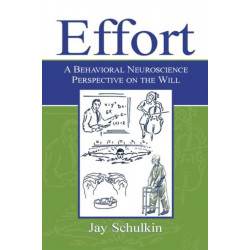
Effort: A Behavioral Neuroscience Perspective on the Will (Bog, Hardback, Engelsk)
In this book, author Jay Schulkin presents a two-fold thesis: there is no absolute separation of the cognitive and non-cognitive brain, and there are diverse cognitive systems, many of which are embodied in motor systems that underlie self-regulation. Ce
Levering: Skaffevare (forvent 14 - 30 hverdage) -
Oliver Wendell Holmes Jr., Pragmatism and Neuroscience (Bog, Hardback, Engelsk)
This book explores the cultures of philosophy and the law as they interact with neuroscience and biology, through the perspective of American jurist Oliver Wendell Holmes’ Jr., and the pragmatist tradition of John Dewey.
Levering: Skaffevare (forvent 14 - 30 hverdage) -
Oliver Wendell Holmes Jr., Pragmatism and Neuroscience (Bog, Paperback / softback, Engelsk)
This book explores the cultures of philosophy and the law as they interact with neuroscience and biology, through the perspective of American jurist Oliver Wendell Holmes’ Jr., and the pragmatist tradition of John Dewey.
Levering: 6 - 9 hverdage -
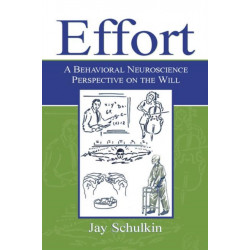
Effort: A Behavioral Neuroscience Perspective on the Will (Bog, Paperback / softback, Engelsk)
In this book, author Jay Schulkin presents a two-fold thesis: there is no absolute separation of the cognitive and non-cognitive brain, and there are diverse cognitive systems, many of which are embodied in motor systems that underlie self-regulation. Ce
Levering: Skaffevare (forvent 14 - 30 hverdage) -
Naturalism and Pragmatism (Bog, Hardback, Engelsk)
As a working neuroscientist, Jay Schulkin's ambitious exploration offers reflections on the pragmatic tradition from a fresh perspective, to present not only a scientist's take on the pragmatic tradition, but also a pragmatist's take on the evolution of human problem solving.
Levering: Skaffevare (forvent 14 - 30 hverdage)