John O'Neill Forfatter
-
Around Grangetown (Bog, Paperback / softback, Engelsk)
Accompanied by supporting text, this book is a valuable pictorial history which will reawaken nostalgic memories for some, while offering a unique glimpse of the past for the others.
Levering: Print on Demand (forvent 14 - 30 hverdage) -
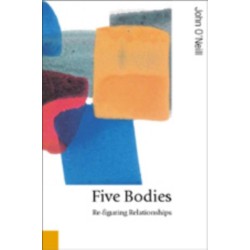
Five Bodies: Re-figuring Relationships (Bog, Hardback, Engelsk)
Five Bodies offers an introduction to some of the most urgent contemporary concerns within the sociology of the body. This new edition has been substantially revised and updated to address today's issues of the body in modern life, community and politics.
Levering: Skaffevare (forvent 14 - 30 hverdage) -
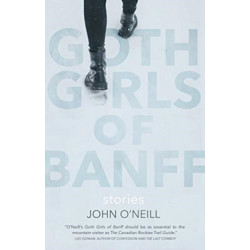
Goth Girls of Banff (Bog, Paperback / softback, Engelsk)Levering: Skaffevare (forvent 14 - 30 hverdage)
-
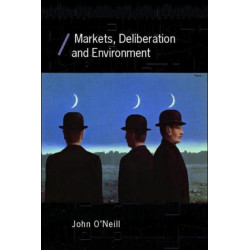
Markets, Deliberation and Environment (Bog, Paperback / softback, Engelsk)
Provides an examination of two opposing viewpoints and covers a discussion of the ethical boundaries of markets, the role of private property rights in environmental... Læs mere
Levering: Skaffevare (forvent 14 - 30 hverdage) -
Markets, Deliberation and Environment (Bog, Hardback, Engelsk)
Provides an examination of two opposing viewpoints and covers a discussion of the ethical boundaries of markets, the role of private property rights in environmental... Læs mere
Levering: Skaffevare (forvent 14 - 30 hverdage) -
The Market: Ethics, Knowledge and Politics (Bog, Hardback, Engelsk)
The author draws on considerable research in this area to provide an overdue critical evaluation of the limits of the market, and future prospects for non-market socialism.
Levering: Skaffevare (forvent 14 - 30 hverdage) -
The Poverty of Postmodernism (Bog, Hardback, Engelsk)
An articulate and passionate argument against the postmodern/postraditionalist abandonment of Marxist and phenomenological concepts of reason and commonsense. This is a major and accessible contribution to the debate on postmodernity.
Levering: Skaffevare (forvent 14 - 30 hverdage) -
Ecology, Policy and Politics: Human Well-Being and the Natural World (Bog, Hardback, Engelsk)
Revealing flaws in both "green" and market-based approaches to environmental policy, O'Neill develops an Aristotelian account of well-being. He examines the implications for wider issues involving markets, civil society and politics in modern society.
Levering: Skaffevare (forvent 14 - 30 hverdage) -
Five Bodies: Re-figuring Relationships (Bog, Paperback / softback, Engelsk)
Five Bodies offers an introduction to some of the most urgent contemporary concerns within the sociology of the body. This new edition has been substantially revised and updated to address today's issues of the body in modern life, community and politics.
Levering: Print on Demand (forvent 14 - 30 hverdage) -
The Market: Ethics, Knowledge and Politics (Bog, Paperback / softback, Engelsk)
The author draws on considerable research in this area to provide an overdue critical evaluation of the limits of the market, and future prospects for non-market socialism.
Levering: Skaffevare (forvent 14 - 30 hverdage) -
The Poverty of Postmodernism (Bog, Paperback / softback, Engelsk)
An articulate and passionate argument against the postmodern/postraditionalist abandonment of Marxist and phenomenological concepts of reason and commonsense. This is a major and accessible contribution to the debate on postmodernity.
Levering: Skaffevare (forvent 14 - 30 hverdage) -
Ecology, Policy and Politics: Human Well-Being and the Natural World (Bog, Paperback / softback, Engelsk)
Revealing flaws in both "green" and market-based approaches to environmental policy, O'Neill develops an Aristotelian account of well-being. He examines the implications for wider issues involving markets, civil society and politics in modern society.
Levering: Skaffevare (forvent 14 - 30 hverdage)