Karl Popper Forfatter
Visning: Type : Alle | Sprog : Alle | Format : Alle
-
-
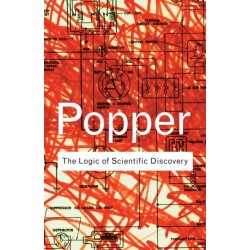
The Logic of Scientific Discovery (Bog, Paperback / softback, Engelsk)
First published in English in 1959, Karl Popper's "The Logic of Scientific Discovery" revolutionized contemporary thinking about science and knowledge and is one of the most widely read books about science written in the 20th century.
Levering: 6 - 9 hverdage -
Unended Quest: An Intellectual Autobiography (Bog, Paperback / softback, Engelsk)
A brilliant account of the life of one of the most influential thinkers of the twentieth century. Popper also explains some of the central ideas in his work, making this ideal reading for anyone coming to his life and work for the first time.
Levering: 6 - 9 hverdage -
The World of Parmenides: Essays on the Presocratic Enlightenment (Bog, Paperback / softback, Engelsk)Levering: 6 - 9 hverdage
-
The Poverty of Historicism (Bog, Paperback / softback, Engelsk)
Hailed on publication in 1957 as 'probably the only book published this year that will outlive the century', this is a devastating criticism of the idea that there are fixed laws in history and that human beings are able to predict them.
Levering: 6 - 9 hverdage -
Conjectures and Refutations: The Growth of Scientific Knowledge (Bog, Paperback / softback, Engelsk)
One of Karl Popper's most wide-ranging and popular works, it provides the clearest statement of the fundamental idea that guided his work: that our knowledge grows by an unending process of trial and error.
Levering: 6 - 9 hverdage -
The Open Society and its Enemies: Hegel and Marx (Bog, Paperback / softback, Engelsk)
First published in 1945 and never out of print, this is the second volume of one of the most famous and influential works of the twentieth century.
Levering: 6 - 9 hverdage -
The Open Society and its Enemies: The Spell of Plato (Bog, Paperback / softback, Engelsk)
First published in 1945 and never out of print, this is the first volume of one of the most famous and influential works of the twentieth century.
Levering: 6 - 9 hverdage -
The Two Fundamental Problems of the Theory of Knowledge (Bog, Paperback / softback, Engelsk)
Karl Popper described Die Beiden Grundrpobleme der Erkenntnistheorie.
Levering: 6 - 9 hverdage -
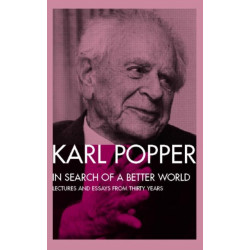
In Search of a Better World: Lectures and Essays from Thirty Years (Bog, Paperback / softback, Engelsk)
A collection of essays that offers striking new insight into the mind of one of the greatest living philosophers. Popper's subjects range from the beginnings of scientific speculation in Greece to the role of science in the arts.
Levering: Skaffevare (forvent 14 - 30 hverdage) -
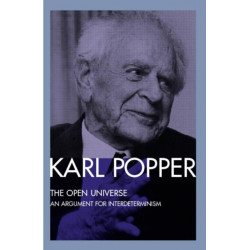
The Open Universe: An Argument for Indeterminism From the Postscript to The Logic of Scientific Discovery (Bog, Paperback / softback, Engelsk)
The Open Universe is one of the three volumes of Karl Popper’s Postscript to the Logic of scientific Discovery. The Postscript is the culmination of Popper’s work in the philosophy of physics and a new famous attack on subjectivist approaches to philosophy of science.
Levering: Skaffevare (forvent 14 - 30 hverdage) -
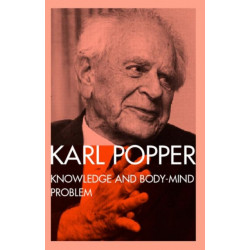
Knowledge and the Body-Mind Problem: In Defence of Interaction (Bog, Paperback / softback, Engelsk)
Based upon the Kenan Lectures that Popper delivered in 1969, this volume raises problems connected with human freedom, creativity, rationality, and the relationship between human beings and their actions.
Levering: Skaffevare (forvent 14 - 30 hverdage)