Neville Symington Forfatter
-
The Growth of Mind (Bog, Hardback, Engelsk)
The Growth of Mind is the product of a series of ten lectures by Neville Symington. It offers an understanding of the mind and its capacity to discover truth, establishing this as the foundation stone for our judgment and critique of the human world.
Levering: Skaffevare (forvent 14 - 30 hverdage) -
The Spirit of Sanity (Bog, Hardback, Engelsk)
A rare and unusual consideration of the spiritual dimensions of sanity from a psychoanalytic perspective, this transcription of a series of seven lectures delivered at the Tavistock... Læs mere
Levering: Skaffevare (forvent 14 - 30 hverdage) -
The Making of a Psychotherapist (Bog, Hardback, Engelsk)
This book is about a psychotherapist in the making, so both the strengths and errors of the psychotherapist are laid bare for the reader to scrutinize. It discusses psychotherapy in relation to such areas as modes of cure, conscience.
Levering: Skaffevare (forvent 14 - 30 hverdage) -
Narcissism: A New Theory (Bog, Hardback, Engelsk)
In this book, Neville Symington approaches the well-trodden subject of narcissism, offers us fresh insights from his long clinical experience with patients suffering from this disorder, and sketches some highlights in the history of the concept of narcissism.
Levering: Skaffevare (forvent 14 - 30 hverdage) -
How to Choose a Psychotherapist (Bog, Hardback, Engelsk)
This little book is written for patients. It is a challenge to action. Do not be satisfied with a malingering treatment. Gird your loins and challenge your... Læs mere
Levering: Skaffevare (forvent 14 - 30 hverdage) -
The Blind Man Sees: Freud's Awakening and Other Essays (Bog, Hardback, Engelsk)
The author argues that psychoanalysis can be seen as a scientific religion with Freud as the leader of the movement. He examines the various stages... Læs mere
Levering: Skaffevare (forvent 14 - 30 hverdage) -
In-gratitude and Other Poems (Bog, Hardback, Engelsk)
Where does the creative act come from? No one knows. All the rash of literature in recent times from artists, scientists and theologians on the subject of consciousness... Læs mere
Levering: Skaffevare (forvent 14 - 30 hverdage) -
Becoming a Person Through Psychoanalysis (Bog, Hardback, Engelsk)
What Neville Symington is attempting to do in this book is to trace the pathway along which he has travelled to become a person. This has run side by side with... Læs mere
Levering: Skaffevare (forvent 14 - 30 hverdage) -
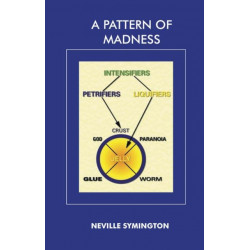
A Pattern of Madness (Bog, Hardback, Engelsk)
Born of wide-ranging scholarship, a lifetime's psychoanalytic practice and deep personal commitment and struggle, this book will challenge professional practitioners in the field and all those who take a serious interest in understanding the human psyche.
Levering: Skaffevare (forvent 14 - 30 hverdage) -
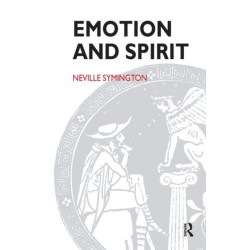
Emotion and Spirit: Questioning the Claims of Psychoanalysis and Religion (Bog, Hardback, Engelsk)
The papers in this book have been written over a period of fifteen years, and focus in the similarity between psychoanalysis and religion. Symington argues that psychoanalysis can be seen as a scientiic religion with Freud as the leader of the movement.
Levering: Skaffevare (forvent 14 - 30 hverdage) -
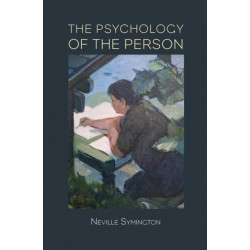
The Psychology of the Person (Bog, Hardback, Engelsk)
The definition of 'person' implies that no two people, even identical twins, are the same. What is a person? How is a person different from someone who is not a person? This book set out to answer these questions. It intends to sketch out a 'psychology of the person'.
Levering: Skaffevare (forvent 14 - 30 hverdage)