Philip Larkin Forfatter
Visning: Type : Alle | Sprog : Alle | Format : Alle
-
Collected Poems (Bog, Paperback / softback, Engelsk)
Since its publication in 1988, Philip Larkin's Collected Poems has become essential reading on any poetry bookshelf. Preserving everything that he published in his lifetime, this new... Læs mere
Levering: 6 - 9 hverdage -
The Complete Poems of Philip Larkin (Bog, Paperback / softback, Engelsk)
This entirely new edition brings together all of Philip Larkin's poems. Due prominence is given to the poet's comments on his poems, which often outline the circumstances that gave rise to a poem, or state what he was trying to achieve.
Levering: 6 - 9 hverdage -
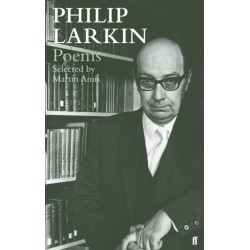
Philip Larkin Poems: Selected by Martin Amis (Bog, Paperback / softback, Engelsk)
For the first time, Faber publish a selection from the poetry of Philip Larkin. how many poets make us laugh - or, in that curious phrase, "laugh out loud"... Læs mere
Levering: 6 - 9 hverdage -
The Whitsun Weddings (Bog, Paperback / softback, Engelsk)
Philip Larkin (1922-1985) remains England's best-loved poet - a writer matchlessly capable of evoking his native land and of touching all readers from the most sophisticated intellectual to the proverbial common reader.
Levering: 6 - 9 hverdage -
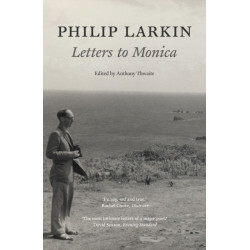
Philip Larkin: Letters to Monica (Bog, Paperback / softback, Engelsk)
Philip Larkin met Monica Jones at University College Leicester in autumn 1946, when they were both twenty-four; he was the newly-appointed assistant librarian and she was... Læs mere
Levering: 6 - 9 hverdage -
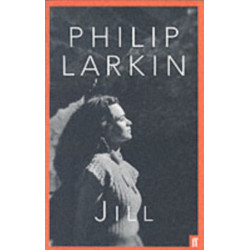
Jill (Bog, Paperback / softback, Engelsk)
But when he invents an imaginary sister to win the attention of a rich but unreliable 'friend', and then falls in love for real, undergraduate life becomes its own strange world . 'Absolutely contemporary - perhaps even prophetic.' Joyce Carol Oates'Remarkable .
Levering: 6 - 9 hverdage -
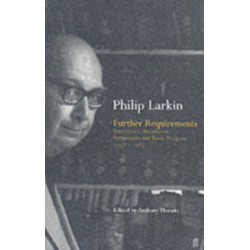
Further Requirements: Interviews, Broadcasts, Statements and Book Reviews 1952-1985 (Bog, Paperback / softback, Engelsk)
Philip Larkin's Required Writing, a selection from his miscellaneous prose from 1953-82, was highly praised and enjoyed when it appeared in 1983. This second edition of Further... Læs mere
Levering: 6 - 9 hverdage -
The Whitsun Weddings and Selected Poems (York Notes Advanced) English Literature Study Guide - for 2026, 2027 exams: York Notes Series (Bog, Paperback / softback, Engelsk)
York Notes Advanced offer a fresh and accessible approach to English Literature. This market-leading series has been completely updated to... Læs mere
Levering: 6 - 9 hverdage -
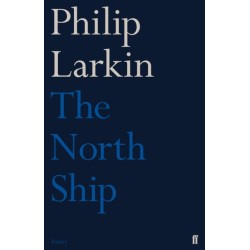
The North Ship (Bog, Paperback / softback, Engelsk)
The North Ship, Philip Larkin's earliest volume of verse, was first published in August 1945 and reissued in 1966 by Faber.
Levering: 6 - 9 hverdage -
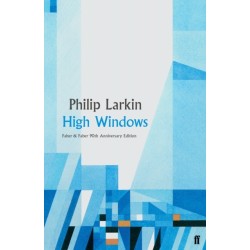
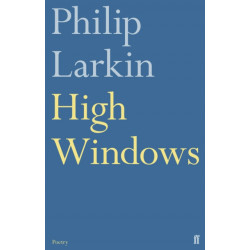
High Windows (Bog, Hardback, Engelsk)
Larkin's final collection of poems shows, as does all his best work, his ability to adapt contemporary speech rhythms and everyday vocabulary to subtle metrical patterns and poetic forms.
Levering: 6 - 9 hverdage -
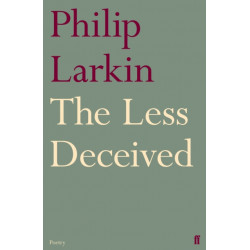
The Less Deceived (Bog, Paperback / softback, Engelsk)
The eye can hardly pick them out. From the cold shade they shelter in, Till wind distresses tail and mane; Then one crops grass, and moves about - The other seeming to look on - And stands anonymous again.
Levering: 6 - 9 hverdage -
High Windows (Bog, Paperback / softback, Engelsk)
Larkin's final collection of poems shows, as does all his best work, his ability to adapt contemporary speech rhythms and everyday vocabulary to subtle metrical patterns and poetic forms.
Levering: 6 - 9 hverdage