Rodney Castleden Forfatter
-
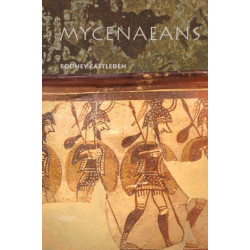
The Mycenaeans (Bog, Hardback, Engelsk)
The Mycenaean world: the stuff of legends and heroes who conquered Troy and who still stand at the heart of Greek identity today. This clear, detailed study brings their civilisation, culture, and history to life for both students and enthusiasts
Levering: Skaffevare (forvent 14 - 30 hverdage) -
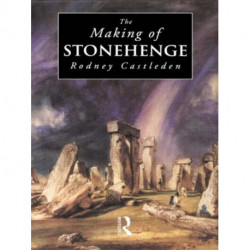
The Making of Stonehenge (Bog, Hardback, Engelsk)
Castleden suggests that there is no one `meaning' or `purpose' for Stonehenge, that from its very beginning it has filled a variety of needs.
Levering: Skaffevare (forvent 14 - 30 hverdage) -
Neolithic Britain: New Stone Age sites of England, Scotland and Wales (Bog, Hardback, Engelsk)
The climax of the Stone Age in Britain, the Neolithic period (4700-2000BC), was a period of startling achievement.
Levering: Skaffevare (forvent 14 - 30 hverdage) -
The Stonehenge People: An Exploration of Life in Neolithic Britain 4700-2000 BC (Bog, Hardback, Engelsk)
Of all the monuments left by the past, Stonehenge is the most evocative, the most memorable and the most mysterious. Whilst the monuments of other cultures have gradually surrendered their mysteries, Stonehenge alone seems to stimulate endless conjecture.
Levering: Skaffevare (forvent 14 - 30 hverdage) -
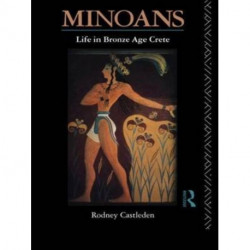
Minoans: Life in Bronze Age Crete (Bog, Hardback, Engelsk)
Bang up to date, and thoroughly researched, Rodney Castleden's Minoans: Life in Bronze Age Crete here sues the results of recent research to produce a comprehensive new vision of the peoples of Minoan Crete.
Levering: Skaffevare (forvent 14 - 30 hverdage) -
King Arthur: The Truth Behind the Legend (Bog, Hardback, Engelsk)
In his quest for the real King Arthur, Rodney Castleden uses archaeological and documentary evidence to recreate the history and society of Dark Age Britain.
Levering: Skaffevare (forvent 14 - 30 hverdage) -
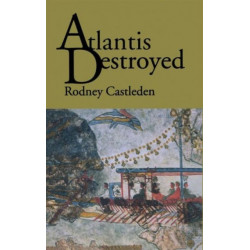
Atlantis Destroyed (Bog, Hardback, Engelsk)
Fired by the imagination a new vision of Atlantis has arisen over the last one hundred and fifty years as a lost utopia. Rodney Castleden discusses why this picture arose and explains how it has become confused with Plato's genuine account.
Levering: Skaffevare (forvent 14 - 30 hverdage) -
The Knossos Labyrinth: A New View of the `Palace of Minos' at Knossos (Bog, Hardback, Engelsk)
The first excavators of the lost site of Knossos in the nineteenth century saw the site through the eyes of the classical authors. Rodney Castleden gives an alternative insight into the labyrinth which is equally exciting.
Levering: Skaffevare (forvent 14 - 30 hverdage)