Samuel S. Kim Forfatter
Visning: Type : Alle | Sprog : Alle | Format : Alle
-
China, the United Nations and World Order (Bog, Paperback / softback, Engelsk)
"Written under the auspices of the Center of International Studies, Princeton University"--Page facing title page.
Levering: Skaffevare (forvent 14 - 30 hverdage) -
China, the United Nations and World Order (Bog, Hardback, Engelsk)
China's role in the United Nations has been a significant one. Yet, Samuel Kim contends, as far as the literature on Chinese foreign policy is concerned, the... Læs mere
Levering: Skaffevare (forvent 14 - 30 hverdage) -
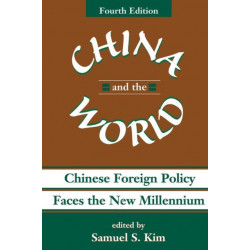
China And The World: Chinese Foreign Policy Faces The New Millennium (Bog, Paperback / softback, Engelsk)
This book poses and addresses several main questions about the major sources, patterns, and consequences of Chinese foreign policy behavior. It represents a joint venture into the seemingly forbidden territory of interdisciplinary inquiry in the study of Chinese foreign policy.
Levering: Skaffevare (forvent 14 - 30 hverdage) -
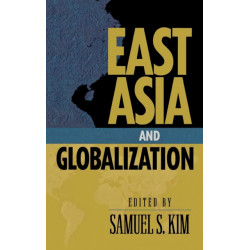
East Asia and Globalization (Bog, Paperback / softback, Engelsk)
This clear and timely book presents the first sustained and structured analysis of globalization in the East Asian context, exploring the strategies used by East Asian countries to cope with the forces of globalization.
Levering: Print on Demand (forvent 14 - 30 hverdage) -
East Asia and Globalization (Bog, Hardback, Engelsk)
This clear and timely book presents the first sustained and structured analysis of globalization in the East Asian context, exploring the strategies used by East Asian countries to cope with the forces of globalization.
Levering: Print on Demand (forvent 14 - 30 hverdage) -
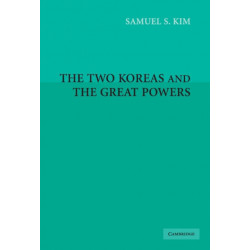
The Two Koreas and the Great Powers (Bog, Paperback / softback, Engelsk)
Emphasizing the most recent developments in East Asia, including the ongoing confrontation with North Korea over its nuclear program, this book examines how North and South Korea have emerged separately and in relation to one another in the post-Cold War world.
Levering: Skaffevare (forvent 14 - 30 hverdage) -
The Two Koreas and the Great Powers (Bog, Hardback, Engelsk)
Emphasizing the most recent developments in East Asia, including the ongoing confrontation with North Korea over its nuclear program, this book examines how North and South Korea have emerged separately and in relation to one another in the post-Cold War world.
Levering: Print on Demand (forvent 14 - 30 hverdage) -
China And The World: Chinese Foreign Policy Faces The New Millennium (Bog, Hardback, Engelsk)
This book poses and addresses several main questions about the major sources, patterns, and consequences of Chinese foreign policy behavior. It represents a joint venture into the seemingly forbidden territory of interdisciplinary inquiry in the study of Chinese foreign policy.
Levering: Skaffevare (forvent 14 - 30 hverdage) -
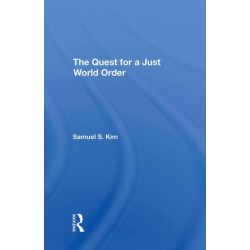
The Quest For A Just World Order (Bog, Hardback, Engelsk)
This book presents a conceptual framework for developing a normative theory of world order. It proposes a variety of desirable and feasible transition strategies and assesses the prospects for achieving a just and humane world order system by the end of this century.
Levering: Skaffevare (forvent 14 - 30 hverdage) -
The Quest For A Just World Order (Bog, Paperback / softback, Engelsk)
This book presents a conceptual framework for developing a normative theory of world order. It proposes a variety of desirable and feasible transition strategies and assesses the prospects for achieving a just and humane world order system by the end of this century.
Levering: Skaffevare (forvent 14 - 30 hverdage)