Søren Kierkegaard Forfatter
Visning: Type : Alle | Sprog : Engelsk | Format : Paperback / softback Der vises kun varer på engelsk
-
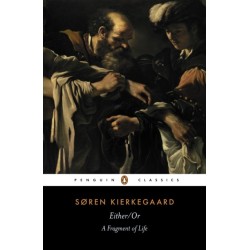
Either/Or: A Fragment of Life (Bog, Paperback / softback, Engelsk)
Published in 1843, this is one of the earliest of Kierkegaard's major works. The author plays devil's advocate putting forward two opposing points of view challenging the reader to question the different alternatives. This book is written to provoke philosophical debate.
Levering: 6 - 9 hverdage -
-
The Sickness Unto Death: A Christian Psychological Exposition of Edification and Awakening by Anti-Climacus (Bog, Paperback / softback, Engelsk)
Explores the concept of 'despair', alerting readers to the diversity of ways in which they may... Læs mere
Levering: 6 - 9 hverdage -
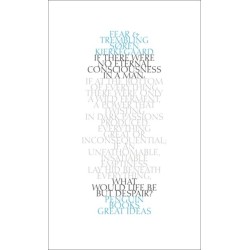
Fear and Trembling: Dialectical Lyric by Johannes De Silentio (Bog, Paperback / softback, Engelsk)
Presents Abraham as a great man, who chose to sacrifice his son, Isaac, in the face of conflicting expectations and in defiance of any conceivable ethical standard.
Levering: 6 - 9 hverdage -
Practice in Christianity: Practice in Christianity (Bog, Paperback / softback, Engelsk)
In his reflections on such topics as Christ's invitation to the burdened, the imitatio Christi, the possibility of offense, and the exalted... Læs mere
Levering: Skaffevare (forvent 14 - 30 hverdage) -
-
Upbuilding Discourses in Various Spirits: Upbuilding Discourses in Various Spirits (Bog, Paperback / softback, Engelsk)
Offers a discussion of double-mindedness and ethical integrity. This work shows an inverted qualitative difference between the learner and the teacher. It explores how joy can come out of suffering.
Levering: Skaffevare (forvent 14 - 30 hverdage) -
Concluding Unscientific Postscript to Philosophical Fragments: Volume I (Bog, Paperback / softback, Engelsk)
Takes on the "unscientific" form of a mimical-pathetical-dialectical compilation of ideas. This work examines the truth of Christianity as an objective issue and the subjective issue of what is involved for the individual in becoming a Christian.
Levering: Skaffevare (forvent 14 - 30 hverdage) -
Two Ages: The Age of Revolution and the Present Age A Literary Review: Two Ages: The Age of Revolution and the Present Age A Literary Review (Bog, Paperback / softback, Engelsk)
After deciding to terminate his authorship with the pseudonymous "Concluding Unscientific... Læs mere
Levering: Skaffevare (forvent 14 - 30 hverdage) -
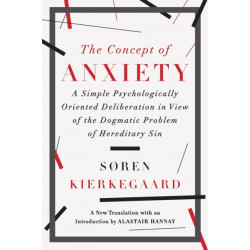
The Concept of Anxiety: A Simple Psychologically Oriented Deliberation in View of the Dogmatic Problem of Hereditary Sin (Bog, Paperback / softback, Engelsk)
The first new translation of Kierkegaard's masterwork in a generation brings to vivid life this essential work of modern philosophy.
Levering: 6 - 9 hverdage -
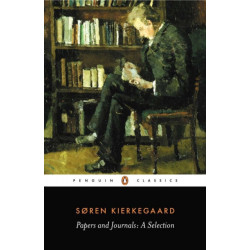
Papers and Journals (Bog, Paperback / softback, Engelsk)
One of the greatest thinkers of the nineteenth century, Soren Kierkegaard (1814-55) often expressed himself through pseudonyms and disguises. This book features his private reflections that reveal the development of his own thought and personality.
Levering: 6 - 9 hverdage -
The The Sickness Unto Death (Bog, Paperback / softback, Engelsk)
Influencing philosophers such as Sartre and Camus, and still modern in its psychological insights, this work explores the concept of 'despair' as a symptom of the human condition and describes man's struggle to fill the spiritual void.
Levering: 6 - 9 hverdage