Archaeopress Forlag
-
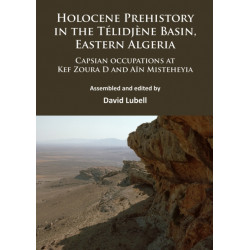
Holocene Prehistory in the Telidjene Basin, Eastern Algeria: Capsian occupations at Kef Zoura D and Ain Misteheyia (Bog, Paperback / softback, Fransk)
Excavations at Kef Zoura D and Aïn Misteheyia - stratified Capsian escargotières (one openair, the other a rockshelter) in the Télidjène Basin, Eastern Algeria.
Levering: 6 - 9 hverdage -
Cedar Forests, Cedar Ships: Allure, Lore, and Metaphor in the Mediterranean Near East (Bog, Paperback / softback, Engelsk)
It is commonly recognized that the Cedars of Lebanon were prized in the ancient world, but how can the complex archaeological role of the Cedrus genus be articulated in terms that go beyond its interactions with humans alone?
Levering: 6 - 9 hverdage -
Archaeology of the Ouse Valley, Sussex, to AD 1500 (Bog, Paperback / softback, Engelsk)
This is the first review of the archaeology of this important landscape – from Palaeolithic to medieval times by contributors all routed in the archaeology of Sussex.
Levering: 6 - 9 hverdage -
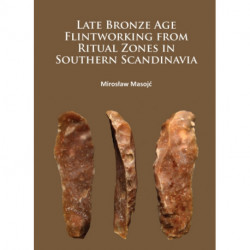
Late Bronze Age Flintworking from Ritual Zones in Southern Scandinavia (Bog, Paperback / softback, Engelsk)
This book is devoted to flintworking encountered in the so-called cult houses and ritual zones from the Late Bronze Age in southern Scandinavia, where thousands of barrows were built in the period from the Neolithic to the end of the Early Bronze Age
Levering: 6 - 9 hverdage -
El Sur de la Peninsula Iberica y el Mediterraneo Occidental: relaciones culturales en la segunda mitad del II milenio a.C. (Bog, Paperback / softback, Spansk)
Greek epics are the basis for the first speculations that link societies all along the Mediterranean coast. This book strives to distinguish reality from myth in the pursuit of a bond of certainty between the data provided by historical, literary and archaeological sources.
Levering: 6 - 9 hverdage -
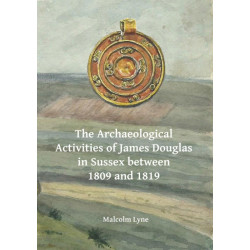
The Archaeological Activities of James Douglas in Sussex between 1809 and 1819 (Bog, Paperback / softback, Engelsk)
James Douglas (1753-1819) was a polymath, well ahead of his time in both the fields of archaeology and earth-sciences. This book recounts his archaeological and other activities in Sussex during the first two decades of the 19th century.
Levering: 6 - 9 hverdage -
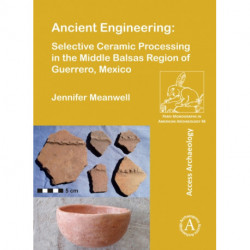
Ancient Engineering: Selective Ceramic Processing in the Middle Balsas Region of Guerrero, Mexico (Bog, Paperback / softback, Engelsk)
This volume has two main objectives: establishing a chronology of the Middle Balsas and detailing the... Læs mere
Levering: 6 - 9 hverdage -
Hillforts, Warfare and Society in Bronze Age Ireland (Bog, Paperback / softback, Engelsk)
This is the first project to study hillforts in relation to warfare and conflict in Bronze Age Ireland. This project combines remote sensing and GIS-based landscape analysis with conventional archaeological survey to investigate ten prehistoric hillforts across southern Ireland.
Levering: 6 - 9 hverdage -
The Archaeology and History of the Church of the Redeemer and the Muristan in Jerusalem: A Collection of Essays from a Workshop on the Church of the Redeemer and its Vicinity held on 8th/9th September 2014 in Jerusalem (Bog, Paperback / softback, Engelsk)
This monograph contains fifteen chapters written by leading scholars from around the world dealing with the archaeological and historical aspects of the Muristan from the Iron Age through to Ottoman times.
Levering: 6 - 9 hverdage -
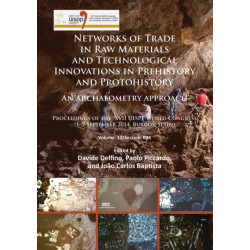
Networks of trade in raw materials and technological innovations in Prehistory and Protohistory: an archaeometry approach: Proceedings of the XVII UISPP World Congress (1–7 September 2014, Burgos, Spain) Volume 12/Session B34 (Bog, Paperback / softback, Engelsk)
Specialists from various disciplines (humanities and natural sciences)... Læs mere
Levering: 6 - 9 hverdage -
Brochs and the Empire: The impact of Rome on Iron Age Scotland as seen in the Leckie broch excavations (Bog, Paperback / softback, Engelsk)
Excavations of the Leckie Iron Age broch in Stirlingshire, Scotland, reflect the expansion of the Roman Empire into southern Scotland in the late first century AD
Levering: 6 - 9 hverdage -
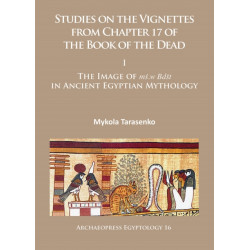
Studies on the Vignettes from Chapter 17 of the Book of the Dead: I: The Image of ms.w Bdst in Ancient Egyptian Mythology (Bog, Paperback / softback, Engelsk)
This book is a comprehensive study of the myth of the Egyptian deities ms.w Bdšt - ‘Children of Weakness’ - and the scene depicting the cat, cutting off the head of the serpent under the branches of the išd-tree found on a number of Book of the Dead chapter 17 vignettes.
Levering: 6 - 9 hverdage