Archaeopress Forlag
-
Archaeology with Art (Bog, Paperback / softback, Engelsk)
Based on a 2013 Theoretical Archaeology Group (TAG) conference session, this book aims to merge the perspectives of artists and archaeologists on making art. It explores the... Læs mere
Levering: 6 - 9 hverdage -
Les sepultures mesolithiques de Teviec et Hoedic: revisions bioarcheologiques (Bog, Paperback / softback, Fransk)
This book presents the long lacking bioarchaeological review study of the Teviec and Hoedic graves, located in Brittany and excavated from 1928 to 1934 by Marthe and Saint-Just Péquart.
Levering: 6 - 9 hverdage -
Bearsden: The Story of a Roman Fort (Bog, Paperback / softback, Engelsk)
This accessible account of the discoveries at the Roman fort at Bearsden examines the process of archaeological excavation, the life of the soldiers at the fort based on the results of the excavation as well as material from elsewhere in the Roman Empire.
Levering: 6 - 9 hverdage -
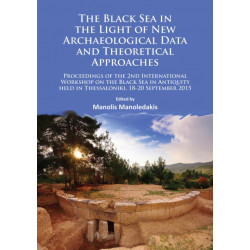
The Black Sea in the Light of New Archaeological Data and Theoretical Approaches: Proceedings of the 2nd International Workshop on the Black Sea in Antiquity held in Thessaloniki, 18-20 September 2015 (Bog, Paperback / softback, Engelsk)
The Black Sea in the Light of New Archaeological Data and Theoretical Approaches contains 19 papers on the archaeology and ancient history of the Black Sea region, covering a vast period of time, from the Early Iron Age until the Late Roman – Early Byzantine Periods.
Levering: 6 - 9 hverdage -
The Archaeology of Time Travel: Experiencing the Past in the 21st Century (Bog, Paperback / softback, Engelsk)
This volume explores the relevance of time travel as a characteristic contemporary way to approach the past. Papers explore... Læs mere
Levering: 6 - 9 hverdage -
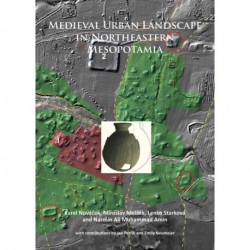
Medieval Urban Landscape in Northeastern Mesopotamia (Bog, Paperback / softback, Engelsk)
Investigates the sites which formed an urban network from 6th to 19th centuries in the region of northeastern Mesopotamia, bounded by the rivers Great Zab, Little Zab and Tigris.
Levering: 6 - 9 hverdage -
Dress and Identity in Iron Age Britain: A study of glass beads and other objects of personal adornment (Bog, Paperback / softback, Engelsk)
Through an analysis of glass beads from four key study regions in Britain, the book aims to explore the role that this object played within the networks and relationships that constructed Iron Age society.
Levering: 6 - 9 hverdage -
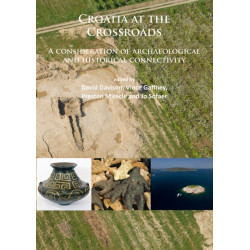
Croatia at the Crossroads: A consideration of archaeological and historical connectivity: Proceedings of conference held at Europe House, Smith Square, London, 24–25 June 2013 to mark the accession of Croatia to the European Union (Bog, Paperback / softback, Engelsk)
Papers focus on Croatia’s particular interconnectedness in terms of social and cultural relationships with the wider region as the starting point for exploring issues across a broad chronological range, from human origins to modernity.
Levering: 6 - 9 hverdage -
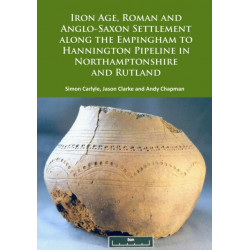
Iron Age, Roman and Anglo-Saxon Settlement along the Empingham to Hannington Pipeline in Northamptonshire and Rutland (Bog, Paperback / softback, Engelsk)
Reports on excavations by Northamtonshire Archaeology (now MOLA) in the south-east Midlands region; Nineteen sites were investigated, dating primarily to the Iron Age, Roman and Anglo-Saxon periods
Levering: 6 - 9 hverdage -
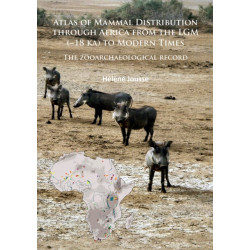
Atlas of Mammal Distribution through Africa from the LGM (~18 ka) to Modern Times: The zooarchaeological record (Bog, Paperback / softback, Engelsk)
This work provides the first overview of mammal species distributions in Africa since the Last Glacial Maximum (LGM, 18 ky) to modern time
Levering: 6 - 9 hverdage -
Materials, Productions, Exchange Network and their Impact on the Societies of Neolithic Europe: Proceedings of the XVII UISPP World Congress (1–7 September 2014, Burgos, Spain) Volume 13/Session A25a (Bog, Paperback / softback, Engelsk)
How is it possible to identify the circulation of materials or of finished objects in Neolithic Europe, as well as the social networks involved? Several approaches exist for the researcher, and the present volume provides some examples.
Levering: 6 - 9 hverdage -
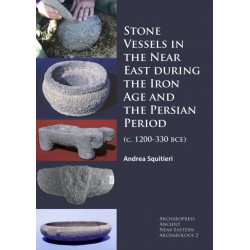
Stone Vessels in the Near East during the Iron Age and the Persian Period: (c. 1200-330 BCE) (Bog, Paperback / softback, Engelsk)
This book focuses on the characteristics and the development of the stone vessel industry in the Near East during the Iron Age and the Persian period (c. 1200 – 330 BCE).
Levering: 6 - 9 hverdage