Archaeopress Forlag
-
Archeologie de la Bible hebraique: Culture scribale et Yahwismes (Bog, Paperback / softback, Fransk)
This volume presents an archaeological exploration of the Hebrew Bible. It examines the notion of "The Bible", not as a controlled theological and historiographical project but as the empirical arrangement of heterogeneous texts linked together by an evolving religious ideology.
Levering: 6 - 9 hverdage -
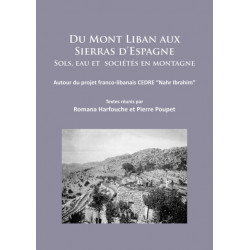
Du Mont Liban aux Sierras d’Espagne: Sols, eau et societes en montagne: Autour du projet franco-libanais CEDRE “Nahr Ibrahim” (Bog, Paperback / softback, Fransk)
This volume presents the results of the CEDRE multidisciplinary project NAHR IBRAHIM that was led on the Lebanese mountain centered around the Nahr Ibrahim valley (the famous Adonis valley in Antiquity), in the hinterland of the ancient city of Byblos.
Levering: 6 - 9 hverdage -
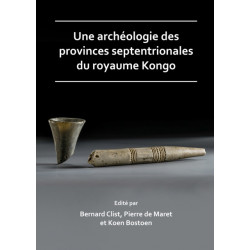
Une archeologie des provinces septentrionales du royaume Kongo (Bog, Paperback / softback, Fransk)
This book presents in detail the results of archaeological research carried out by the KongoKing project in the former northern provinces of the Kongo Kingdom, currently located in the Democratic Republic of Congo.
Levering: 6 - 9 hverdage -
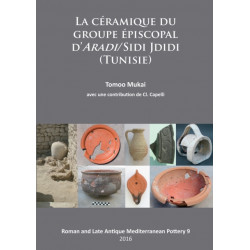
La Ceramique du groupe episcopal d’ARADI/Sidi Jdidi (Tunisie) (Bog, Paperback / softback, Fransk)
This study focuses on ceramic finds from the excavations (1996-2006) of the Episcopal Group of Sidi Jdidi, the ancient city of Aradi, in the hinterland of Hammamet in Tunisia.
Levering: 6 - 9 hverdage -
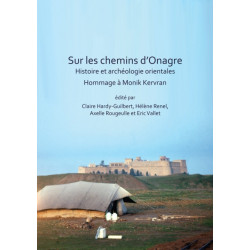
Sur les chemins d’Onagre: Histoire et archeologie orientales: Hommage a Monik Kervran (Bog, Paperback / softback, Fransk)
This volume is in honour of Monik Kervran, a pioneer of the French Islamic archaeology in the Middle East. Through the nineteen international contributions found within, the editors and contributors wish to highlight the variety of Monik Kervran’s scientific interests.
Levering: 6 - 9 hverdage -
L’ oblique dans le monde grec: Concept et imagerie (Bog, Paperback / softback, Fransk)
Explores the ancient Greeks' apprehension (or lack thereof) of the concept of oblique. The study of written and figurative languages each bring a different and complementary perspective.
Levering: 6 - 9 hverdage -
Redonner vie a une collection: les terres cuites communes du fort La Tour (Bog, Paperback / softback, Fransk)
Research on common earthenware from the early 17th century is scarce. This study seeks to bring back to life the ceramics,... Læs mere
Levering: 6 - 9 hverdage -
Megalithismes vivants et passes: approches croisees: Living and Past Megalithisms: interwoven approaches (Bog, Paperback / softback, Fransk)
This volume seeks, through both case studies and more synthetic works, to discuss how the patterns drawn from the observation of 'living' megalithic societies have been used to try and shed light on the functioning of European Neolithic societies.
Levering: 6 - 9 hverdage -
Verres incolores de L’antiquite romaine en Gaule et aux marges de la Gaule (Bog, Paperback / softback, Fransk)
Colourless glass became prominent between the middle of the 1st century AD and the beginning of the 4th century. This book reflects the diversity of glass and is designed as a practical manual divided into three parts: Assemblages, Typological Catalogue, Chemical Analyses.
Levering: 6 - 9 hverdage -
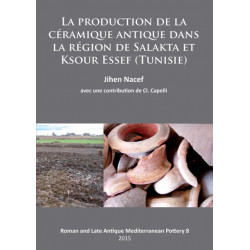
La production de la ceramique antique dans la region de Salakta et Ksour Essef (Tunisie) (Bog, Paperback / softback, Fransk)
This publication provides the most updated information on the ceramic production (amphorae, cooking and coarse wares, ceramic building materials) of Salakta and the Ksour Essef district, in the Sahel region of Tunisia, from the 3rd century BC to the 7th century AD.
Levering: 6 - 9 hverdage -
Water as a morphogen in landscapes/L’eau comme morphogene dans les paysages: Proceedings of the XVII UISPP World Congress (1–7 September 2014, Burgos, Spain) Volume 4/Session A14 (Bog, Paperback / softback, Fransk)
Water as generator of networks was the core topic of the second session organized by the commission Theory and Methods in Landscape Archaeology: Archeogeography that began in 2011 on occasion of the Florianopolis Congress.
Levering: 6 - 9 hverdage -
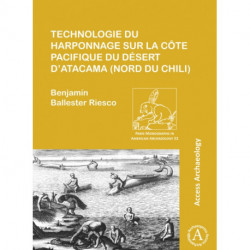
Technologie du harponnage sur la cote Pacifique du desert d’Atacama (nord du Chili) (Bog, Paperback / softback, Fransk)
Throughout the volume the reader will follow a representation of a marine hunter-gatherer society, a projection deriving from one of its iconic and most important material assets, the harpoon.
Levering: 6 - 9 hverdage