Archaeopress Forlag
Visning: Type : Alle | Sprog : Alle | Format : Alle
-
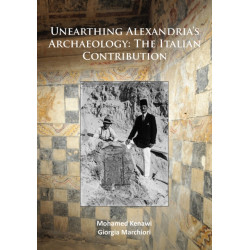
Unearthing Alexandria’s Archaeology: The Italian Contribution (Bog, Paperback / softback, Engelsk)
Presents an archival survey, historical research, and archaeological description of the main Italian excavations in Alexandria from the 1890s... Læs mere
Levering: 6 - 9 hverdage -
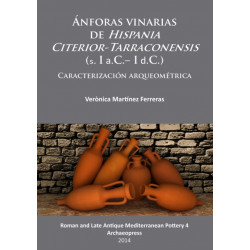
Anforas vinarias de Hispania Citerior-Tarraconensis (s. I a.C.– I d.C.): Caracterizacion arqueometrica (Bog, Paperback / softback, Spansk)
This volume presents the results of a multidisciplinary archaeological and archaeometric study of the wine amphorae produced in Hispania Citerior (Tarraconensis, in Augustus’ reorganisation) between the first century BC and the first century AD.
Levering: 6 - 9 hverdage -
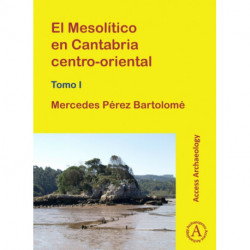
El Mesolitico en Cantabria centro-oriental (Bog, Paperback / softback, Spansk)
This book explores the Mesolithic period in the central-eastern area of Cantabria (Spain) as a manifestation of sociocultural evolution and change of the societies that lived in the area between the ninth and sixth millennia cal BC, until the introduction of farming.
Levering: 6 - 9 hverdage -
EurASEAA14 Volume I: Ancient and Living Traditions: Papers from the Fourteenth International Conference of the European Association of Southeast Asian Archaeologists (Bog, Paperback / softback, Engelsk)
This volume comprises papers originally presented at the EurASEAA14... Læs mere
Levering: 6 - 9 hverdage -
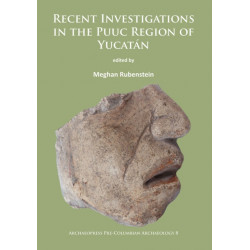
Recent Investigations in the Puuc Region of Yucatan (Bog, Paperback / softback, Engelsk)
Papers focus on the history of the Puuc region, Yucatán, incorporating archaeological, architectural, epigraphic, and iconographic studies.
Levering: 6 - 9 hverdage -
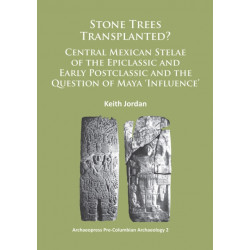
Stone Trees Transplanted? Central Mexican Stelae of the Epiclassic and Early Postclassic and the Question of Maya ‘Influence’ (Bog, Paperback / softback, Engelsk)
Stelae dating to the Epiclassic and Early Postclassic from Tula, Xochicalco, and... Læs mere
Levering: 6 - 9 hverdage -
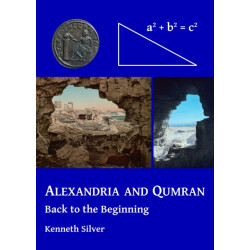
Alexandria and Qumran: Back to the Beginning (Bog, Paperback / softback, Engelsk)
This book addresses the proto-history and the roots of the Qumran community and of the Dead Sea Scrolls in the light of contemporary scholarship in Alexandria, Egypt.
Levering: 6 - 9 hverdage -
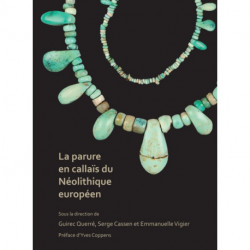
La parure en callais du Neolithique europeen (Bog, Hardback, Engelsk)
Callaïs refers to the green stones from which the remarkable ornaments discovered in several Neolithic sites in Western Europe are made. This volume brings... Læs mere
Levering: 6 - 9 hverdage -
The Maritime Traditions of the Fishermen of Socotra, Yemen (Bog, Paperback / softback, Engelsk)
This research analyses the Socotri maritime traditions and addressing the question as to how social, environmental and technological influences have shaped the maritime traditions of the fishermen of Socotra (205 nautical miles south of Yemen).
Levering: 6 - 9 hverdage -
Quebrando rocas, una aproximacion metodologica para el estudio del cuarzo en contextos arqueologicos de Cordoba (Argentina) (Bog, Paperback / softback, Spansk)
This book offers a valuable contribution to the development of a methodology to... Læs mere
Levering: 6 - 9 hverdage -
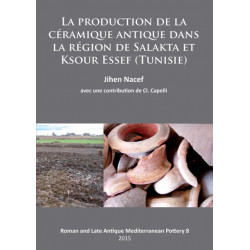
La production de la ceramique antique dans la region de Salakta et Ksour Essef (Tunisie) (Bog, Paperback / softback, Fransk)
This publication provides the most updated information on the ceramic production (amphorae, cooking and coarse wares, ceramic building materials) of Salakta and the Ksour Essef district, in the Sahel region of Tunisia, from the 3rd century BC to the 7th century AD.
Levering: 6 - 9 hverdage -
Die Bleifunde der romisch-republikanischen Anlage von Sanisera, Menorca: Archaologische und archaometrische Analyse (Bog, Paperback / softback, Tysk)
This book presents archaeological and archaeometrical analysis of the lead finds from the Roman Republican military fort of Sanisera, northern Minorca. It places Sanisera within the historical context of the development of the late Roman Republic and early Imperial times.
Levering: 6 - 9 hverdage