Central European University Press Forlag
-
Austerities and Aspirations: A Comparative History of Growth, Consumption, and Quality of Life in East Central Europe Since 1945 (Bog, Hardback, Engelsk)
This monograph provides an analysis of the economic performance and living standard in Czechoslovakia and its successor states, Hungary, and Poland since 1945.
Levering: Skaffevare (forvent 14 - 30 hverdage) -
The Rise of Comparative History (Bog, Hardback, Engelsk)
This book-the first of a 3-volume overview of comparative and transnational historiography in Europe-focuses on the complex engagement of various comparative methodological approaches with different transnational and supranational frameworks.
Levering: Skaffevare (forvent 14 - 30 hverdage) -
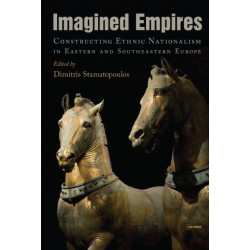
Imagined Empires: Tracing Imperial Nationalism in Eastern and Southeastern Europe (Bog, Hardback, Engelsk)
The Balkans offer classic examples of how empires imagine they can transform themselves into national states (Ottomanism) and how... Læs mere
Levering: Skaffevare (forvent 14 - 30 hverdage) -
Byzantium after the Nation: The Problem of Continuity in Balkan Historiographies (Bog, Hardback, Engelsk)
The first systematic comparison of how Greek, Bulgarian, Serbian, Albanian, Romanian, Turkish, and Russian intellectuals... Læs mere
Levering: Skaffevare (forvent 14 - 30 hverdage) -
Making and Breaking the Yugoslav Working Class: The Story of Two Self-Managed Factories (Bog, Hardback, Engelsk)
Investigation of workers' self-management, a unique feature of communist Yugoslavia, by analyzing how blue-collar workers perceived the regime's recurring crises through a study of two self-managed metal enterprises (one in Serbia, another in Slovenia) between 1945 and 1989.
Levering: Skaffevare (forvent 14 - 30 hverdage) -
The Tsar, The Empire, and The Nation: Dilemmas of Nationalization In Russia’s Western Borderlands, 1905-1915 (Bog, Hardback, Engelsk)
This collection of essays addresses the challenge of modern nationalism to the tsarist Russian Empire, particularly on its western periphery in 12 provinces extending from Ukrainian lands in the south to the Baltic provinces in the north and the Kingdom of Poland.
Levering: Skaffevare (forvent 14 - 30 hverdage) -
Nation and Migration: How Citizens in Europe Are Coping with Xenophobia (Bog, Hardback, Engelsk)
Provides a framework for understanding recent European migration events by analyzing how the emergence of Western nations promised... Læs mere
Levering: Skaffevare (forvent 14 - 30 hverdage) -
Making Muslim Women European: Voluntary Associations, Islam and Gender in Post-Ottoman Bosnia and Yugoslavia (1878-1941) (Bog, Hardback, Engelsk)
This social, cultural, and political history of Slavic Muslim women of the Yugoslav region in the first decades of the post-Ottoman era is the first to provide a comprehensive overview of the issues confronting these women.
Levering: Skaffevare (forvent 14 - 30 hverdage) -
The University in the Twenty-first Century: Teaching the New Enlightenment in the Digital Age (Bog, Hardback, Engelsk)
Examines the challenges facing 21st-century universities, with Elkana and Klöpper advocating for a... Læs mere
Levering: Skaffevare (forvent 14 - 30 hverdage) -
Subversive Stages: Theater in Pre- and Post-Communist Hungary, Romania and Bulgaria (Bog, Hardback, Engelsk)
Exploring theater practices in communist and post-communist Hungary, Romania and Bulgaria, this book analyzes... Læs mere
Levering: Skaffevare (forvent 14 - 30 hverdage) -
The Apocalyptic Complex: Perspectives, Histories, Persistence (Bog, Hardback, Engelsk)
The thirteen essays in this volume explore the everyday relevance of the apocalyptic in contemporary society, culture, and politics, side by side with the various histories of apocalyptic ideas and movements.
Levering: Skaffevare (forvent 14 - 30 hverdage) -
Totalitarian Societies and Democratic Transition: Essays in Memory of Victor Zaslavsky (Bog, Hardback, Engelsk)
This book is a tribute to the memory of Victor Zaslavsky (1937–2009), sociologist, émigré from the Soviet Union, Canadian citizen, public intellectual, and keen observer of Eastern Europe.
Levering: Skaffevare (forvent 14 - 30 hverdage)