Central European University Press Forlag
-
Muslim Land, Christian Labor: Transforming Ottoman Imperial Subjects into Bulgarian National Citizens, c. 1878-1939 (Bog, Hardback, Engelsk)
Focusing upon a region in Southern Bulgaria, a region that has been the crossroads between Europe and Asia for many centuries, this book describes how former Ottoman Empire Muslims were transformed into citizens of Balkan nation-states.
Levering: Skaffevare (forvent 14 - 30 hverdage) -
Shortcut or Piecemeal: Economic Development Strategies and Structural Change (Bog, Hardback, Engelsk)
Alternative strategies of economic development have received little attention in the literature. Academics rarely compare certain strategic features or assess the performance of different strategies in terms of outcomes.
Levering: Skaffevare (forvent 14 - 30 hverdage) -
Art beyond Borders: Artistic Exchange in Communist Europe (1945-1989) (Bog, Hardback, Engelsk)
This book presents and analyzes artistic interactions both within the Soviet bloc and between the Western bloc between 1945 and 1989.
Levering: Skaffevare (forvent 14 - 30 hverdage) -
Those Who Count: Expert Practicies of Roma Classification (Bog, Hardback, Engelsk)
The book takes a historical perspective on Roma group construction, both as an epistemic object and a policy target, with a focus on the expert discourse of the last two decades.
Levering: Skaffevare (forvent 14 - 30 hverdage) -
The Eugenic Fortress: The Transylvanian Saxon Experiment in Interwar Romania (Bog, Hardback, Engelsk)
The Eugenic Fortress examines the eugenic movement that emerged in the early twentieth century, and focuses on its conceptual and methodological evolution during this turbulent period.
Levering: Skaffevare (forvent 14 - 30 hverdage) -
Enemies for a Day: Antisemitism and Anti-Jewish Violence in Lithuania under the Tsars (Bog, Hardback, Engelsk)
Examines anti-Jewish violence in 19th century Lithuania by first illustrating widespread anti-Jewish feelings among... Læs mere
Levering: Skaffevare (forvent 14 - 30 hverdage) -
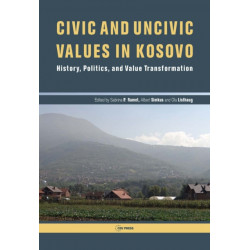
Civic and Uncivic Values in Kosovo: History, Politics, and Value Transformation (Bog, Hardback, Engelsk)
This volume is based on the conviction that the key to the establishment of stable liberal democracy lies in the completion of three interrelated tasks: The creation of effective political institutions, the implementation of the rule of law, and the promotion of civic values.
Levering: Skaffevare (forvent 14 - 30 hverdage) -
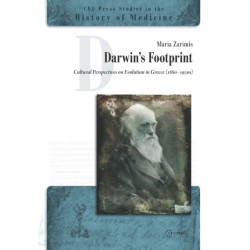
Darwin's Footprint: Cultural Perspectives on Evolution in Greece (1880–1930s) (Bog, Hardback, Engelsk)
Examines how Darwinism profoundly influenced Greek cultural and intellectual history from the late 19th to early 20th centuries,... Læs mere
Levering: Skaffevare (forvent 14 - 30 hverdage) -
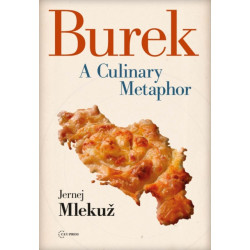
Burek: A Culinary Metaphor (Bog, Hardback, Engelsk)
Challenges the Slovenian phrase as simple as burek by arguing that this Balkan pastry is actually a complex cultural artifact loaded with ideological meanings related to immigration, nationalism, and identity in Slovenia.
Levering: Skaffevare (forvent 14 - 30 hverdage) -
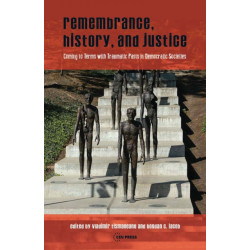
Remembrance, History, and Justice: Coming to terms with traumatic pasts in democratic societies (Bog, Hardback, Engelsk)
The volume is an up-to-date reassessment of how the interplay between memory, history, and justice generates insights that examine the present and future of democracy without becoming limited to a Europe-centric framework of understanding.
Levering: Skaffevare (forvent 14 - 30 hverdage) -
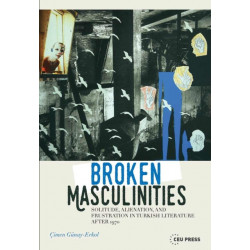
Broken Masculinities: Solitude, Alienation, and Frustration in Turkish Literature after 1970 (Bog, Hardback, Engelsk)
Examines the post-dictatorial Turkish novels of the 1970s following the 1971 coup, arguing that these works constitute a coherent sub-genre characterized by images of men and women craving power amid general isolation, sexual-emotional frustration, and traumatic alienation.
Levering: Skaffevare (forvent 14 - 30 hverdage) -
The Positive Mind: Its Development and Impact on Modernity and Postmodernity (Bog, Hardback, Engelsk)
Provides a radical reappraisal of positivism as a major philosophical, scientific, and cultural movement, offering a more precise definition while demonstrating how positivist thinkers connected problems of knowledge and science with ethics, social philosophy, and politics.
Levering: Skaffevare (forvent 14 - 30 hverdage)