DOM Publishers Forlag
-
The History of Architecture: From the Avant-Garde Towards the Present (Bog, Paperback / softback, Engelsk)
Organised chronologically, this volume analyses the dynamics, convergences, and ideological clashes that have given life to the most significant movements of the twentieth century and today to the season of recent phantasmagoric buildings of the so-called Star System.
Levering: 6 - 9 hverdage -
-
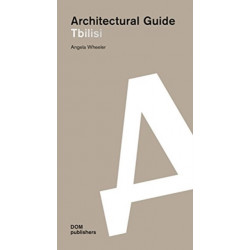
Tbilisi: Architectural Guide (Bog, Paperback / softback, Engelsk)
This book helps to unravel the different layers of this fascinating metropolis. It does so by providing in-depth profiles of more than 120 buildings, themed guides to many others (sacred architecture, Art Nouveau, Constructivism), and essays contributed by local scholars.
Levering: 6 - 9 hverdage -
Moon: Architectural Guide (Bog, Paperback / softback, Engelsk)
In celebration of the 50th anniversary of the first man on the moon, this book for the first time ever looks at the artefacts left behind on the moon from the perspective of architecture.
Levering: 6 - 9 hverdage -
Ludwig Mies van der Rohe: Complete Writings 19221969 (Bog, Paperback / softback, Engelsk)
A heterogeneous collection of writings, speeches, and interviews, revealing how Mies was able to extend his influence well beyond the classroom-studio and the profession to reach a general audience during a time of great cultural and societal upheaval.
Levering: 6 - 9 hverdage -
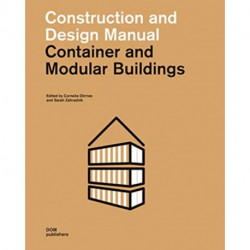
Container and Modular Buildings: Construction and Design Manual (Bog, Paperback / softback, Engelsk)
An in-depth look at how tent cities and containers could possibly be the best short-term housing solution for displaced persons.
Levering: 6 - 9 hverdage -
Moscow: Soviet Mosaics from 1935 to 1990: Art for Architecture (Bog, Paperback / softback, Engelsk)Levering: 6 - 9 hverdage
-
Theorising Architecturein Sub-Saharan Africa: Perspectives, Questions,and Concepts (Bog, Paperback / softback, Engelsk)
Collection of 49 essays searching for new ways to theorisesub-Saharan African architecture, putting forward an array of heterogeneousperspectives, questioning old tropes and emerging narratives, and challengingpopular concepts whilst proposing new ones.
Levering: 6 - 9 hverdage -
-
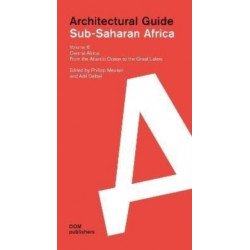
Central Africa: From the Atlantic Ocean to the Great Lakes: Central Africa: From the Atlantic Ocean to the Great Lakes (Bog, Paperback / softback, Engelsk)Levering: 6 - 9 hverdage
-
Moscow: Architectural Guide (Bog, Paperback / softback, Engelsk)
This book guides you through Moscow's history, from the fifteenth century to the present day, taking you to well-known landmarks, industrial areas and residential districts. It includes more than 550 buildings, structures, parks and squares, detailed maps and QR codes.
Levering: 6 - 9 hverdage -
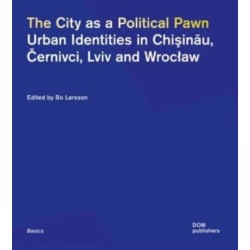
The City as a Political Pawn: Urban Identities in Chiinu, ernivci, Lviv and Wrocaw (Bog, Paperback / softback, Engelsk)
This book describes the urban environment in the four cities before World War II, and how the present population handles the memories of the past for future development.
Levering: 6 - 9 hverdage