Duke University Press Forlag
-
Discovering Fiction (Bog, Paperback / softback, Engelsk)
Eminent Chinese novelist Yan Lianke offers insights into his views on literature and realism, the major works that inspired him, and his theories of writing.
Levering: 6 - 9 hverdage -
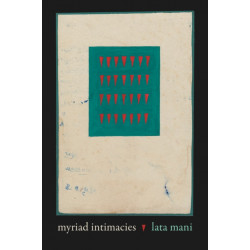
Myriad Intimacies (Bog, Paperback / softback, Engelsk)
Lata Mani oscillates between poetry and prose, genre and form, register and voice, and secular and sacred to meditate on the ways in which everyone and everything exists in mutually constitutive interrelations.
Levering: 6 - 9 hverdage -
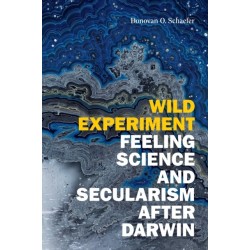
Wild Experiment: Feeling Science and Secularism After Darwin (Bog, Paperback / softback, Engelsk)
Examining the reception of evolutionary biology, the 1925 Scopes Trial, and the New Atheist movement of the 2000s, Donovan O. Schaefer theorizes the relationship between thinking and feeling by challenging the conventional wisdom that they are separate.
Levering: 6 - 9 hverdage -
In the Shadow of the Palms: More-Than-Human Becomings in West Papua (Bog, Paperback / softback, Engelsk)
Sophie Chao examines the multispecies entanglements of oil palm plantations in West Papua, Indonesia, showing how Indigenous Marind communities understand and navigate the social, political, and environmental demands of the oil palm plant.
Levering: 6 - 9 hverdage -
Paradoxes of Nostalgia: Cold War Triumphalism and Global Disorder Since 1989 (Bog, Paperback / softback, Engelsk)
Penny M. Von Eschen offers a sweeping examination of the afterlife of the cold war and its lingering shadows, showing how a nostalgia and longing for stability fuels US-led militarism and the rise of xenophobic right-wing nationalism and authoritarianism around the world.
Levering: 6 - 9 hverdage -
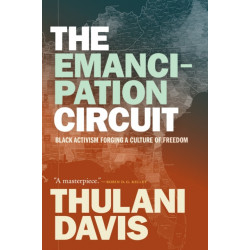
The Emancipation Circuit: Black Activism Forging a Culture of Freedom (Bog, Paperback / softback, Engelsk)
Thulani Davis provides a sweeping rethinking of Reconstruction by tracing how the four million people newly freed from bondage created political organizations and connections that mobilized communities across the South.
Levering: 6 - 9 hverdage -
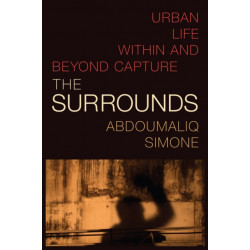
The Surrounds: Urban Life Within and Beyond Capture (Bog, Paperback / softback, Engelsk)
Working at the intersection of urban theory, Black studies, and decolonial and Islamic thought, AbdouMaliq Simone offers a new theorization of the interface of the urban and the political.
Levering: 6 - 9 hverdage -
A Ritual Geology: Gold and Subterranean Knowledge in Savanna West Africa (Bog, Paperback / softback, Engelsk)
Robyn d’Avignon tells the history of West Africa’s centuries-old indigenous gold mining industries and its shared practices, prohibitions, and cosmological engagements.
Levering: 6 - 9 hverdage -
Legacies of War: Violence, Ecologies, and Kin (Bog, Paperback / softback, Engelsk)
Drawing on ethnographic research in postconflict Peru and Colombia, Kimberly Theidon examines the lives of children born of wartime rape and impact of violence on human and more-than-human lives, bodies, and ecologies.
Levering: 6 - 9 hverdage -
Making Peace with Nature: Ecological Encounters Along the Korean DMZ (Bog, Paperback / softback, Engelsk)
Eleana J. Kim shows how a closer examination of the Demilitarized Zone area in South Korea reveals that the area’s biodiversity is inseparable from scientific practices and geopolitical, capitalist, and ecological dynamics.
Levering: 6 - 9 hverdage -
Consuelo Jimenez Underwood: Art, Weaving, Vision (Bog, Paperback / softback, Engelsk)
The contributors to this volume examine the artistic practice of Consuelo Jimenez Underwood, whose innovative art and urgent engagement with a range of pressing contemporary issues mark her as one of the most vital artists of our time.
Levering: 6 - 9 hverdage -
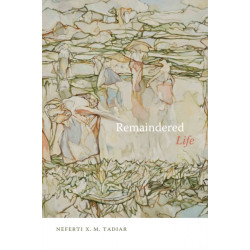
Remaindered Life (Bog, Paperback / softback, Engelsk)
Neferti X. M. Tadiar offers a new conceptual vocabulary and framework for rethinking the dynamics of a global capitalism maintained through permanent imperial war.
Levering: 6 - 9 hverdage