Duke University Press Forlag
-
Junot Diaz: On the Half-Life of Love (Bog, Paperback / softback, Engelsk)
José David Saldívar offers a critical examination of Junot Díaz, showing how his influences converged in his fiction and how his work radically changed the course of US Latinx literature and created a new way of viewing the decolonial world.
Levering: 6 - 9 hverdage -
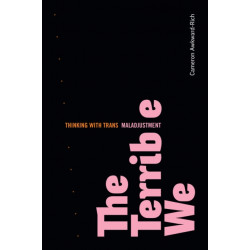
The Terrible We: Thinking with Trans Maladjustment (Bog, Paperback / softback, Engelsk)
Observing that trans studies was founded on a split from and disavowal of madness, illness, and disability, Cameron Awkward-Rich argues for and models a trans criticism that works against this disavowal.
Levering: 6 - 9 hverdage -
Dragging Away: Queer Abstraction in Contemporary Art (Bog, Paperback / softback, Engelsk)
Lex Morgan Lancaster traces the formal and material innovations of contemporary queer and feminist artists, showing how they use abstraction as a queering tactic for social and political ends.
Levering: 6 - 9 hverdage -
Translating Blackness: Latinx Colonialities in Global Perspective (Bog, Paperback / softback, Engelsk)
Drawing from archives and cultural productions from the United States, the Caribbean, and Europe, Lorgia García Peña considers Black Latinidad in a global perspective in order to chart colonialism as an ongoing sociopolitical force.
Levering: 6 - 9 hverdage -
Panama in Black: Afro-Caribbean World Making in the Twentieth Century (Bog, Paperback / softback, Engelsk)
Kaysha Corinealdi traces the multigenerational activism of Afro-Caribbean Panamanians as they forged diasporic communities in Panama and the United States throughout the twentieth century.
Levering: 6 - 9 hverdage -
Markets of Civilization: Islam and Racial Capitalism in Algeria (Bog, Paperback / softback, Engelsk)
Muriam Haleh Davis provides a history of racial capitalism, showing how Islam became a racial category that shaped economic development in colonial and postcolonial Algeria.
Levering: 6 - 9 hverdage -
On the Inconvenience of Other People (Bog, Paperback / softback, Engelsk)
Lauren Berlant continues to explore our affective engagement with the world, focusing on the encounter with and the desire for the bother of other people and objects, showing that to be driven toward attachment is to desire to be inconvenienced.
Levering: 6 - 9 hverdage -
King's Vibrato: Modernism, Blackness, and the Sonic Life of Martin Luther King Jr. (Bog, Paperback / softback, Engelsk)
Maurice O. Wallace explores the sonic character of Martin Luther King Jr.’s voice and how a mixture of architecture, acoustics, sound technology, and gospel influenced it.
Levering: 6 - 9 hverdage -
Memories of a Gay Catholic Boyhood: Coming of Age in the Sixties (Bog, Hardback, Engelsk)
Memories of a Gay Catholic Boyhood is John D’Emilio’s coming-of-age story in which he takes readers from his working-class Bronx neighborhood and Columbia University to New York’s hidden gay male subculture and the political and social upheavals of the late 1960s.
Levering: 6 - 9 hverdage -
On the Inconvenience of Other People (Bog, Hardback, Engelsk)
Lauren Berlant continues to explore our affective engagement with the world, focusing on the encounter with and the desire for the bother of other people and objects, showing that to be driven toward attachment is to desire to be inconvenienced.
Levering: 6 - 9 hverdage -
Annotations: On the Early Thought of W. E. B. Du Bois (Bog, Hardback, Engelsk)
Nahum Dimitri Chandler offers a philosophical interpretation of W. E. B. Du Bois’s 1897 American Negro Academy address, “The Conservation of Races,”... Læs mere
Levering: 6 - 9 hverdage -
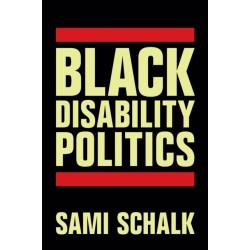
Black Disability Politics (Bog, Paperback / softback, Engelsk)
Drawing on the archives of the Black Panther Party and the National Black Women’s Health Project, Sami Schalk explores how issues of disability have been and continue to be central to Black activism from the 1970s to the present.
Levering: 6 - 9 hverdage