Duke University Press Forlag
Visning: Type : Alle | Sprog : Alle | Format : Alle
-
Colonial Lives of Property: Law, Land, and Racial Regimes of Ownership (Bog, Paperback / softback, Engelsk)
Brenna Bhandar examines how the emergence of modern property law contributed to the formation of racial subjects in settler colonies,... Læs mere
Levering: 6 - 9 hverdage -
Constructing the Pluriverse: The Geopolitics of Knowledge (Bog, Paperback / softback, Engelsk)
The contributors to this volume explore how non-Western, pluriversal approaches to core questions in the social sciences and humanities can help to dramatically rethink the relationship between knowledge and power.
Levering: 6 - 9 hverdage -
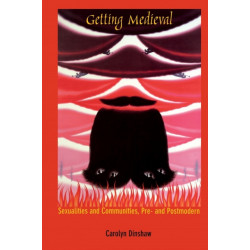
Getting Medieval: Sexualities and Communities, Pre- and Postmodern (Bog, Paperback / softback, Engelsk)
Explores how particular sexual practices and identifications were normalized while others were outlawed in medieval England. This work... Læs mere
Levering: 6 - 9 hverdage -
Edward Said and the Work of the Critic: Speaking Truth to Power (Bog, Paperback / softback, Engelsk)
Assesses various aspects of Edward Said's work - his contributions to postcolonial theory, his work on racism and ethnicity, his aesthetics... Læs mere
Levering: 6 - 9 hverdage -
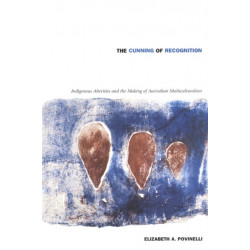
The Cunning of Recognition: Indigenous Alterities and the Making of Australian Multiculturalism (Bog, Paperback / softback, Engelsk)
Argues that the multicultural legacy of colonialism perpetuates unequal systems of power, not by demanding that colonized subjects identify with their colonizers but by demanding that they identify with an impossible standard of authentic traditional culture.
Levering: 6 - 9 hverdage -
Dark Shamans: Kanaima and the Poetics of Violent Death (Bog, Paperback / softback, Engelsk)
Uses an ethnographic example of ritual violence to illuminate cultural expression more widely and thereby reformulate anthropological and historical approaches to warfare and violence.
Levering: 6 - 9 hverdage -
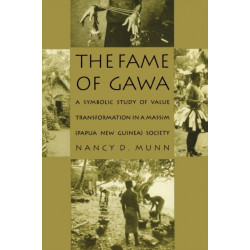
The Fame of Gawa: A Symbolic Study of Value Transformation in a Massim Society (Bog, Paperback / softback, Engelsk)
Deals with fundamental practices of value creation on Gawa, a small island off the southeast coast of mainland Papua New Guinea, the inhabitants of which participate in the long-distance kula shell exchange ring.
Levering: 6 - 9 hverdage -
A Different Light: The Photography of Sebastiao Salgado (Bog, Paperback / softback, Engelsk)
This is the first full critical study of the work of the popular documentary photographer Sebastiao Salgado. Nair explores all the stages of Salgado's work, including the recent more ecological subjects, showing its planetary commitments.
Levering: 6 - 9 hverdage -
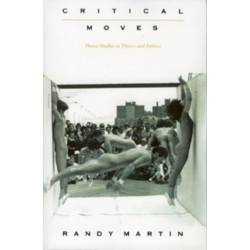
Critical Moves: Dance Studies in Theory and Politics (Bog, Paperback / softback, Engelsk)
Illustrates how the study and practice of dance can reanimate arrested prospects for progressive politics and social change. This book engages a range... Læs mere
Levering: Skaffevare (forvent 14 - 30 hverdage) -
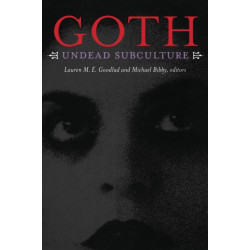
Goth: Undead Subculture (Bog, Paperback / softback, Engelsk)
Since it first emerged from Britain's punk-rock scene in the late 1970s, goth subculture has haunted postmodern culture and society, reinventing itself inside and against the... Læs mere
Levering: Skaffevare (forvent 14 - 30 hverdage) -
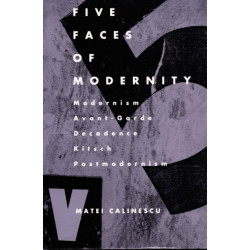
Five Faces of Modernity: Modernism, Avant-garde, Decadence, Kitsch, Postmodernism (Bog, Paperback / softback, Engelsk)Levering: 6 - 9 hverdage
-
Home Rule: National Sovereignty and the Separation of Natives and Migrants (Bog, Paperback / softback, Engelsk)
Nandita Sharma traces the development of the categories of migrants and natives from the nineteenth century to the present to theorize how the idea of people's rights being tied to geographical notions of belonging came to be.
Levering: 6 - 9 hverdage