Duke University Press Forlag
Visning: Type : Alle | Sprog : Alle | Format : Alle
-
The Powers of Dignity: The Black Political Philosophy of Frederick Douglass (Bog, Paperback / softback, Engelsk)
Nick Bromell examines how Frederick Douglass forged a distinctively black political philosophy out of his experiences as an enslaved and later nominally free man in ways that challenge Anglo-Continental traditions of political thought.
Levering: 6 - 9 hverdage -
History on the Run: Secrecy, Fugitivity, and Hmong Refugee Epistemologies (Bog, Paperback / softback, Engelsk)
Ma Vang examines the experiences of Hmong refugees who migrated to the United States following the secret war in Laos (1961–1975) to theorize “history on the run” as a framework for understanding refugee histories, in particular those of the Hmong.
Levering: 6 - 9 hverdage -
Coed Revolution: The Female Student in the Japanese New Left (Bog, Paperback / softback, Engelsk)
In Coed Revolution Chelsea Szendi Schieder examines the campus-based New Left in Japan by exploring the significance of women's participation in the protest movements of the 1960s.
Levering: 6 - 9 hverdage -
Black Utopias: Speculative Life and the Music of Other Worlds (Bog, Paperback / softback, Engelsk)
Engaging with the work of Black musicians, writers, and women mystics, Jayna Brown takes up the concept of utopia as an occasion to explore new states of being, doing, and imagining in Black culture.
Levering: 6 - 9 hverdage -
Experts in Action: Transnational Hong Kong–Style Stunt Work and Performance (Bog, Paperback / softback, Engelsk)
Lauren Steimer examines how Hong Kong-influenced action movie aesthetics and stunt techniques have been taken up, imitated, and reinvented in other locations and production contexts around the globe.
Levering: 6 - 9 hverdage -
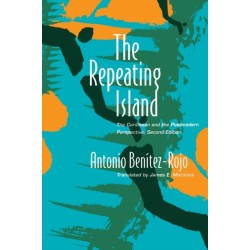
The Repeating Island: The Caribbean and the Postmodern Perspective (Bog, Paperback / softback, Engelsk)Levering: 6 - 9 hverdage
-
Toussaint Louverture: The Story of the Only Successful Slave Revolt in History- a Play in Three Acts (Bog, Paperback / softback, Engelsk)
A new critical edition of Toussaint Louverture, the play written by the Trinidadian intellectual and activist C. L. R. James in 1934, performed at London's Westminster Theatre in 1936, and then presumed lost until its rediscovery in 2005.
Levering: 6 - 9 hverdage -
Pink Globalization: Hello Kitty's Trek Across the Pacific (Bog, Paperback / softback, Engelsk)
Tracing the global circulation and consumption of Hello Kitty, Christine R. Yano analyzes the spread of Japanese "cute-cool" culture, which she sees as combining kitsch with an ironic self-referentiality.
Levering: 6 - 9 hverdage -
The Question of Women in Chinese Feminism (Bog, Hardback, Engelsk)
A history of ideas about women in twentieth-century China. It tracks the categories that Chinese intellectuals have developed to think about women and connects... Læs mere
Levering: Skaffevare (forvent 14 - 30 hverdage) -
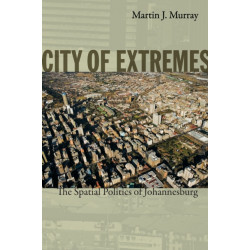
City of Extremes: The Spatial Politics of Johannesburg (Bog, Paperback / softback, Engelsk)
A powerful critique of urban development in greater Johannesburg since the end of apartheid in 1994.
Levering: 6 - 9 hverdage -
Other Planes of There: Selected Writings (Bog, Paperback / softback, Engelsk)
In addition to being a renowned artist, Renee Green is also a prolific writer and a major voice in the international art world. Other Planes of There gathers for the first time a substantial collection of the work she wrote between 1981 and 2010.
Levering: 6 - 9 hverdage -
Useful Cinema (Bog, Paperback / softback, Engelsk)
By exploring the use of film in mid-twentieth-century institutions including libraries, classrooms, and professional organizations, film scholars show how moving images became an ordinary feature of American life.
Levering: Skaffevare (forvent 14 - 30 hverdage)