Duke University Press Forlag
Visning: Type : Alle | Sprog : Alle | Format : Alle
-
Conspiracy/Theory (Bog, Paperback / softback, Engelsk)
The contributors to Conspiracy/Theory evaluate the relationship between critical theory and conspiracy theory as the basis for political thought, showing how people rely on conspiracy theory or critical theory to make sense of complex and confusing events and social crises.
Levering: 6 - 9 hverdage -
Beyond the Sovereign Self: Aesthetic Autonomy from the Avant-Garde to Socially Engaged Art (Bog, Paperback / softback, Engelsk)
Grant H. Kester continues the critique of aesthetic autonomy begun in The Sovereign Self, showing how socially engaged art provides an alternative aesthetic with greater possibilities for critical practice.
Levering: 6 - 9 hverdage -
Architecture of Migration: The Dadaab Refugee Camps and Humanitarian Settlement (Bog, Paperback / softback, Engelsk)
Environments associated with migration are often seen as provisional, lacking history or architecture. Focusing on the... Læs mere
Levering: 6 - 9 hverdage -
The Coloniality of the Secular: Race, Religion, and Poetics of World-Making (Bog, Paperback / softback, Engelsk)
An Yountae investigates the collusive ties between the modern concepts of the secular, religion, race, and coloniality in the Americas, showing how decolonial thought incorporates religion into its vision of liberation.
Levering: 6 - 9 hverdage -
A View of Venice: Portrait of a Renaissance City (Bog, Paperback / softback, Engelsk)
Draws on a high-resolution digital scan of Jacopo de’ Barbari’s woodcut View of Venice printed in the year 1500 to outline the ways it depicts the social,... Læs mere
Levering: 6 - 9 hverdage -
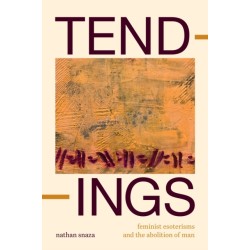
Tendings: Feminist Esoterisms and the Abolition of Man (Bog, Paperback / softback, Engelsk)
Nathan Snaza brings contemporary feminist and queer popular culture’s resurging interest in esoteric practices like tarot and witchcraft into... Læs mere
Levering: 6 - 9 hverdage -
Platinum Bible of the Public Toilet: Ten Queer Stories (Bog, Paperback / softback, Engelsk)
Cui Zi’en—China’s most famous and controversial queer filmmaker, writer, scholar, and LGBTQ rights activist—presents ten queer coming-of-age stories of young boys and men as they explore their sexuality and desires in contemporary China.
Levering: 6 - 9 hverdage -
The Politics of Kinship: Race, Family, Governance (Bog, Paperback / softback, Engelsk)
Mark Rifkin explores how the construction of family as a white liberal institution of race-making drives US settler-colonial violence.
Levering: 6 - 9 hverdage -
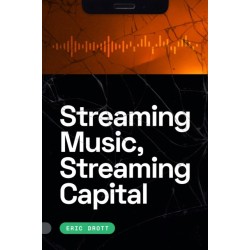
Streaming Music, Streaming Capital (Bog, Paperback / softback, Engelsk)
Eric Drott undertakes a wide-ranging study of the political economy of music streaming to engage in a broader reconsideration of music’s complex relation to capitalism.
Levering: 6 - 9 hverdage -
The Archival Afterlives of Philippine Cinema (Bog, Paperback / softback, Engelsk)
Drawing on cultural policy, queer and feminist theory, materialist media studies, and postcolonial historiography, Bliss Cua Lim analyzes the crisis-ridden history of Philippine film archiving—a history of lost films, limited access, and collapsed archives.
Levering: 6 - 9 hverdage -
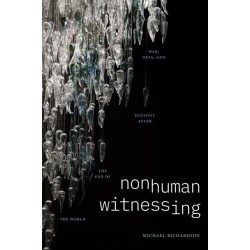
Nonhuman Witnessing: War, Data, and Ecology After the End of the World (Bog, Paperback / softback, Engelsk)
Michael Richardson argues that a radical rethinking of what counts as witnessing is central to building a framework for justice, suggesting that nonhuman witnessing is central to combat contemporary global crises.
Levering: 6 - 9 hverdage -
Struggles for the Human: Violent Legality and the Politics of Rights (Bog, Paperback / softback, Engelsk)
Lara Montesinos Coleman presents an ethnographic exploration of contemporary human rights discourse that reorients debates on legality, ethics, and humanity within anticapitalist and decolonial struggles.
Levering: 6 - 9 hverdage